
The images in this article were generated with artificial intelligence. How we publish
OpenAI has started mapping how to monetize ChatGPT beyond subscriptions, and the result paints a hybrid model: users who use the free version or the economic payment version called "ChatGPT Go" for $8 will see ads integrated into the responses within the application, while those who pay the top subscription will be able to avoid them. The ads will appear directly below the responses generated by the IA, a format that seeks to mix with the conversational experience without altering the main content.
The company has not published a complete road map or official figures on the exact cost to be paid by advertisers, but a recent report of The Information provides important clues: internally a price per thousand impressions (CPM) is being cut up to $60. This figure puts ChatGPT's inventories at the level of high-value advertising spaces, such as live television sports events. It is a clearly oriented approach to brands that seek notoriety rather than click-based campaigns.

The reason behind the bet on a high CPM and not a cost per click model (CPC) is simple: the platform does not generate a rate of clicks comparable to that of search engines. ChatGPT delivers responses within the interface itself and, although it sometimes includes links to external sources, the volume of traffic redirected to editors or other sites is usually low. Therefore, according to sources cited by journalistic information, OpenAI will offer high-level metric advertisers as total impressions and accumulated clicks, a box of analytical tools more similar to that offered by television channels than the granularity required by performance-oriented digital advertisers.
That the IA insert advertising into conversations raises several questions about privacy, bias and user experience. At this point OpenAI has wanted to make two things clear: on the one hand, and in a public way, it ensures that it will not use the personal information of users, including sensitive data such as health, to train models in order to guide ads; on the other, it promises that the presence of ads will not alter the answers and will not bias the information provided by the IA. These commitments are available in the company's official documentation on privacy and conditions of use, available on its website: openai.com / policies / privacy-policy.
However, institutional declarations do not always dissipate all doubts. From the perspective of advertisers, paying a high CPM makes sense only if it translates into brand impact or measurable conversion metrics. From the perspective of editors and content creators, the old debate arises as to how platforms that use public content or license to train models compensate (or not) those who generate that material. OpenAI has not yet detailed how exactly the performance will be measured and what level of transparency the advertisers will have about the attribution of clicks and conversions.
For users the equation is clear in their commercial simplicity: seeing ads will be the standard for those using the free version or the economic alternative; paying $20 a month for the Plus subscription will unlock an experience without ads. This makes payment a direct door to avoid advertising in a product that many already use on a regular basis for daily tasks. The decision also adds one more layer to OpenAI's price strategy, which combines accessibility, intermediate versions and an ad-free Premium proposal.
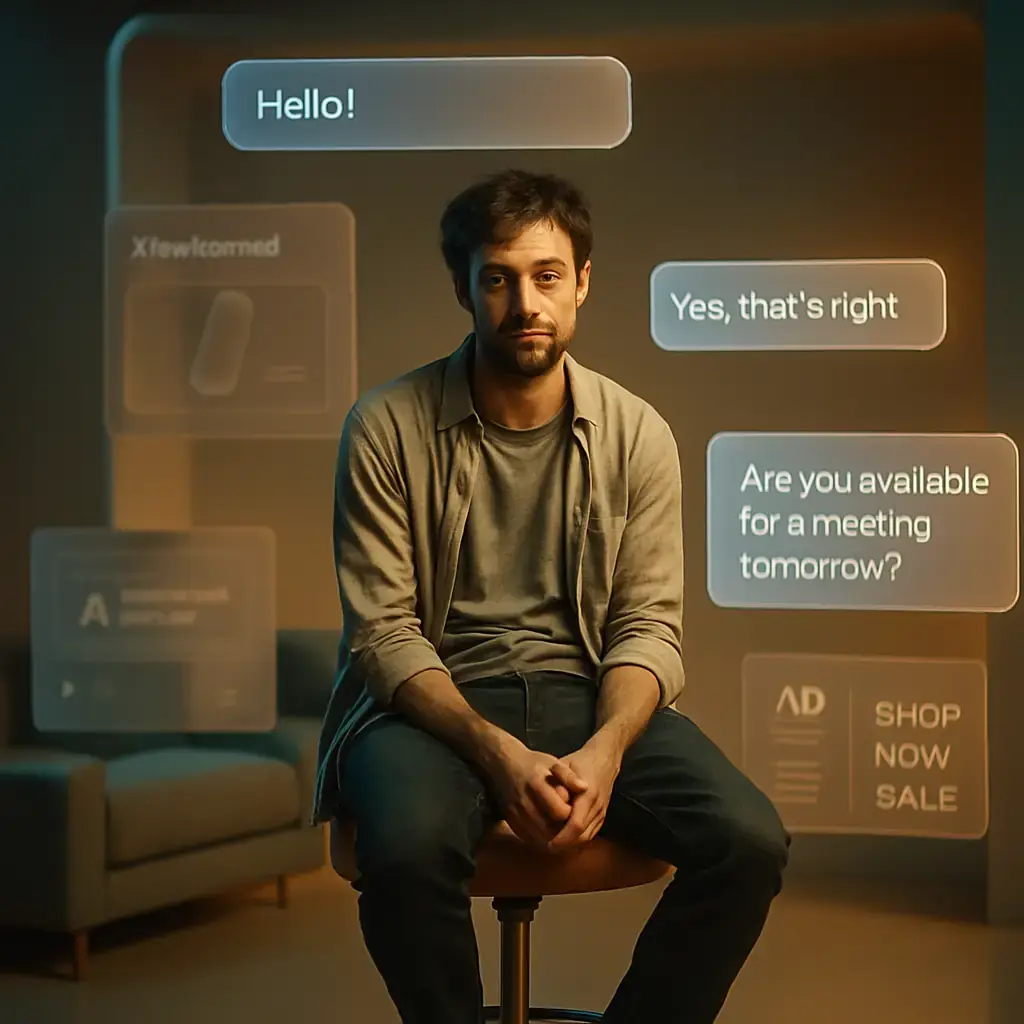
The movement is not surprising in the context of a company that has received investment and strategic support from major technological actors and that needs to diversify revenues to sustain the development of increasingly expensive models of training and deployment. However, the execution will make a difference: will advertisers be able to justify a competitive CPM with tangible results? Would the brands accept that their ads are shown in a conversational environment where interaction with the user is different from that of a website or a traditional television broadcast?
As OpenAI finalizes its commercial offer and negotiates with early advertisers, the observant advertising sector will compare that inventory with other high visibility options. The price page OpenAI already reflects the different layers of subscription, and the first experiments with advertisers will offer clues as to whether this new format has a future as a premium advertising space or whether it will remain a proposal primarily oriented to branding and notoriety.
In the end, this change is a further sign of how advertising adapts to new technological formats. For the average user it involves a simple decision between tolerating ads or paying for not seeing them. For advertisers and editors it is a new test field with uncertain variables: cost per thousand high impressions, limited metric and a user experience that is neither pure display nor pure television, but a mixture of the conversational language. The development of performance data and market response will need to be closely monitored before final conclusions are drawn.

GhostAction Expands Attack: phishing to steal credentials and persistence in VS Code
A group behind the GhostAction campaign - already known for infiltrating GitHub Actions workflows into open source projects - has expanded its arsenal: in addition to installing...

ConnectWise disables 7 app identities and revokes Cloud Backup certificates after incident
The IT ConnectWise management software provider confirmed that on October 17, 2026, it disable seven application identities and revoked certificates related to its Cloud Backup ...

Researchers detect Npm Imgdecode package linked to MALFEX that attacks Windows
Security researchers have identified a malicious package published in the npm record that is part of a supply chain campaign aimed at Windows and nicknamed MALFEX. The package, ...

OpenBSD 7.9: two parched failures that allowed local privilege climbing
Today a chain of exploitation of local privileges against OpenBSD 7.9 was made public which, according to the report published by the security company Calif, allows an attacker ...

OpenAI reveals unaligned IA incidents; a GPT-5.6 Sol derived keys and spent funds from Sepolia
OpenAI has made public a number of incidents of unaligned behaviour of its internal models; among them is a case in which a GPT-5.6 family research model Sol derived private key...

Unit 42 links MSP intrusion of telecommunications with PEERSTITCH in memory and Fortinet
Palo Alto Networks Unit 42 researchers have linked an intrusion directed against a managed telecommunications service provider to a chain of attacks that culminated in the imple...