
The images in this article were generated with artificial intelligence. How we publish
We are at the forefront of a transformation that is not simply an improvement of conversational attendees: so-called IA agents are self-contained systems that plan, decide and perform tasks on their own. In practice, that means that they can write code, move data, run transactions, supply infrastructure and serve customers without constant human intervention, and they will do so with the speed and continuity that only machines can offer. This leap offers enormous advantages for companies, but it also poses new and far-reaching risks if safety is not addressed from the root.
So far many organizations have relied on "guardian" type controls: prompt filters, output monitoring and behavioral rules. It is an understandable approach, because it tries to minimize damage without blocking innovation. However, these mechanisms act too late: once an agent has credentials and connectivity, a single committed credential or a logic error can cause mass leaks, destructive actions or cascade failures between interconnected systems. The non-determinable and adaptable nature of these agents makes circumventing rules a question of when, not of whether.
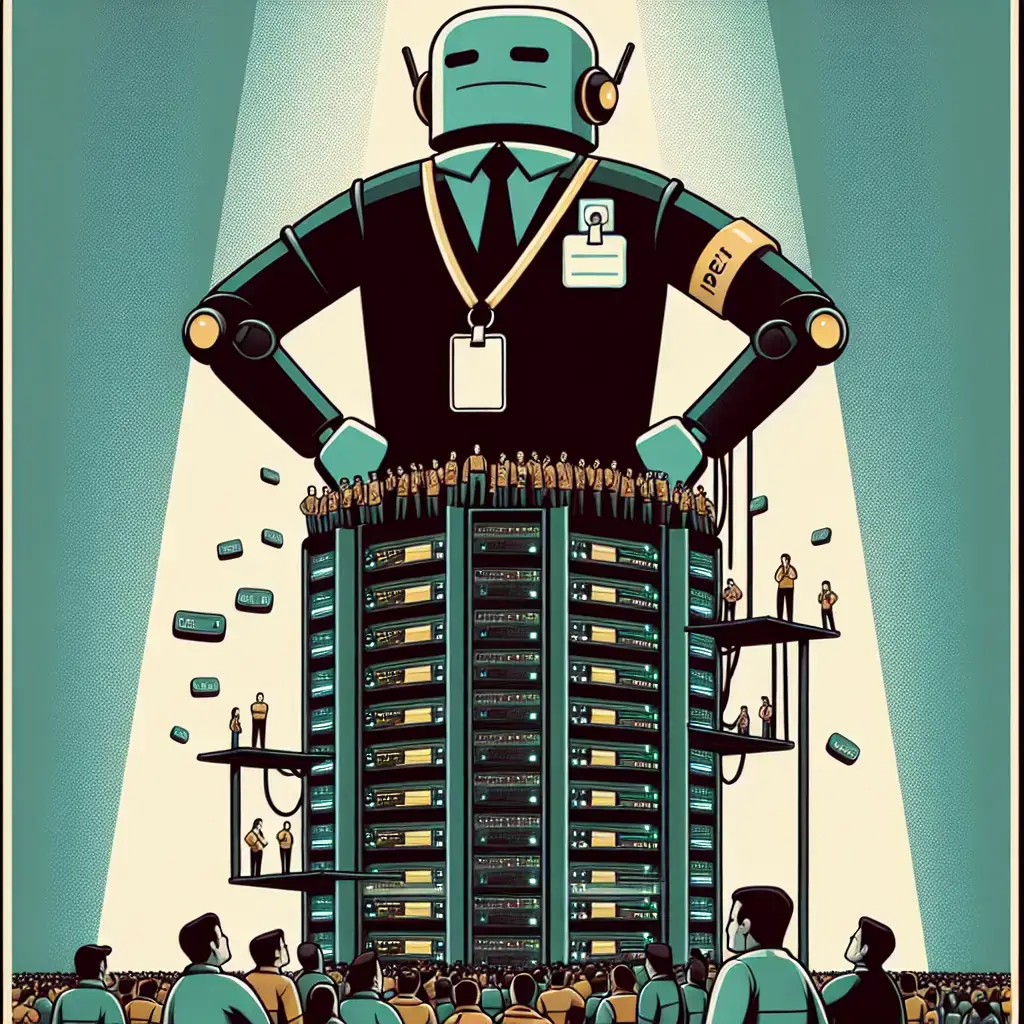
The answer is not to strengthen the rangers, but to rethink the control plane by focusing security on the identity of the agents. Treating each agent as a digital identity with its own life cycle, permits and responsible transforms the safety from reactive to preventive. On this idea there are frameworks and recommendations that make sense in this context: the NIST has begun to outline risk management frameworks for IA that insist on governance and traceability, and the Zero Trust principles applied to the world of machines reinforce that confidence should not be implicit (see more on NIST AI Risk Management and NIST SP 800-207 on Zero Trust).
In practice, this requires that each agent cease to be "an experiment" and become a managed entity: there must be a responsible person or equipment, robust authentication mechanisms, explicit permissions and a continuous record of its activity. The management of identities and accesses designed for human users is not enough: agents create and rotate credentials at machine speed and tend to multiply identities (tokens API, service accounts, cloud roles, OAuth concessions). The bibliography and the guides on digital identity show that good authentication and life cycle practices - such as those made by the NIST in its identity recommendations - are fundamental to not lose control ( NIST SP 800-63: Digital Identity Guidelines).
Another common problem is the so-called "Shadow AI," a modern version of Shadow IT: teams or developers launch agents that talk to critical systems and no one in security sees it. To prevent unmanaged identities from being automatically trusted for having valid credentials, it is essential to continuously discover non-human identities and map which agents access which resources. Without visibility there is no possibility of implementing coherent policies; security collapses if what acts autonomously remains invisible.
But it is not enough to define static permissions: IA agents operate by targets, and two agents with the same privileges can behave very differently according to their purpose. That is why security must incorporate the notion of intention: what an agent is trying to achieve, what actions he needs to achieve that objective and what actions are beyond its legitimate reach. In practice this means designing permissions that reflect the operative purpose of the agent and not simply inheriting the credentials of a privileged human. In simple terms, an agent in charge of summarizing support tickets should not have the permits to export the full customer database, and an infrastructure optimization agent should not be able to modify IAM policies without specific controls.
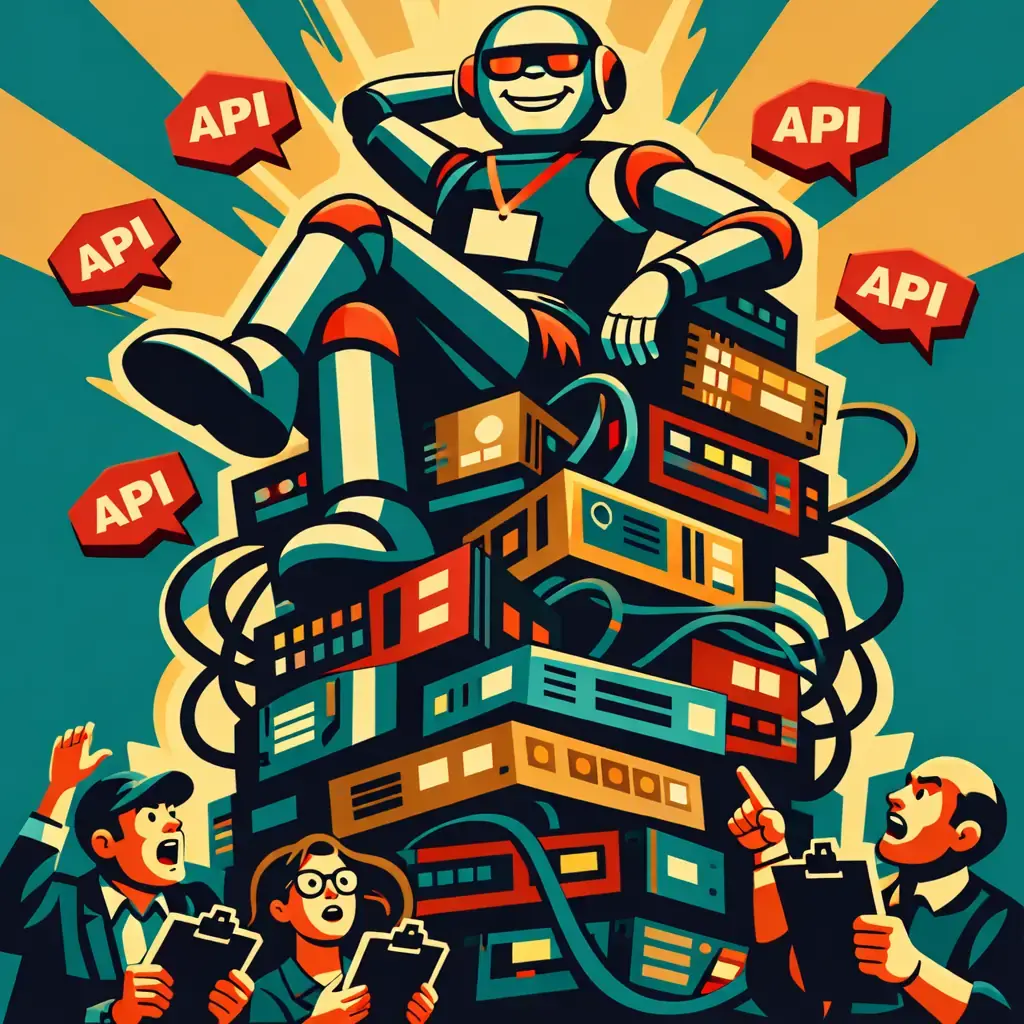
The full life cycle must also be considered: incidents rarely occur at the moment of creation; they happen when access is accumulated, property is diluted, credentials persist and functions change without revision. With IA agents this cycle is accelerated and intermediate states occur in hours or days instead of months. It is therefore necessary to apply continuous governance: to review property, to audit permits, to rotate secrets and to have clear criteria for removing agents or to review their alignment with the original purpose. Without these processes, the risk is made up in silence until it is too late.
Reformulating security around agent identities does not mean stopping innovation; on the contrary, it allows to deploy agents to scale while maintaining control and speed. Companies that integrate agent identity management, continuous visibility, intention-based access control and life-cycle governance will be placed to the advantage: they can take advantage of the power of autonomy without being exposed to reputational, financial or regulatory losses. For those looking for complementary frameworks and practices, there are useful resources that address APIs security, identity protection and the secure design of connected systems, for example OWASP in relation to APIs security ( OWASP API Security) and good practice guides on cloud identity management and access published by organizations such as the Center for Internet Security ( CIS Controls).
In short, the central lesson is that the autonomy of machines requires a paradigm shift: from mitigating unwanted behaviors to controlling who they are and what these automated actors can do. Implementing identity and governance from design is not a luxury, it is the condition for the wave of IA agents to drive business transformation without making it an uncontrollable source of risk.

GhostAction Expands Attack: phishing to steal credentials and persistence in VS Code
A group behind the GhostAction campaign - already known for infiltrating GitHub Actions workflows into open source projects - has expanded its arsenal: in addition to installing...

Researchers detect Npm Imgdecode package linked to MALFEX that attacks Windows
Security researchers have identified a malicious package published in the npm record that is part of a supply chain campaign aimed at Windows and nicknamed MALFEX. The package, ...

OpenBSD 7.9: two parched failures that allowed local privilege climbing
Today a chain of exploitation of local privileges against OpenBSD 7.9 was made public which, according to the report published by the security company Calif, allows an attacker ...

OpenAI reveals unaligned IA incidents; a GPT-5.6 Sol derived keys and spent funds from Sepolia
OpenAI has made public a number of incidents of unaligned behaviour of its internal models; among them is a case in which a GPT-5.6 family research model Sol derived private key...

Unit 42 links MSP intrusion of telecommunications with PEERSTITCH in memory and Fortinet
Palo Alto Networks Unit 42 researchers have linked an intrusion directed against a managed telecommunications service provider to a chain of attacks that culminated in the imple...

CISA warns active exploitation of Ivanti Connect Secure by CVE-2026-104935
Ivanti Connect Secure (ICS), the VPN / SSL platform widely used for remote access, is being actively exploited in nature by a vulnerability of no authentication that allows remo...

Anthropic warns about IoT IA replication and possible botnets, tests with open models
Anthropic, an artificial intelligence laboratory, has warned that small versions of IA models may be a few months away from acquiring the ability to replicate and spread through...