
The images in this article were generated with artificial intelligence. How we publish
In the ecosystem of tools for development security, a new open project has emerged that aims to raise the bar in the detection of filtered secrets: Betterleaks. It is a scanner capable of analyzing Git folders, files and repositories in search of credentials, tokens, private keys and other secrets that, by accident, end up within the code history. The idea is simple and urgent: to find and mitigate secrets before the attackers test them..
Betterleaks is born as a direct evolution of a tool already known in the community: Gitleaks. Behind the project is Zach Rice, who led the development of Gitleaks and now drives this new initiative with support from Aikido, a Belgian company focused on ensuring the development cycle. You can review the code and documentation in the official repository of Betterleaks in GitHub: https: / / github.com / betterleaks / betterleaks, and read the team's explanation on Aikido's blog: https: / / www.aikido.dev / blog / betterleaks-gitleaks-successor.

Secret scanners are already a basic piece in any organization's toolbox that publishes code or works with shared repositories. Platforms such as GitHub offer secret scanning mechanisms, and specialized companies publish constant reports of unnoticed leaks of credentials. A secret in a public commission can become a direct key to attacking infrastructure, cloud services or third party accounts This is why early detection changes the risk significantly (see GitHub's documentation on secret scanning: https: / / docs.github.com / en / code-security / secret-scanning).
What makes Betterleaks different from other options? The project incorporates a number of technical decisions aimed at improving accuracy, performance and usability. One of the new developments is the validation of rules by CEL (Common Expression Language), which allows more expressive and secure conditions to be defined to confirm that a coincidence is really a secret. CEL, driven by Google, makes it easier to create logical expressions about the findings; more information in the CEL specification: https: / / github.com / google / cel-spec.
In the field of detection, Betterleaks introduces a tokenization-based approach by Byte Pair Encoding (BPE) rather than relying only on entropy measures. According to the benchmarks published by the project itself, this method achieves a significantly higher sensitivity in reference sets used to evaluate credentials detectors. BPE is a text segmentation technique widely used in modern language models and tokenizers; if you want to understand it in depth, the documentation of Hugging Face tokenizers is a good starting point: https: / / huggingface.co / docs / takenizers / python / latest / components / takenizer _ models # byte-pair-encoding.
Another important decision of the team has been to write Betterleaks completely on Go pure, eliminating dependencies that in previous projects complicated distribution and installation, such as CGO or Hyperscan. This aims to facilitate its execution in various environments, from local machines to light containers. For those who want to deepen, Hyperscan is a bookstore of regular high-performance expressions developed by Intel: https: / / github.com / intel / hyperscan.
In practice, Betterleaks also improves aspects that day by day generate noise: it automatically handles content that has been encoded several times (for example, repeated URL-encoded chains), expands its set of rules to support more service providers and parallels Git repository scanning to accelerate large-scale analysis. These are features that, combined, seek to reduce false positives and accelerate detection when there are large volumes of code.
The project is not only technical: its road map includes functions that reflect where development security is going. The ideas under study include support for data sources other than Git repositories and local files, analysis assisted by language models to better classify findings, more refined detection filters, automatic memory of secrets through supplier APIs and mapping of credentials-associated permissions. All this aims to integrate Betterleaks into automated remediation, not just alert flows.
As for the government of the project, Betterleaks is published under the MIT license and is co-workers of different organizations, which seeks to combine transparency and accountability in maintenance. The provenance of the team - with contributions from people who have worked in banking, in large open source projects and in the cloud - helps development priorities look at both the business environment and the developer community.

From the perspective of those who develop software, incorporating this kind of tools can change the dynamics of secret management. Beyond running a punctual scan, the practical recommendation is to integrate the scanner into the CI / CD channeling, combine it with policies that detect secrets in pre-commitments and establish clear rotation and revocation procedures when a leak is detected. Companies specialized in the detection of secrets publish useful guides and metrics to contextualize these risks, for example the GitGuardian blog: https: / / www.gitabaran.com / blog /.
Finally, it should be stressed that tools are useful but not a magical solution. Prevention and response require complementary technical processes, education and controls: avoid commitments with secrets through hooks, use secret and credentials managers for execution environments, and have plans to rotate keys in case of exposure. Betterleaks provides technical and practical improvements that can reduce operational risk, but its real value is obtained when integrated into sustainable security policies.
If you want to explore Betterleaks for yourself, review benchmarks or contribute, the starting point is the project repository: https: / / github.com / betterleaks / betterleaks, and for context about your relationship with Gitleaks and the reasons for the change of direction, the entry in the blog of Aikido offers a complete reading: https: / / www.aikido.dev / blog / betterleaks-gitleaks-successor.

Florida, Iowa, Montana and Nebraska sue TP-Link Systems for security and source of routers
On October 6, four State Attorney General filed complaints against TP- Link Systems in U.S. state courts - in addition to a previous Texas lawsuit - for business practices relat...

FBI and six countries link Integrity Technology Group to entity post theft in SE Asia
On October 8, the FBI and agencies in six countries issued a joint warning that assigns to a Chinese company, Integrity Technology Group, a sustained series of intrusions whose ...

Campaign with LLM and ARTEX attacks South Korean financial institutions and exfilters data
Security researchers have documented a campaign directed against South Korean financial institutions using language-driven attack tools to automate intrusions and data extractio...

ChainDrop campaign exposes tensorlake in npm; version 0.5.144 withdrawal
A package of npm called tensorlake, an SDK in TypeScript oriented to Tensorlake applications and services, was engaged in a supply chain campaign linked to the attack family kno...
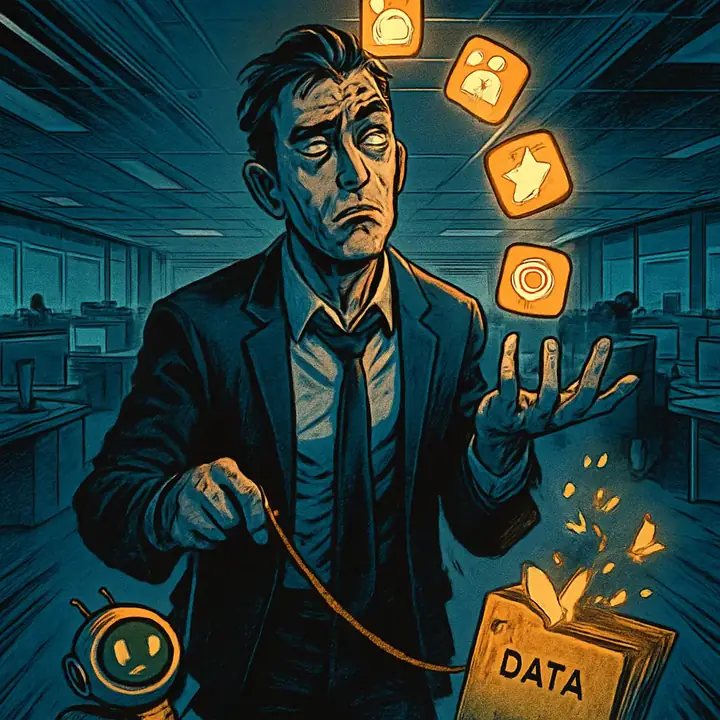
Cyber risk in 2026 moves to workflows and IA, according to Voice of the CISO
The data added by five editions of the Voice of the CISO study - including the most recent findings of 2026 - draw a less intense change than risk location: the threat is moving...
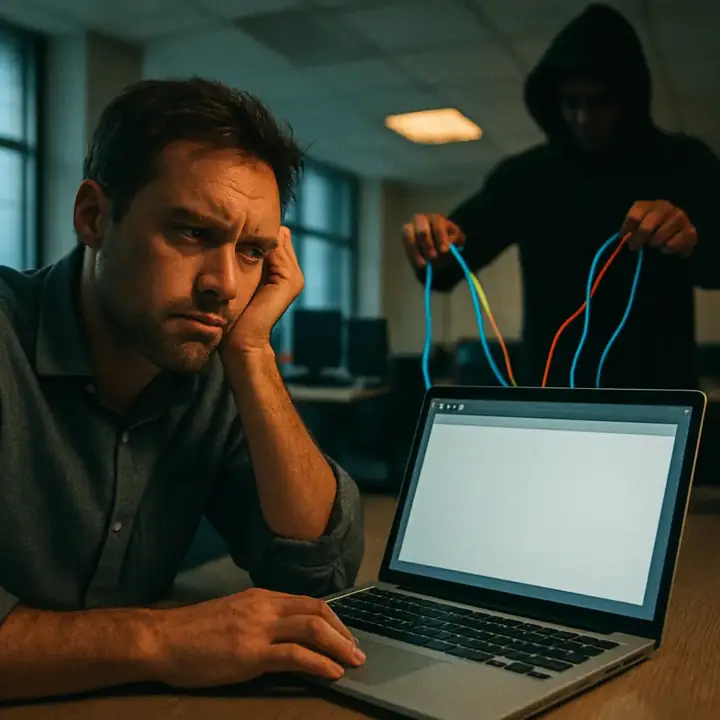
Phishing BitB points to advertising professionals and account managers to steal MFA
Security researchers have described a phishing campaign for advertising professionals and account managers that uses a human-operated platform to mimic ad products linked to IA ...