
The images in this article were generated with artificial intelligence. How we publish
In the corridors of a Minnesota federal court, a key version of the events surrounding two separate but connected episodes was thwarted: the arrest of Roberto Carlos Muñoz-Guatemala last summer and the death, days ago, of Renee Nicole Good. What seemed to be a corroboration between agents in a previous case now raises doubts about how the interventions were conducted and whether basic security and rights procedures were respected - elements that ultimately affect public perception of police action.
During a testimony given last month, FBI agent Bernardo Medellin provided details on the training that agents receive to interact with vehicle occupants and, above all, he disagreed with an assertion made under oath by immigration agent Jonathan Ross. Ross stated in December that in the detention of Muñoz-Guatemala, the detainee had asked for a lawyer. Medellin, who participated in the operation and said he had heard much of the conversation, denied having heard such a request. This contradiction is not a technicality: it puts at the centre the credibility of formal declarations and the consistency between records, previous statements and the physical or digital evidence that may exist.

The difference between "asking for a lawyer" and "asking who you are" changes how the interaction is interpreted. In the trial for the assault on a federal official, Ross stated that he had repeatedly clarified in English and Spanish that he was law enforcement personnel, and that Muñoz-Guatemala had responded in English, even asking for a lawyer. The defence was surprised that this claim had not appeared in previous interviews, which led the defence counsel to highlight the omission and explore the consistency of the versions on the stand.
In order to understand why this matters, it is necessary to stop at two levels: the legal and the operational. On the legal side, the presence - or absence - of a lawyer's request may influence the detainee's understanding of the nature of the meeting and his or her willingness to cooperate. In the field of operation, Medellin described how the FBI training instructs the agents to place themselves, during traffic stops, in positions that reduce the risk of being beaten or dragged by a moving vehicle; that is, usually to the back of the car or on the sides from where there is less chance of being exposed to the vehicle's advance.
It is precisely that contrast between doctrine and practice that opened up questions. According to the testimony, the tactic adopted by the Ross-led group involved approaching the front of the vehicle and, in a moment, fracking a back window to access the interior. Medellin reported that the intervention quickly escalated: Ross drew a gun, left his arm trapped between pillar B and the headrest, and other agents - including Medellin - also unfounded to "provide coverage." The account also includes a tactical detail that may seem minor but is revealing: a foot supported on the driver's tire as a type of "sensor" to detect whether the vehicle intends to leave.
This recalls findings from reviews of border practices: independent reports that have analysed shooting at vehicles have pointed to a worrying trend in some bodies, where agents were deliberately placed in front of a car as a justification for shooting when it was trying to move. An analysis that reviewed several cases and policies of the time concluded that, in multiple incidents, the suspects did not pose a violent threat other than vehicle mobility, and that the safest option for the agents would have been to move away from the car path. A critical summary of these findings can be found in public reports on border patrol practices, such as that published by The Nation.
Ross' professional background adds another layer to the analysis. In his own previous testimony, he has experience in the Border Patrol, a role as an instructor of shooting and participation in special teams, suggesting that his tactical decisions were not improvised but aligned with a set of practices learned throughout his career. This fact feeds the debate on which training practices should be maintained, which should be corrected and how the continuity between training and real action on the street is monitored.
In parallel, Renee Good's death has revived the demand for transparency and documentation: recordings of body cameras, mobile phone videos and other digital records have become key pieces to rebuild events where the versions of participants and witnesses do not match. Media that have followed the case have reported that the authorities are reviewing phone material and other data to clarify the sequence that led to the fatal shooting; see reports like those of CNN and The Washington Post provides context for ongoing research.
Another element to consider is the difference between declaring something in a trial and having said it to researchers or colleagues. The defense of Muñoz-Guatemala and the tax team were surprised by the appearance of the lawyer's petition on the stand because it was not in Ross' previous statements. That kind of story changes are angular stones in the assessment of witness credibility, and that's why the exchange between Newmark - the defense lawyer - and Medellin in the room was so significant: to confirm that no one else heard a lawyer's request reinforces the doubt as to whether the statement added by Ross was accurate or late.
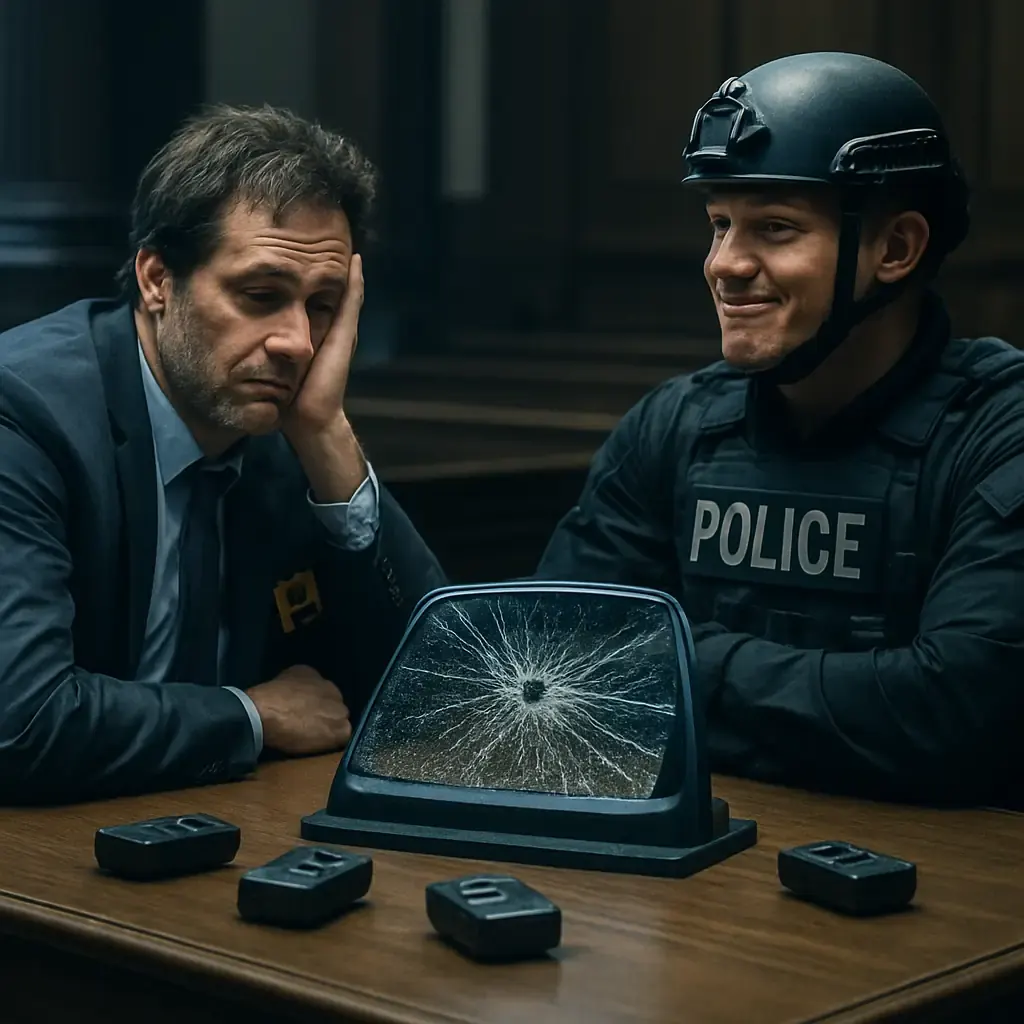
As for the institutions, the response has been measured. A spokesman for the Department of National Security referred to the detainee's previous case (which includes charges of sexual conduct with a minor according to state records), while the FBI declined to comment on the discrepancies. At the public level, the identification of Ross by media as a possible author of the good shot has not been officially confirmed by the administration, although officials have provided details that some observers identified with their professional biography.
What lies behind is a social demand for evidence and institutional responsibility.. When testimonial evidence fluctuates, recordings, phone data and body cameras are the ones most likely to lead to contradictions. This is also the critical review of vehicle approach protocols and the training given to agents who often work in interagency environments and under pressure that complicate decisions in second-party fractions.
This case shows, once again, that the shadows between the perception of risk and the proportionality of the use of force can have tragic consequences. The ongoing investigation should place on the table specific evidence and, where appropriate, lead to changes in practices and disciplinary responsibility. Meanwhile, the comparison between versions - Ross and Medellin's - and the search for digital and expert tests remain the key to understanding what really happened in each of these episodes. For those who want to deepen, the reports of the Minnesota District Attorney's Office on the conviction of the detainee's assault are available on the Department of Justice's website ( OJ), and the media coverage provides the updates of the ongoing research by national media such as CNN and The Washington Post.

GhostAction Expands Attack: phishing to steal credentials and persistence in VS Code
A group behind the GhostAction campaign - already known for infiltrating GitHub Actions workflows into open source projects - has expanded its arsenal: in addition to installing...

OpenCode: possible exposure of AI suppliers in Console affects 1.4% of users
On the night of October 16 there was an unauthorized access to a system inherited from OpenCode which, according to the company, could have exposed keys from IA suppliers that u...

ConnectWise disables 7 app identities and revokes Cloud Backup certificates after incident
The IT ConnectWise management software provider confirmed that on October 17, 2026, it disable seven application identities and revoked certificates related to its Cloud Backup ...

Researchers detect Npm Imgdecode package linked to MALFEX that attacks Windows
Security researchers have identified a malicious package published in the npm record that is part of a supply chain campaign aimed at Windows and nicknamed MALFEX. The package, ...

OpenBSD 7.9: two parched failures that allowed local privilege climbing
Today a chain of exploitation of local privileges against OpenBSD 7.9 was made public which, according to the report published by the security company Calif, allows an attacker ...

OpenAI reveals unaligned IA incidents; a GPT-5.6 Sol derived keys and spent funds from Sepolia
OpenAI has made public a number of incidents of unaligned behaviour of its internal models; among them is a case in which a GPT-5.6 family research model Sol derived private key...