
The images in this article were generated with artificial intelligence. How we publish
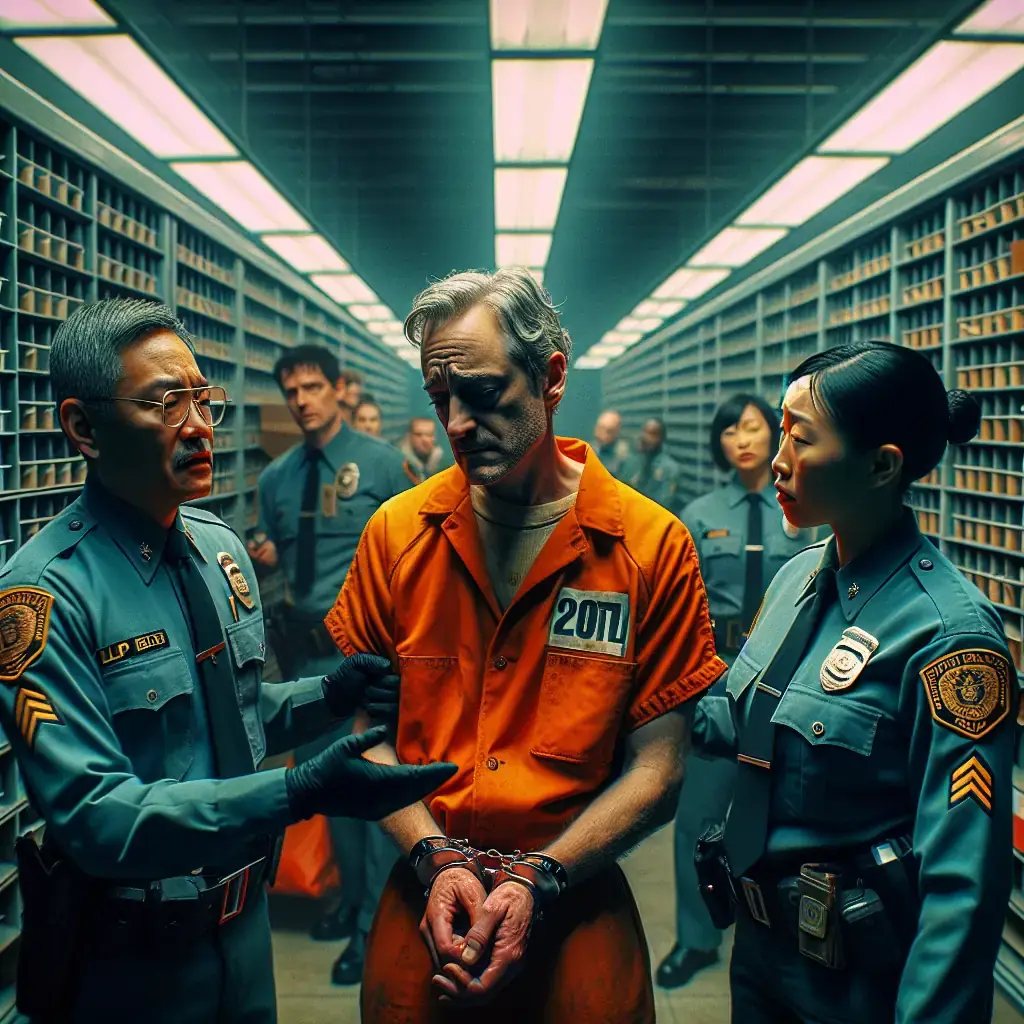
Last month, a federal court in Los Angeles imposed a 57-month prison sentence on a man from Glendale for his involvement in a drug-sale network through the so-called "darknet." The conviction, given after a guilty conspiracy to distribute narcotics, closes one of the most visible recent cases against vendors who used hidden markets in the network to move cocaine, methamphetamine, MDMA and ketamine throughout the United States.. You can consult the official statement of the Department of Justice with the details of the case on the federal prosecutor's page: justice.gov.
According to the judicial records, the operation took place for several years, from 2018 to 2025, and was articulated around multiple seller accounts and virtual "shops" in different darknet markets. Some of these accounts operated under recognizable names within that community and became responsible for a volume of shipments that the authorities described as exceptionally high. The court documents describing the investigation and the evidence are publicly available and allow the mechanics of the case to be addressed: see file.
The way to operate is not new, but it has been evolving: sellers create multiple profiles in different hidden markets, receive payments in cryptomonedas and send orders packed by mail. In this particular case, the authorities describe the use of accounts accepted by Bitcoin and Monero as payment methods and the physical shipment of drugs through the US postal service from offices and mailboxes distributed by Los Angeles and other locations. This combination - digital anonymity, crypto-currency and traditional mail logistics - has for years made illegal trade in the darknet a complex challenge for law enforcement.
To dismount the network operating behind these accounts an integrated work was launched. The investigation was led by a specialized team formed by the JCODE (Joint Criminal Opioid Darknet Enforcement) initiative and was supported by the United States Postal Inspectorate, the Drug Enforcement Administration (DEA), the IRS criminal investigation unit and the local police. Interagency cooperation was key to combining digital tracking expertise with traditional postal and criminal research techniques. If you want more information about the institutions that participated, there are explanations on their official pages about their role: FBI, DEA, United States Postal Inspection Service, IRS Criminal Investigation and LAPD.
The convicted accused is the last of four involved in this case; his co-defendants had already received sentences ranging from several years in prison to shorter sentences. The judicial process reflects how federal justice is prioritizing cases involving dark markets and distribution networks that use the network to reach customers at national level and is part of a wider movement against underground market operators.
The phenomenon of the darknet markets is not homogeneous and has suffered cycles: police closures and reopenings under new platforms or different names. However, experts and authorities agree that the combination of cryptomonedas, conventional shipping services and digital opsec techniques continues to allow the proliferation of these networks. To better understand the nature and scope of the problem from a global perspective, bodies such as Europol provide reports and analysis on the activity in the dark network and its impact on transnational crime: Europol - Dark Web.

In addition to this case, in recent times there have been relevant convictions against operators and managers of illicit online markets, which shows that investigations can lead to far-reaching sentences when infrastructure is dismantled behind sales. Recent examples show that coordinated action between national and international agencies, along with digital forensic tools and cryptotransaction tracking, can even dismount very extensive networks.
For those who follow the intersection between technology and crime, the issue raises lasting questions: to what extent can cryptomonedas preserve anonymity against improvements in block chain analysis? How do security forces balance the tracking of crimes with the protection of legitimate privacy? And on a practical level, what role does traditional logistics play - mailboxes, postal offices, messaging - in risk management? The responses evolve with technology and legislation, but the clearest lesson in this case is that collaboration between cyber security experts, blockchain analysts and "field" researchers is now indispensable to pursue those who profit from drugs using technology.
If you want to elaborate on the legal and technical details mentioned in this article, the case documents and the public prosecutor's statement are a primary and direct source: Department of Justice communiqué and judicial record. For a broader context on the threat posed by clandestine online markets, consult the institutional resources identified above and the analysis reports of public and private actors.

GhostAction Campaign commits maintenance accounts and inserts workflows to exfilter secrets
Security researchers have re-detected a massive credentials theft campaign that exploits open source project maintainer accounts to insert malicious workflows in GitHub reposito...

Florida, Iowa, Montana and Nebraska sue TP-Link Systems for security and source of routers
On October 6, four State Attorney General filed complaints against TP- Link Systems in U.S. state courts - in addition to a previous Texas lawsuit - for business practices relat...

FBI and six countries link Integrity Technology Group to entity post theft in SE Asia
On October 8, the FBI and agencies in six countries issued a joint warning that assigns to a Chinese company, Integrity Technology Group, a sustained series of intrusions whose ...

Campaign with LLM and ARTEX attacks South Korean financial institutions and exfilters data
Security researchers have documented a campaign directed against South Korean financial institutions using language-driven attack tools to automate intrusions and data extractio...

ChainDrop campaign exposes tensorlake in npm; version 0.5.144 withdrawal
A package of npm called tensorlake, an SDK in TypeScript oriented to Tensorlake applications and services, was engaged in a supply chain campaign linked to the attack family kno...

Google reports DNS kidnapping: TLS certificates for google.com.gh, google.sl and google.as
Google reported on October 6 that attackers managed to issue unauthorized HTTPS certificates for Google and YouTube names after compromising authoritative DNS records of three t...

Cyber risk in 2026 moves to workflows and IA, according to Voice of the CISO
The data added by five editions of the Voice of the CISO study - including the most recent findings of 2026 - draw a less intense change than risk location: the threat is moving...