
The images in this article were generated with artificial intelligence. How we publish
A new phishing kit called Bluekit is drawing the attention of response teams and intelligence analysts for combining ready-to-use templates with IA-driven automation functions; according to public analysis, it offers more than 40 templates that mimic popular services - from mail accounts (Gmail, Outlook, Yahoo, Proton Mail) to development and critical platforms - and a unified panel to buy domains, deploy fraudulent pages and manage campaigns.
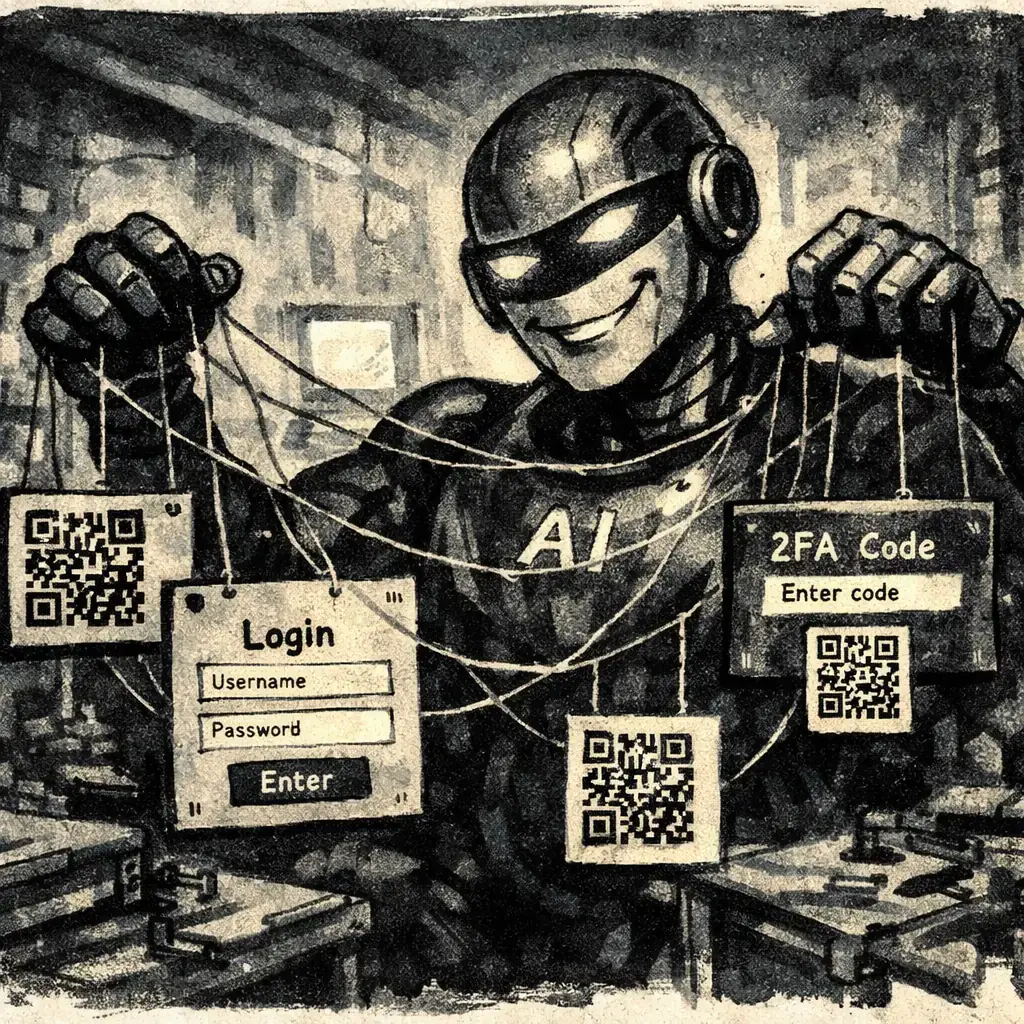
What distinguishes Bluekit from the traditional catalog of phishing kits is its "AI Assistant" panel which can connect with several models (Llama, GPT-4.1, Claude, Gemini and others). In practice, Varonis researchers found that the IA generates useful sketches - a campaign structure and base copy - but with links and QR blocks as position markers, suggesting that today it acts as a work accelerator rather than a complete author of sophisticated attacks ( analysis of Varonis).

From the tactical point of view, Bluekit presents other worrying features: filters to block traffic from VPNs and automated agents, anti-analysis tools, granular control of the log-in flow, real-time monitoring of captured sessions and exfiltration of credentials to private channels in Telegram. This combination means that even attackers with limited skills can launch, adjust and scale campaigns with a fraction of the effort that previously required technical experience.
The practical implications are clear: The IA is reducing the input barrier for cybercrime, allowing for more speed and customization in phishing messages. At the same time, the integration of domain purchase and administration into a single panel facilitates the rotation of malicious infrastructure, which complicates the detection and closure work by security recorders and equipment.
For organizations and administrators, the first recommendation is to strengthen the defenses that mitigate the impact when the credentials are stolen: implement multifactor authentication based on robust standards (preferably FIDO2 physical keys), implement DMARC / SPF / DKIM policies to reduce mail spoofing, automate the intelligence intake of newly registered domains and monitor abnormal login patterns (geolocation, agents, cookies and session states). Official resources on how to prepare and respond to phishing campaigns are a good starting point, for example the CISA guidelines on defensive measures against phishing.
For end-users and security officials in SMEs, specific actions that make the difference are simple but effective practices: do not follow suspicious mail links, check the actual URL before entering credentials, use password managers to differentiate true domains from imitations and separate critical accounts (banking, corporate mail, cryptomoneda key management) from those for daily use. In addition, enabling security alerts and regular review of authorized devices and active sessions can detect unwanted access on time.
The detection and response teams should add to their playbooks the identification of specific artifacts of these platforms: reused templates, Telegram exfiltration patterns, domains with mimed names and page signals that place scripts to capture cookies or session states. Communicate these findings to IOCs' registrators, mail platforms and exchange forums to speed up containment and blocking measures.
Finally, it is important to recognize that the evolution of kits like Bluekit is not an isolated event but part of a greater trend: criminal services are incorporating IA and automation to industrialize attacks. The response cannot be only technical; it requires investment in continuing staff training, processes to revoke rapid access and collaboration between private sector, identity providers and authorities to break down malicious infrastructure before they spread.

FBI and six countries link Integrity Technology Group to entity post theft in SE Asia
On October 8, the FBI and agencies in six countries issued a joint warning that assigns to a Chinese company, Integrity Technology Group, a sustained series of intrusions whose ...

Campaign with LLM and ARTEX attacks South Korean financial institutions and exfilters data
Security researchers have documented a campaign directed against South Korean financial institutions using language-driven attack tools to automate intrusions and data extractio...

ChainDrop campaign exposes tensorlake in npm; version 0.5.144 withdrawal
A package of npm called tensorlake, an SDK in TypeScript oriented to Tensorlake applications and services, was engaged in a supply chain campaign linked to the attack family kno...

Google reports DNS kidnapping: TLS certificates for google.com.gh, google.sl and google.as
Google reported on October 6 that attackers managed to issue unauthorized HTTPS certificates for Google and YouTube names after compromising authoritative DNS records of three t...
Cyber risk in 2026 moves to workflows and IA, according to Voice of the CISO
The data added by five editions of the Voice of the CISO study - including the most recent findings of 2026 - draw a less intense change than risk location: the threat is moving...

Phishing BitB points to advertising professionals and account managers to steal MFA
Security researchers have described a phishing campaign for advertising professionals and account managers that uses a human-operated platform to mimic ad products linked to IA ...