
The images in this article were generated with artificial intelligence. How we publish
This week, the US Agency for Infrastructure and Cybersecurity. US (CISA) included in its Known Exploited Vulnerabilities (KEV) catalogue a high-severity vulnerability that affects UnrealIRCd, a widely used open-source IRC server. The failure, recorded as CVE-2026-114713 and valued with an 8.6 CVSS in the NIST database, allows the injection and execution of server-privileged commands when it is exploited in networks with two or more linked servers. CISA requires priority mitigation under its KEV catalogue; federal agencies must apply corrections under the BOD Directive 26-04 by 16 November 2026 ( CISA KEV, NVD CVE-2026-114713, BOD 26-04).
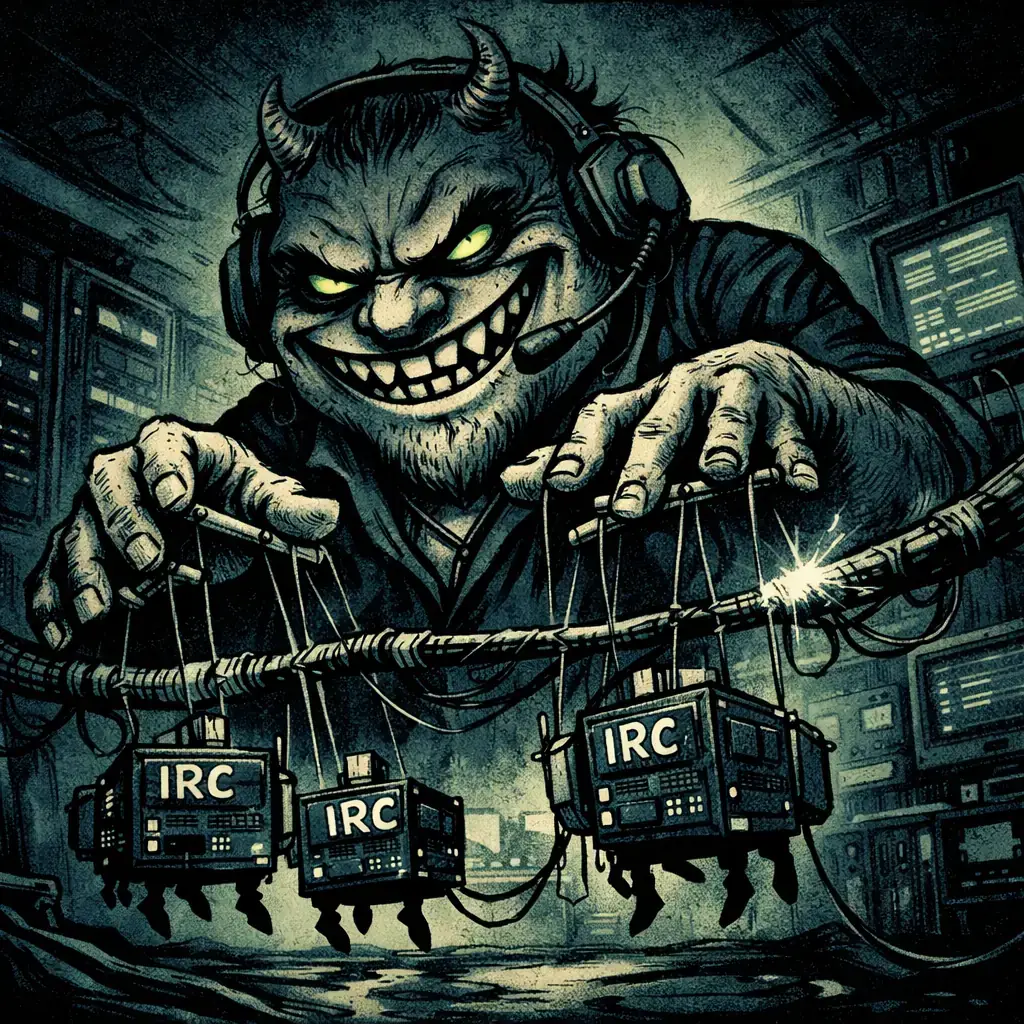
What happens technically: the problem is located in the labeled-response module of UnrealIRCd. When the module replicates the IRCv3 label called "label," the delimiting characters do not escape correctly. In practice, a user connected to a server can send a label designed to contain sequences that the remote server takes as server commands rather than inert data. If the IRC network is composed of several linked servers, these commands can be spread and run with the authority of the server, which is equivalent to high-level control over the affected instance.
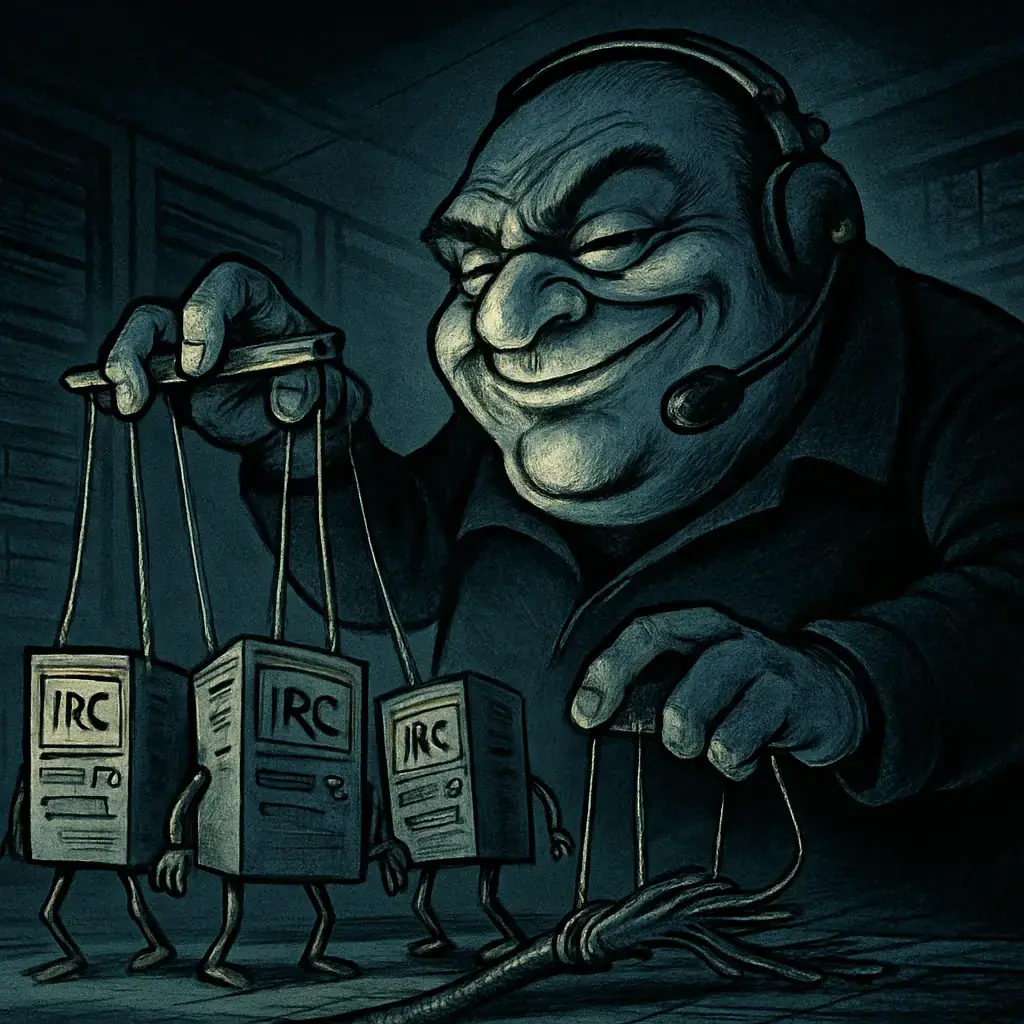
Why is this dangerous: In distributed chat protocols such as IRC, server-to-server operations include commands to register servers, add operators, join users to channels, and replicate states. The unauthorized execution of such orders can return the attacker's ability to create accounts with high privileges, alter the configuration, close or redirect services and, in general, compromise the integrity and availability of the IRC network. UnrealIRCd's maintainer described the finding as the most critical in 15 years of the project and reported attempts to operate on the Internet after the patch was published.
The confirmed facts are: vulnerability was identified and registered as CVE-2026-114713 in the NVD; the UnrealIRCd project published a corrected version (6.2.7.1) and warned about active exploitation; and CISA added vulnerability to its KEV catalogue, which triggers mediation obligations for federal agencies under BOD 26-04. It is also confirmed that the operation began shortly after the patch was published and that the project author recommended applying hotpatches or a temporary solution called "spamfilter worldwide."
What is still uncertain or estimated: the specific objectives and scope of the malicious activity detected have not been publicly disclosed; there is no complete inventory of affected servers or universal community-published commitment indicators (IoC); and there is no public, verified and detailed evidence on the use of the failure to establish persistent back doors or move laterally outside IRC instances, although these scenarios are technically plausible.
Those affected: IRC network managers and operators running UnrealIRCd versions from 6.0.0 to the immediately prior to 6.2.7.1; any IRC network composed of two or more linked servers is vulnerable in its design configuration. In addition, public organisations using UnrealIRCd, especially US government agencies. UU subject to BOD 26-04, should prioritize mitigation.
The practical consequences can range from spammass and operator supplanting to complete control of the affected server. In linked networks, unintentionally joining channels or raising privileges could allow to manipulate conversations, spread malicious links or coordinate the exploitation of other vulnerabilities in adjacent systems. For organizations using IRC as a coordination channel, loss of confidentiality and interruption of service are real risks.
Specific and immediate actions to be taken by those responsible: 1) To update UnrealIRCd 6.2.7.1 without delay on all affected servers. 2) If the update is not immediate, apply the time measure recommended by the project (spamfilter around) to block malicious tags until you can park. 3) Disable the labeled-response module when feasible and test the service functionality after doing so. 4) Restrict server links only to confidence pairs and review lists of linked servers; consider disconnecting non-essential external links until applying patches. 5) Check records by abnormal server commands, unexpected operator creation, configuration changes and messages with IRCv3 tags handled. 6) Rotate administrative and key credentials linked to server replication processes if there is evidence of commitment. 7) Isolate and perform forensic analysis of any suspicious server before re-entering the network.
In practice, the detection goes by audiating connection log between servers and looking for protocol lines containing the label "label" with unusual characters (control sequences, delimiters) or by the sudden appearance of server-to-server commands executed outside the maintenance calendar. Managers should keep and centralize copies of logs to allow correlation and layout of the operating chain.
For security officials in organizations with restrictive regulations (government or compliance requirements), entry into the KEV catalogue involves regulatory time limits for mitigation. See BOD 26-04 for obligations and deadlines, and document every step of the audit mitigation process. More information and vulnerability registration are available in the NVD database and the CISA page ( NVD, CISA KEV).
Finally, administrators should establish a post-patch response plan: validate the integrity of the installed software, audit operator accounts, monitor traffic between servers and enable early alerts for abnormal activities. It is also appropriate to review server liaison policies and to minimize the exposure of management services to public networks. UnrealIRCd source code and releases are available in its public repository for verification ( GitHub - UnrealIRCd).
Confirmed facts, clear estimates and practical measures are the basis for containing this threat: updating or isolating, monitoring records, reviewing operators and following regulatory directives. The operating window is short but real; rapid action significantly reduces the risk of a small incident climbing to total service control.

Drago detects prompts exfiltration in three IA suppliers; OpenRouter withdraws three suppliers
This week the research of the firm Dragos revealed a data exfiltration pattern that affected at least three suppliers offering inference of IA models: sustained attacks for mont...

NebuSec reveals chain of exploitation in Muse that could steal chats and user memories
Researchers at the NebuSec security firm demonstrated in the laboratory a chain of exploitation that allowed a malicious website, opened by Meta's personal assistant called Muse...

Meta fixes three WhatsApp vulnerabilities on Android, iOS and Mac; CVE-2026-23871 exposes IP
Meta has patched three vulnerabilities in WhatsApp that affect Android, iOS and Mac customers, including a failure in the Android application that the company itself links to a ...

KVM AMD Vulnerability with nested virtualization allows you to read host memory; patch applied
A vulnerability in KVM, the hyperviewer integrated into the Linux kernel, allowed researchers to read large portions of the physical memory of the host server from within a virt...

ROMULUS delivers a RAT with DLL sideloading and DoH using ClickFix
Security researchers have identified a malware distribution platform called "ROMULUS" which is serving as a delivery point for a remote access Trojan (RAT) so far undocumented, ...

The IA potentiates social engineering attacks and abuse of supplier credentials
The scene is not spectacular: an email that looks like human resources, a service cut-off notification that matches the time you're in a hurry, a pop-up window of an application...

CVE-2026-123890: VMware vmdir authentication bypass; patches available
A critical failure at VMware vCenter allows an attacker with network access to avoid authentication and obtain unauthorized access to the system, according to a notice published...