
The images in this article were generated with artificial intelligence. How we publish
Security teams have become the operational heart of modern companies, but they often work with tools that they did not choose and workflows designed for executive presentations rather than for real incidents. The result is a daily tension: on the one hand, the urgency of detecting and reacting in real time, and on the other, platforms that promise a lot in theory and fail in practice when a complex intrusion comes.
Next January 29 at 2: 00 PM ET will be a live seminar organized by BleepingComputer with Adrian Sanabria and David Girvin of Sumo Logic where this gap between the executive priorities and the operational needs of the SOC will be addressed. Beyond the timely invitation, the talk points to a recurring problem: the purchase of platforms for reasons that do not always reflect how attacks in the real world take place, and the practical consequences of those decisions.

When a tool is chosen by consolidation objectives, budget savings or promises of new capabilities - as attractive IA functions in the marketing campaign - one can forget something crucial: how analysts investigate and respond in their day-to-day. This disconnection is expressed in different symptoms: alerts that stack without clear priority, fragile integrations that break at critical times, and manual processes that slow down the response. The problem is not just technical; it is organizational. A bridge is needed between strategic decision-makers and risk managers.
Operational reality requires visibility, automation and measurable results. Tools that shine on a demo may not provide actionable signals when telemetry sources are incomplete or poorly standardized. That is why it is important to look beyond the label "SIEM" or "XDR" and ask what evidence the platform provides to detect real campaigns, how deep its integration with critical assets is and how it helps reduce time from detection to containment. Institutions such as MITRE and guides such as CISA remember the importance of connecting telemetry and context to understand tactics, techniques and adverse procedures.
Another aspect that is often underestimated is the so-called "warning fatigue." When analysts receive a rain of notifications without priority or context, their ability to distinguish the critical from the irrelevant is eroded. This is not just a matter of volume: it is a question of a signal against noise. Reports such as Verizon DBIR show that early detection and context understanding are key to limiting the impact of a gap. For this reason, organizations that seek effectiveness must require clear operational metrics - for example, how much the average time of detection and response is reduced - and not be conformed to flashing dashboards that do not change the performance of the equipment.
Artificial intelligence and the machine learning appear today as tempting solutions, but require critical analysis. Not every feature labeled "AI" provides immediate value; sometimes it is simply a limited automation layer or a model that does not generalize the telemetry of a company. At this point it is useful to rely on independent assessments and concept tests that measure the actual impact on operational processes rather than be guided by commercial promises. Organizations such as NIST provide frameworks for assessing capacities and aligning investments with risk management objectives.
The good news is that there are practical ways to improve the alignment between executives and SOC. Involving operations teams in purchase decisions from the outset, defining operational value indicators - not just adoption - and requiring concrete evidence in representative environments are steps that can make an investment a real advantage. It also matters to design workflows that integrate automation with human supervision, and document clear runbooks for the most likely scenarios. These practices facilitate the transition from a tool that "looks good" to one that "works" when needed.
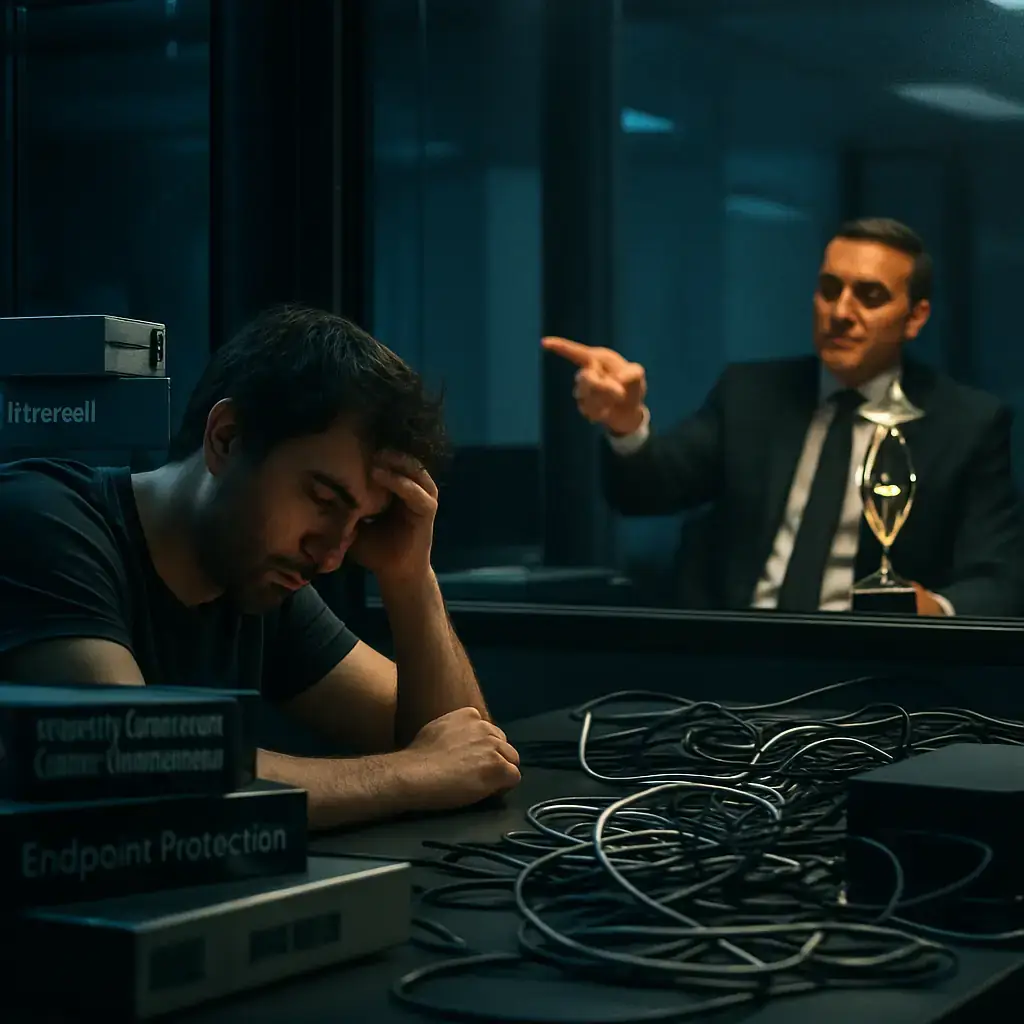
Sumo Logic raises, and will debate on the webinar, that the key is to extract signals from noisy tools, not constantly changing the platform. Optimizing integrations, prioritizing critical telemetry and automating repetitive steps are actions that can transform an existing investment into a tangible improvement in operational performance. For those who lead the strategy or manage the daily response, it is an opportunity to review evaluation criteria and demand reproducible results.
If you are interested in better understanding why these disconnections often occur and how to correct them from practice, the January 29 seminar offers a solution-oriented conversation. In addition, for those who want to deepen on recommendations and formal frameworks, it is advisable to consult resources such as the CISA the framework of NIST for the management of cybersecurity and DBIR on patterns of incidents.
In short, closing the gap between what the management buys and what the SOC needs is not just a technical issue: it is a strategic decision that requires continuous, metric dialogue oriented to real operations and evidence before compromising resources. The panel discussion with Sumo Logic experts promises to offer practical ideas so that this transition will no longer be a distant goal and will become a visible improvement in daily defence.

GhostAction Expands Attack: phishing to steal credentials and persistence in VS Code
A group behind the GhostAction campaign - already known for infiltrating GitHub Actions workflows into open source projects - has expanded its arsenal: in addition to installing...

ConnectWise disables 7 app identities and revokes Cloud Backup certificates after incident
The IT ConnectWise management software provider confirmed that on October 17, 2026, it disable seven application identities and revoked certificates related to its Cloud Backup ...

Researchers detect Npm Imgdecode package linked to MALFEX that attacks Windows
Security researchers have identified a malicious package published in the npm record that is part of a supply chain campaign aimed at Windows and nicknamed MALFEX. The package, ...

OpenBSD 7.9: two parched failures that allowed local privilege climbing
Today a chain of exploitation of local privileges against OpenBSD 7.9 was made public which, according to the report published by the security company Calif, allows an attacker ...

OpenAI reveals unaligned IA incidents; a GPT-5.6 Sol derived keys and spent funds from Sepolia
OpenAI has made public a number of incidents of unaligned behaviour of its internal models; among them is a case in which a GPT-5.6 family research model Sol derived private key...

Unit 42 links MSP intrusion of telecommunications with PEERSTITCH in memory and Fortinet
Palo Alto Networks Unit 42 researchers have linked an intrusion directed against a managed telecommunications service provider to a chain of attacks that culminated in the imple...