
The images in this article were generated with artificial intelligence. How we publish
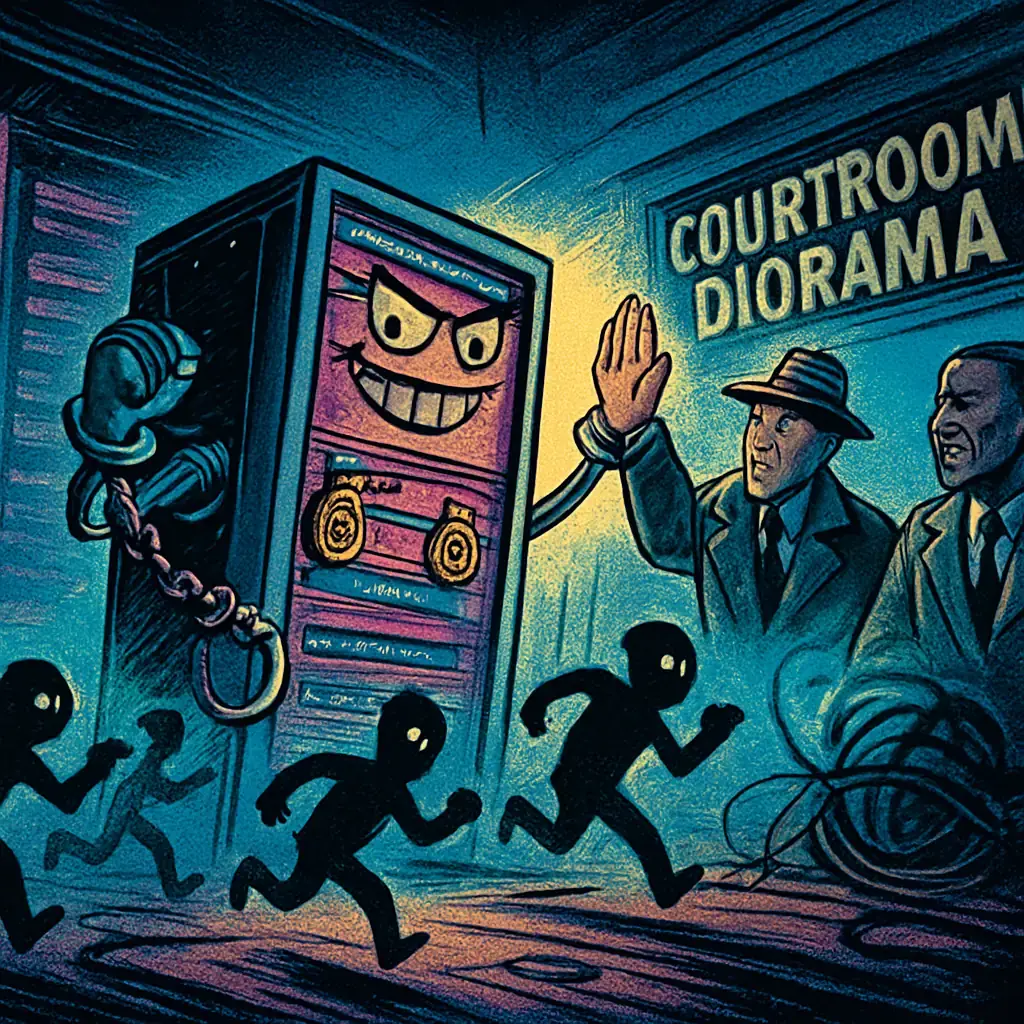
The U.S. Department of Justice announced this week the seizure, by court order, of the web pages linked to the DDoS attack service on request known as NightmareStresser. The addresses involved are nightmare-stresser [.] com and nightmestresser [.] org; the two domains now show a banner of confiscation that, according to the text reproduced by the Justice itself, identifies the Federal Prosecutor's Office of the District of Alaska, the Federal Bureau of Investigations (FBI) of Anchorage and the Royal Canadian Mounted Police (RCMP) as participants in a coordinated international operation. The announcement is part of the continued initiative Operation PowerOFF, a multilateral effort to dismantle commercial infrastructure of DDoS-for-hire.
Done confirmed: the judicial seizure of these domains and the participation of the above-mentioned agencies. It is also a fact confirmed by the Justice that these services - usually marketed as "stresser" or load test tools - have been used to launch attacks on sectors such as education, public administrations and gambling platforms, affecting "millions of people," according to the same official statement. The Public Prosecutor's Office also attributes to NightmareStresser the use for "hundreds of thousands" of actual or attempted attacks since 2022.
The available technical information on the service comes from archived catches and third-party analysis. For example, snapshots in the web file show that nightmarestresser [.] org was hosted behind an infrastructure provided by BlazingFast; a Searchlight Cyber report of the end of 2023 recorded more than 566,000 registered users and 52 servers, and described a control panel that allowed you to choose IP / URL target, port and number of concurrent attacks. The site involved promoted methods of amplification at the level ofLayer 4, UDP / TCP attacks, andLayer 7which, according to the ads, drew CAPTCHAs, geoblocks and rate limits. They also accepted cryptomonedas and maintained a system of referrals to attract and retain customers.
How it works, in general terms:"booter" or "stresser" sell access to panels that orchestrate malicious traffic from compromised machine networks or by means of reflection / amplification techniques (e.g., poorly configured UDP services) to saturate the target's capacity. The above-mentioned panel options - port selection, number of threads, attacks on layers 3 / 4 and 7 - are common in commercial services that seek to lower online services by flood packages or massive HTTP requests. The use of cryptomonedas and reference systems facilitates the scale and commercial persistence of these platforms.
Some technical elements identified in the materials of the service itself - such as promises to "stop all attacks with a button" or the ability to "defeat CAPTCHAs" - indicate the existence of automated infrastructure and tools to evade defensive measures. However, except for information published by researchers and the Justice, precise operational details (e.g., physical location of all servers or the identity of operators) remain research or are not fully publicly confirmed.
To whom it affects and actual consequences: The objectives described above range from educational institutions and government agencies to video games platforms and end-users. Beyond the direct victim, massive DDoS degrade network quality in full areas or suppliers, generate operational costs (response time, mitigation, loss of income) and may interrupt critical services. In online gambling environments, booter are often used to gain competitive advantage or cause game looting; in the public sector, the lack of availability of services can complicate essential procedures. The scale indicated by the reports (hundreds of thousands of attempts and hundreds of thousands of users registered according to third parties) suggests a sustained and comprehensive impact, although the total economic damage has not been publicly quantified.
This was found against the estimated: It is known that the domains were seized and that Operation PowerOFF has resulted in dozens of domains intervened and in charges against dozens of people in previous actions; for example, the Government recorded seizures of dozens of domains in December 2022 and, in a previous operation in April, the interruption of 53 domains and the detention of four people. In total, according to official communications, charges have already been brought against 12 accused and more than 100 domains linked to these services have been seized. What remains uncertain is how much operational infrastructure is still active outside the domains involved, and how many central operators have been directly identified and dismantled at this last stage.

For organizations and administrators: there are concrete and verified measures that reduce the probability and impact of a DDoS. Urgent and practical include: implementing input filtering (BCP38 / anti- spoofing), deploying mitigation in the perimetral network (Anycast, CDN and snorbing services), setting up limits per session and per IP, using automatic loading and scaling, using application-level mechanisms of SYN cookies and protections (WAF and adaptive challenges), and maintaining contact and scaling procedures with the connectivity provider. Registering and retaining logs provides subsequent powers and complaints.
For end-users and small organizations: if you experience persistent interruptions, contact your Internet provider to request IP mitigation or reassignment; document interruptions (hours, symptoms) and file a complaint on official channels (e.g. the FBI Internet Crime Complex Center: https: / / www.ic3.gov). Avoid using unverified stress testing services and do not participate in forums that offer or promote attacks in return for payment.
Finally, the action highlights two clear lessons: on the one hand, the effectiveness of coordinated operations between countries to interrupt criminal services; on the other, the resilience of the criminal ecosystem, which often migrates rapidly to new domains, suppliers or payment methods. Managers can deepen their response by consulting technical guidelines on the mitigation of denial of service (e.g. in public good practice collections: OWASP Denial of Service Cheat Sheet) and reviewing web files for historical indicators in research ( Internet Archive), while police actions to dismantle platforms and process their operators continue.

FBI and six countries link Integrity Technology Group to entity post theft in SE Asia
On October 8, the FBI and agencies in six countries issued a joint warning that assigns to a Chinese company, Integrity Technology Group, a sustained series of intrusions whose ...

Campaign with LLM and ARTEX attacks South Korean financial institutions and exfilters data
Security researchers have documented a campaign directed against South Korean financial institutions using language-driven attack tools to automate intrusions and data extractio...

ChainDrop campaign exposes tensorlake in npm; version 0.5.144 withdrawal
A package of npm called tensorlake, an SDK in TypeScript oriented to Tensorlake applications and services, was engaged in a supply chain campaign linked to the attack family kno...

Google reports DNS kidnapping: TLS certificates for google.com.gh, google.sl and google.as
Google reported on October 6 that attackers managed to issue unauthorized HTTPS certificates for Google and YouTube names after compromising authoritative DNS records of three t...

Cyber risk in 2026 moves to workflows and IA, according to Voice of the CISO
The data added by five editions of the Voice of the CISO study - including the most recent findings of 2026 - draw a less intense change than risk location: the threat is moving...

Phishing BitB points to advertising professionals and account managers to steal MFA
Security researchers have described a phishing campaign for advertising professionals and account managers that uses a human-operated platform to mimic ad products linked to IA ...

LibreOffice / OpenOffice Calc allows remote source execution when opening ODB / JDBC leaves
Researchers have shown that a malicious spreadsheet can force LibreOffice and Apache OpenOffice to run code controlled by an attacker at the time the file is opened, without sho...