
The images in this article were generated with artificial intelligence. How we publish
A contractual notice published in the federal register has revealed that more than two dozen vehicles of the Office of Immigration and Customs Control (ICE) destined for the Minneapolis-St. Paul moves without the necessary emergency devices - lights and sirens - that normally require police operation. The document, available at SAM.gov, justifies the purchase of portable lighting and alarm kits to the Whelen Engineering company to put those units in immediate operational conditions.
The contract specifies the acquisition of 31 kits of the model which Whelen markets as ATLAS, with a total cost of $47,330.49. According to the manufacturer's description, ATLAS is a portable system designed to be quickly installed in vehicles of any brand and temporarily transformed into units suitable for police work. In Whelen's own website it is detailed that the kit includes different light heads, inner light bars, siren amplifier and speakers, as well as a compact control panel that allows to handle the whole from the inside of the vehicle: ATLAS tab, heads, bars, amplifier and speakers.
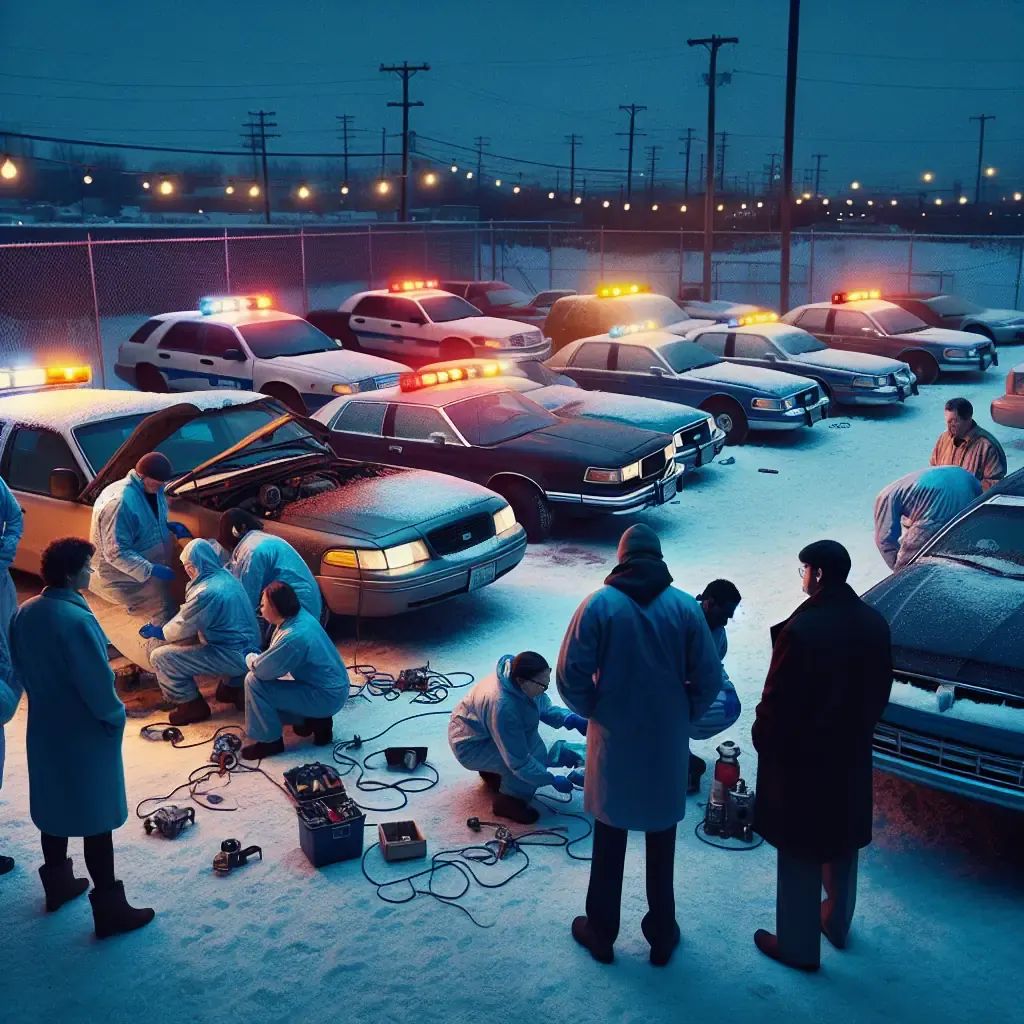
The contractual justification argues that these vehicles were deployed before receiving a permanent adaptation and therefore lacked the light and sound signals required for emergency operations. According to the text, the urgent nature of the mission carried out by the local office of National Security Investigations (HSI) in St. John's. Paul forced a quick solution that did not delay operational capacity: HSI performs operations in Minnesota and nearby states.
The matter is not only technical: there are internal and state rules governing when and how vehicles can be used in emergency driving. The most recent HSI public manual on driving in emergency situations, published by the agency itself in 2012 and accessible via FOIA, provides that vehicles with no lights and sirens should not be used for emergency driving except in very specific exceptions - for example, when monitoring or responding to an imminent danger - and that, in these circumstances, the agent must give control of the manoeuvre to another unit that is equipped if necessary: HSI manual (2012).
In addition to domestic policies, there are State requirements. Minnesota law requires emergency vehicles to issue an audible signal by siren and to have at least one red light at the front, among other technical conditions; these standards must be met during the interventions in which the emergency driving regime is activated: status of Minnesota.
In response to questions from the press, the Department of National Security responded by defending that vehicles comply with the relevant federal regulations and I provide security reasons not to disclose details about specific equipment: according to spokesman Tricia McLaughlin, public confirmation of vehicle configuration could increase the risk to deployed agents. The statement also mentioned that officers identify themselves as law enforcement and that they sometimes take additional measures - such as covering their faces - to protect themselves from reprisals.
The context in which this temporary purchase of equipment arises is particularly tense. The arrival of federal reinforcements to Minneapolis, following a shooting in which an ICE agent was related to the death of a person, provoked massive protests and led state and municipal authorities to sue the Department of National Security to stop federal operations in the area. The expansion of deployment and the controversy over the agency's tactics have put under scrutiny both the use of unlabelled vehicles and the speed with which additional units are being integrated into the city; means and Reuters have followed the events and the legal dispute.
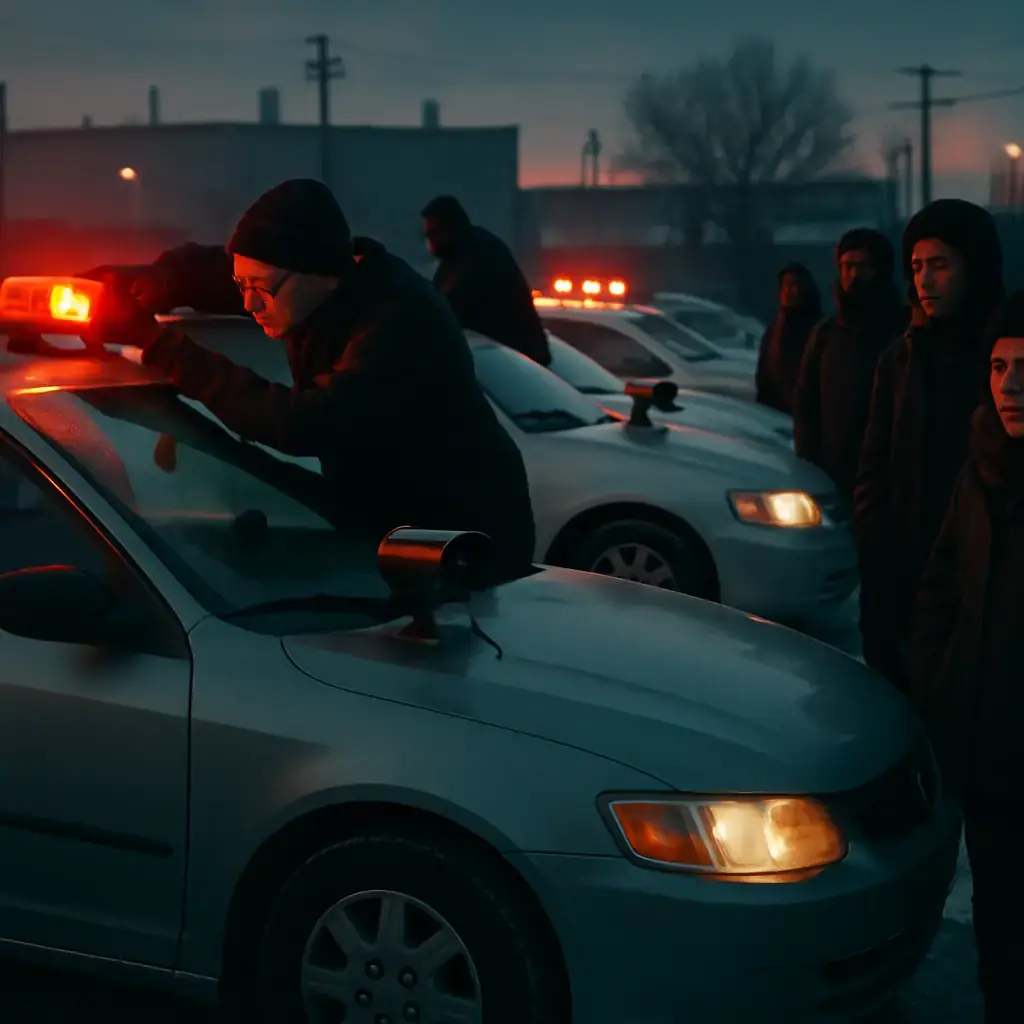
In recent court hearings related to previous incidents, testimony from agents described "unmarked" vehicles with lights on grills, visors and later windows, which shows that the border between clearly identifiable vehicles and cars that maintain a civilian appearance but with intervention capacity is not always clear in operational practice.
The use of portable kits such as ATLAS poses an obvious tension between two priorities: on the one hand, the need for agents to have equipment to enable them to act quickly and safely; and on the other, the need for transparency and regulatory compliance to protect rights, public security and public confidence. The announced temporary solution - turning vehicles into "operational" by portable equipment - can reduce waiting times against permanent adaptation, but also raises questions about monitoring, traceability of units and compliance with state and federal rules in different operational scenarios.
In the end, the case stresses that the technology for public safety is not neutral: its deployment, the way it adapts to existing fleets and the transparency around those decisions matter as much as the hardware itself. As HSI advances with installation and eventual permanent retrofitting, public discussion on how to balance operational effectiveness, accountability and protection of civilians and agents will remain essential.

GhostAction Expands Attack: phishing to steal credentials and persistence in VS Code
A group behind the GhostAction campaign - already known for infiltrating GitHub Actions workflows into open source projects - has expanded its arsenal: in addition to installing...

ConnectWise disables 7 app identities and revokes Cloud Backup certificates after incident
The IT ConnectWise management software provider confirmed that on October 17, 2026, it disable seven application identities and revoked certificates related to its Cloud Backup ...

Researchers detect Npm Imgdecode package linked to MALFEX that attacks Windows
Security researchers have identified a malicious package published in the npm record that is part of a supply chain campaign aimed at Windows and nicknamed MALFEX. The package, ...

OpenBSD 7.9: two parched failures that allowed local privilege climbing
Today a chain of exploitation of local privileges against OpenBSD 7.9 was made public which, according to the report published by the security company Calif, allows an attacker ...

OpenAI reveals unaligned IA incidents; a GPT-5.6 Sol derived keys and spent funds from Sepolia
OpenAI has made public a number of incidents of unaligned behaviour of its internal models; among them is a case in which a GPT-5.6 family research model Sol derived private key...

Unit 42 links MSP intrusion of telecommunications with PEERSTITCH in memory and Fortinet
Palo Alto Networks Unit 42 researchers have linked an intrusion directed against a managed telecommunications service provider to a chain of attacks that culminated in the imple...