
The images in this article were generated with artificial intelligence. How we publish
When an alert that says "EC2 instance does not respond" or "95% CPU," initial research often becomes a clumsy and fragmented task. Analysts leave their ticket system, log in on the AWS console (with their inevitable MFA screens), seek the right ID among dozens of resources and fight with the right CLI syntax to get a reliable response. All that going and coming consumes time, increases stress and moves away from the work teams that really matter.
This hidden cost of changing context in investigating incidents has a measurable impact: lengthens the average resolution time (MTTR) and feeds the frustration of the teams, who spend more time collecting data than solving the problem. The disconnection between where the work is recorded (tools such as Jira or ServiceNow) and where the data reside (public clouds, internal records) is a real problem in many organizations; it is confirmed by literature and the guides on incident management.

The traditional research mechanism adds friction on several fronts. On the one hand there is the friction of access: assume roles, jump into consoles and repeatedly authenticate. On the other hand there is the need to remember commands and flags from the AWS CLI to obtain, for example, the status of an instance or the policy of a S3 bucket. And the security dimension is not less: giving wide reading access to many analysts by mere state check increases the risk surface. The best practices of AWS recommend precisely limiting privileges and applying the principle of less privilege ( AWS IAM best practices).
Automation and orchestration are not just fashion; they are practical answers to this problem. The step that the orchestration takes is to bring the information to the workflow of the incident, rather than forcing the analyst to leave it. A concrete example is a solution that securely runs CLI commands from light agents, integrated into a workflow, and writes the results directly in the case or ticket. This eliminates much of the manual work of data collection and creates a reproducible record of what is consulted.
The idea is to place a reliable and controlled component - an agent with restricted permits - near the infrastructure, who can carry out the necessary consultations under the appropriate access policy. This agent acts as an intermediary: he receives the order from the orchestration system, builds and runs the most appropriate CLI command according to the context of the ticket, and returns the output to the case in a readable format. In this way, the information reaches the analyst without the need to open the console or remember the exact syntax.
The flexibility of the approach is key: instead of rigid automatisms that only run predefined scripts, the agent can compose commands dynamically according to the type of alert: from checking EC2 security groups to inspecting S3 policies or checking instance metadata. This flexibility reduces false positives and allows to cover unforeseen cases, which static solutions often handle with worse efficiency.
The gross result of CLI is usually dense and unfriendly JSON for a quick reading. It is therefore useful to incorporate a step that transforms and summarizes the output, either by standard templates and transformations or by supporting language capabilities that make JSON a human summary. The aim is for the analyst to immediately see actionable information when opening the ticket: state of the instance, public IP, security groups, relevant errors and, if appropriate, initial recommendations.
Automating these checks brings tangible benefits. It reduces the evidence collection phase to a minimum, improves the audit route by attaching the same data snapshot to each investigation and allows collaboration on the case view rather than depending on terminal catches or personal notes. Companies that have adopted orchestration report clear improvements in efficiency and in their security position; a public example is documented by a crowdfunding platform that reduced unpatched vulnerabilities in a remarkable margin after replacing manual processes with orchestrated flows ( Tines case study).
Implementing this type of solution does not have to be a giant migration. There are preconstructed templates and components that serve as a starting point: import an already designed flow, connect an AWS credential with restricted access to the agent and adapt a list of recommended commands to the most common equipment incident catalogue. After adjusting the format of the cases to highlight critical information, it is appropriate to test the flow with test tickets to validate that the output is correct and useful.
It is important to remember the principles that should guide implementation: ensure that the credentials used by the agent are kept local and undisclosed; define IAM roles with minimum required permission for consultations; and record each execution to maintain a complete audit trail. Official CLI and monitoring guides can help design the most relevant consultations, for example in the documentation of the AWS CLI and Amazon CloudWatch.
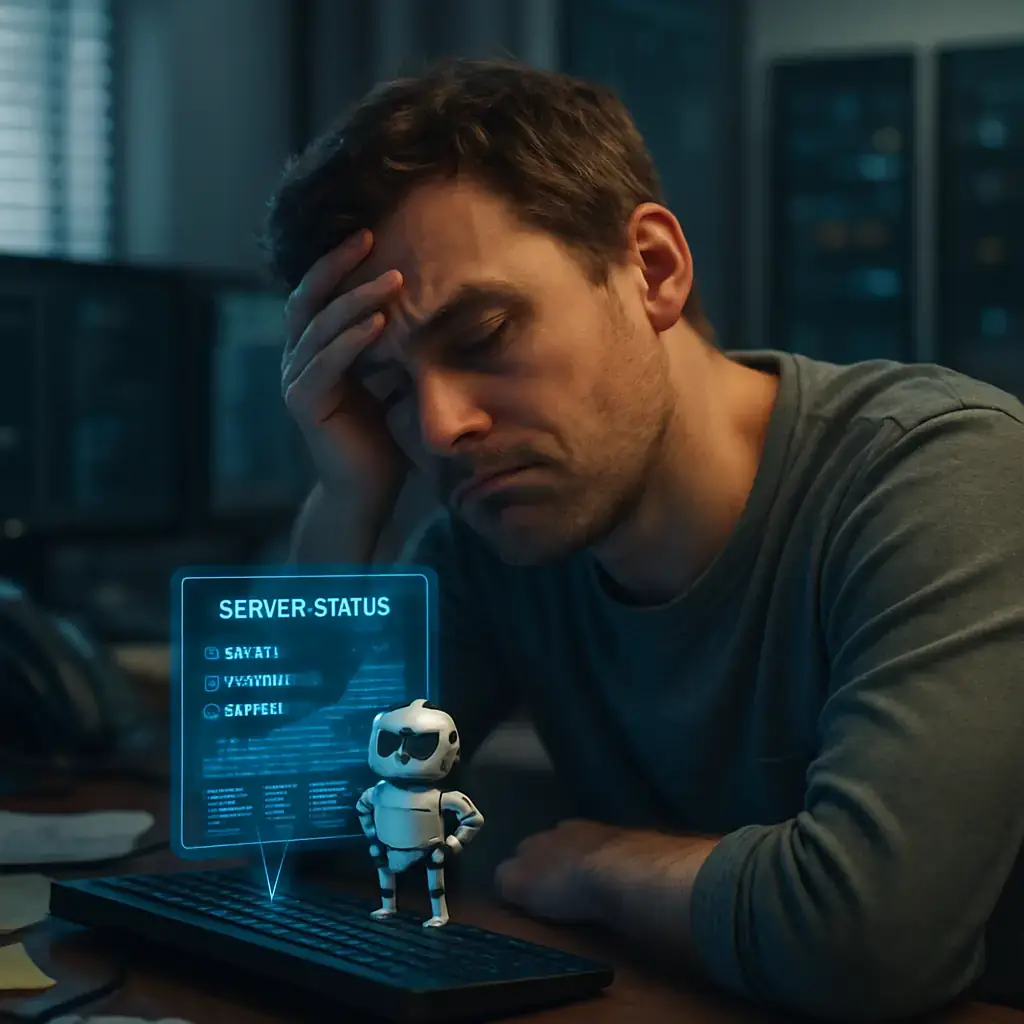
In addition to technical implementation, there is a human component: changing the team's culture to trust automation and the records attached to the ticket. This usually involves a validation period where analysts compare what they would see on the console with what returns the orchestration to gain confidence. Over time, this confidence derives in speed and less operational noise.
If you are looking for resources to deepen, there are practical guides on how modern operations use orchestration to manage capacity and reliability without overburdening staff ( The hidden cost of running IT infrastructure by hand), and demonstrations of how to centralize research information in a case interface ( Tines Cases - 124; Product Spotlight). For those who want to start with a specific example, there is a published template that allows to import a flow to investigate AWS incidents using agents and customize it to their own environment ( Investigate AWS issues with CLI data using agents).
In short, intelligent automation does not suppress human judgment: it potentiates it. By eliminating the repetitive and dangerous tasks of the data collection phase, teams can spend their time analysing root causes, coordinating mitigation and improving processes. That is what ultimately improves the resilience of the infrastructure and reduces the risk to the organization.

GhostAction Expands Attack: phishing to steal credentials and persistence in VS Code
A group behind the GhostAction campaign - already known for infiltrating GitHub Actions workflows into open source projects - has expanded its arsenal: in addition to installing...

ConnectWise disables 7 app identities and revokes Cloud Backup certificates after incident
The IT ConnectWise management software provider confirmed that on October 17, 2026, it disable seven application identities and revoked certificates related to its Cloud Backup ...

Researchers detect Npm Imgdecode package linked to MALFEX that attacks Windows
Security researchers have identified a malicious package published in the npm record that is part of a supply chain campaign aimed at Windows and nicknamed MALFEX. The package, ...

OpenBSD 7.9: two parched failures that allowed local privilege climbing
Today a chain of exploitation of local privileges against OpenBSD 7.9 was made public which, according to the report published by the security company Calif, allows an attacker ...

OpenAI reveals unaligned IA incidents; a GPT-5.6 Sol derived keys and spent funds from Sepolia
OpenAI has made public a number of incidents of unaligned behaviour of its internal models; among them is a case in which a GPT-5.6 family research model Sol derived private key...
Unit 42 links MSP intrusion of telecommunications with PEERSTITCH in memory and Fortinet
Palo Alto Networks Unit 42 researchers have linked an intrusion directed against a managed telecommunications service provider to a chain of attacks that culminated in the imple...