
The images in this article were generated with artificial intelligence. How we publish
An argument injection failure in Gogs- the Git self-hosted platform written on Go - allows remote execution of code (CERs) in Internet-accessible instances without an official patch available to date. Although technical exploitation requires the attacker to be a registered user, Gogs' default settings (open and limitless registration in the creation of repositories) make this defect a practical threat to any public body.
In technical terms, vulnerability takes advantage of the possibility of injecting parameters into calls to system tools (in this case, git) through user-controlled names - specifically, the name of a branch used in a pull request - to force git rebase to receive an --exec-type malicious flag. This allows you to run arbitrary commands with the same privileges as the Gogs process when a repository is fused with the "rebase before trading" option activated.
The operating chain is short and automated: an attacker creates an account (if the instance allows open registration), creates an own repository - automatically its own with the default configuration - activates the rebase option in the repo configuration and then sends a request pull with a branch whose name contains the payload. From there, the merger operation triggers the execution of the malicious command.
The potential impact is wide: from compromising the Gogs server and accessing all the hosted (including private) repositories, to dumping credentials, tokens and SSH keys, moving laterally within internal networks and altering the published source code. This reach makes any vulnerable instance a critical entry door for attackers seeking persistent access or malicious code distribution.
The number of instances exposed is significant: organizations monitoring the Internet find thousands of publicly accessible Gogs servers. Shadowserver records more than 2,400 instances on its public panel, with concentrations in Asia and Europe, and searches on print engines like Shodan also show more than a thousand PIs with Gogs' print. To consult these sources helps to assess the exposure risk of an organisation: Shadowserver - Gogs exposed and the analysis of the original research published by Rapid7 provides more technical details on the concept test and the attack chain: Rapid7 - Authenticated CERs via argument injection in Gogs.
Vulnerability was reported to Gogs' maintainers in March and, although recognized, there is no official correction yet for the affected route. Gogs has already suffered from past-exploited CERs vulnerabilities and there were patches for previous failures, which underlines the importance of immediate mitigation measures when the patch is not available.
Recommended immediate mitigation: disable the open register (put DISABLE _ REGISTRATION = true), set a limit on the creation of repositories (MAX _ CREATION _ LIMIT at a reasonable value or 0), disable the "rebase before trading" option in the global configuration or in critical repositories, and restrict administrative and merge access to trusted users. In addition, consider placing Gogs instances behind a VPN or bastion, limiting access by firewalls to known IP ranges and applying strong authentication and identity verification for new accounts.
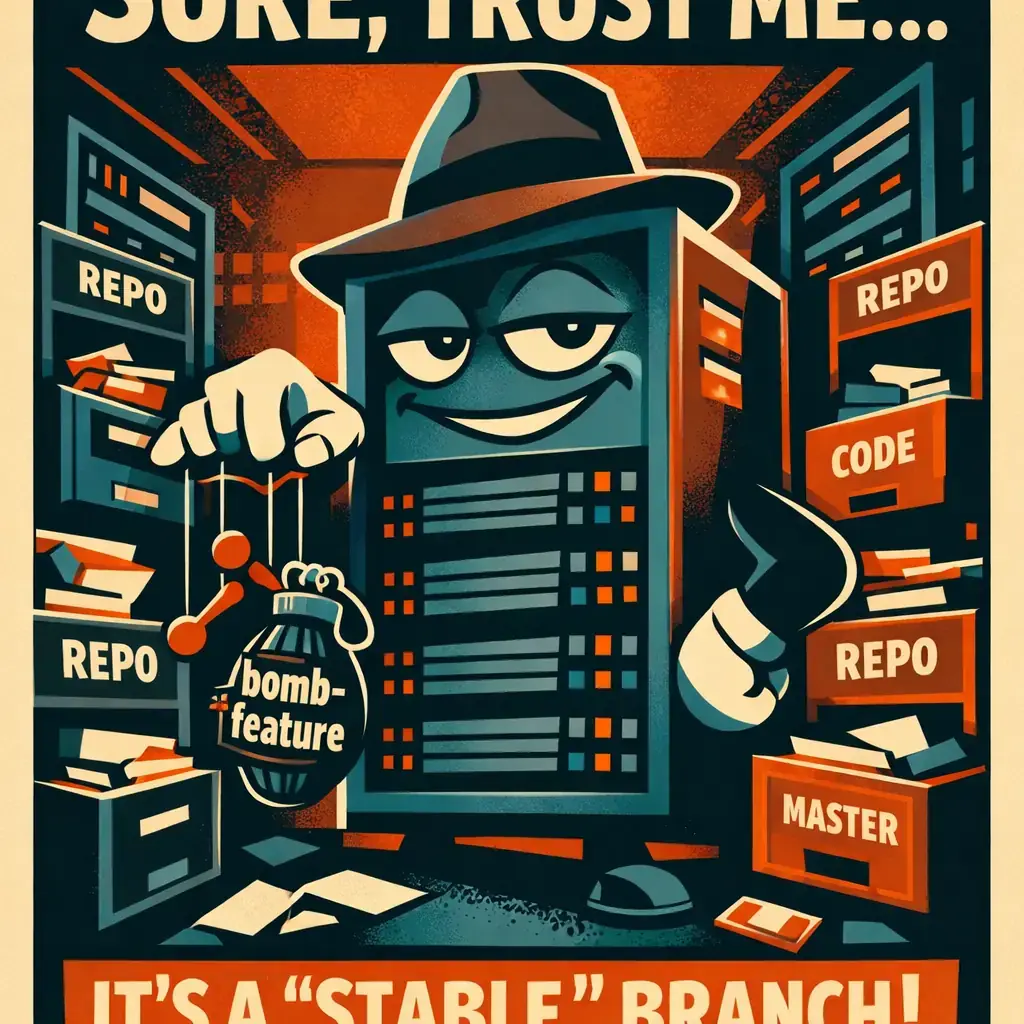
In parallel to the configuration measures, it is essential to strengthen containment and detection: to monitor git processes invoked by the web service, to audit logs in search of fungi that include unusual lags, to review the mass creation of recent repositories or accounts, to scan changes in repositories that do not match normal workflows and to detect unusual outgoing traffic from the server that could indicate exfiltration. If commitment is suspected, isolate the instance, collect devices for forensic analysis (logs, disk images, processes), immediately remove tokens and affected keys and reconstruct from clean copies if necessary.
Recommendations for medium-term strategy: maintain inventory of all Gogs in the organization (including those created by teams outside of IT), schedule regular public exposure scans, implement policies that prevent unsafe settings by default and value migration to active maintenance platforms or managed services if the grating and auditing capacity is not guaranteed internally. Consider also the isolation of code management services in containers or machines with minimum privileges to reduce blast radius in case of failure.
Finally, and although there is no patch for this specific route today, administrators should not wait: taking the above-mentioned configuration and control measures significantly reduces exposure and immediate risk. Keep an eye on official Gogs and security community channels to apply any security updates as soon as it is published and assess the impact of this vulnerability on your software supply chain.

Four Plex2Shell CVE allows remote execution and mining and proxy backdoor deployment
In recent days, an increase in attacks has been confirmed that take advantage of a chain of failures in Plex Media Server - nicknamed "Plex2Shell" by researchers - to run code r...

GhostAction Expands Attack: phishing to steal credentials and persistence in VS Code
A group behind the GhostAction campaign - already known for infiltrating GitHub Actions workflows into open source projects - has expanded its arsenal: in addition to installing...

ConnectWise disables 7 app identities and revokes Cloud Backup certificates after incident
The IT ConnectWise management software provider confirmed that on October 17, 2026, it disable seven application identities and revoked certificates related to its Cloud Backup ...

Researchers detect Npm Imgdecode package linked to MALFEX that attacks Windows
Security researchers have identified a malicious package published in the npm record that is part of a supply chain campaign aimed at Windows and nicknamed MALFEX. The package, ...

OpenBSD 7.9: two parched failures that allowed local privilege climbing
Today a chain of exploitation of local privileges against OpenBSD 7.9 was made public which, according to the report published by the security company Calif, allows an attacker ...

OpenAI reveals unaligned IA incidents; a GPT-5.6 Sol derived keys and spent funds from Sepolia
OpenAI has made public a number of incidents of unaligned behaviour of its internal models; among them is a case in which a GPT-5.6 family research model Sol derived private key...
Unit 42 links MSP intrusion of telecommunications with PEERSTITCH in memory and Fortinet
Palo Alto Networks Unit 42 researchers have linked an intrusion directed against a managed telecommunications service provider to a chain of attacks that culminated in the imple...