
The images in this article were generated with artificial intelligence. How we publish
The U.S. government order that forced Anthropic to immediately deactivate access to its most advanced models, Claude Fable 5 and Mythos 5, has opened a new phase of the debate on the regulation of artificial intelligence: it is no longer just about ethics or privacy, but export and national security controls applied to general purpose models with potential offensive capabilities.
The essence of the case is that the US authority requested the suspension of service for foreigners - both inside and outside the country - claiming security risks arising from a "bypass" method that would allow the exploitation of high-speed software vulnerabilities. Anthropic replied that the supposed technique is narrow and not universal, that similar vulnerabilities can be found with other public models, and that it works to restore access while exploring legal and technical ways to defend its position.
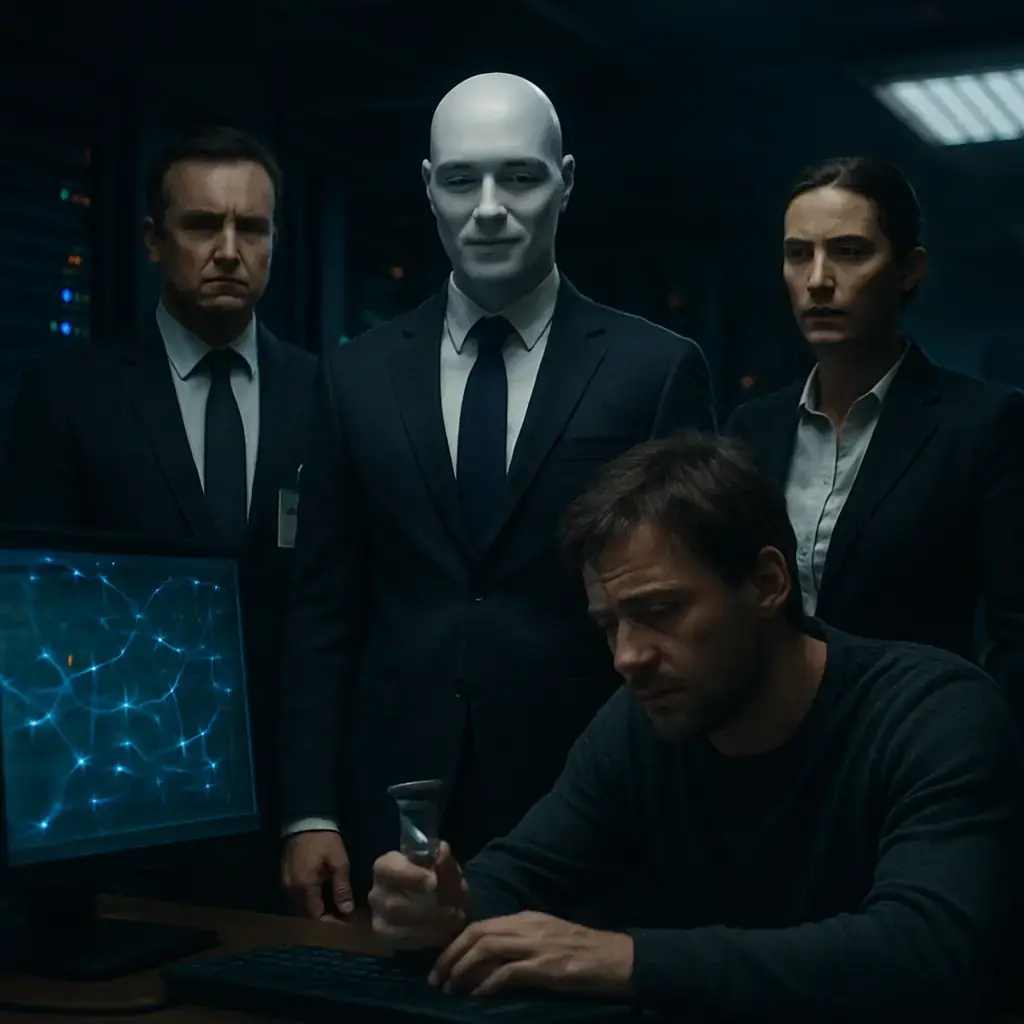
From a technical point of view, what concerns agencies is that very capable models can automate tasks that previously required weeks: translating failure divulges into operating code within hours or even minutes. This drastically reduces the response window of the organizations with direct implications for the continuous patches and deployments strategy that many companies have not yet adopted.
The episode reveals structural tensions: technology companies want to iterate and deploy powerful models; regulatory authorities seek to mitigate dual risks; and cyber security advocates need controlled access to these capabilities to protect critical infrastructure. Anthropic tries to reconcile this by offering Mythos- class to veiled groups of defenders, but government intervention stresses that voluntary solutions are not always enough.
Practical implications for organisations and security officials: operating automation requires the acceleration of parking processes, the reduction of deployment windows, and the strengthening of active detection. Network architectures must assume that the opponent can quickly have functional exploits, so segmentation, privilege control, and robust telemetry become more critical than ever.
For researchers and model providers, the lesson is double. First, there is no absolute immunity: any system of guards can be evaded in specific contexts. Secondly, technical transparency in risk assessments - with reproducible data and public or independent third-party network-teaching exercises - is key to making regulatory decisions proportionate and informed. In this sense, a public dialogue with technical documents and compartable tests rather than opaque orders is desirable.
Specific recommendations for different actors: regulators must develop clear processes, with written technical evidence and a response opportunity before imposing wide blocks; companies must implement layer access controls (just-in-time access, whitelisting, audit), strengthen automated pipelines and maintain secure channels for defenders and critical operators to access advanced tools under agreements and supervision; security teams must prioritize recovery tests and "tablet" exercises that consider the accelerated operation by IA.

At the international level, this episode anticipates increased pressure to classify certain models as export-controlled technologies. This can stop scientific collaboration and fragment the global ecosystem of IA without clear exceptions for defensive research and cooperation between defenders. It is therefore essential to design policies that balance risk mitigation and operational continuity of security equipment.
If you are looking for official documentation or more institutional context, see Anthropic's page for your communications and technical resources at https: / / www.anthropic.com and the general guidelines on security and coordination of the https: / / www.cisa.gov. It is also recommended to follow the Bureau of Industry and Security's communications to understand how export rules evolve: https: / / www.bis.doc.gov.
In short, the temporary block of access to Fable 5 and Mythos 5 is a symptom of a major disruption: border models are changing the economy of the explosion and force the rethinking of technical, legal and governance processes. The appropriate response will require coordination between companies, technical and regulatory communities, transparency of evidence and operational measures that prioritize both responsible innovation and the security of critical infrastructure.

Four Plex2Shell CVE allows remote execution and mining and proxy backdoor deployment
In recent days, an increase in attacks has been confirmed that take advantage of a chain of failures in Plex Media Server - nicknamed "Plex2Shell" by researchers - to run code r...

GhostAction Expands Attack: phishing to steal credentials and persistence in VS Code
A group behind the GhostAction campaign - already known for infiltrating GitHub Actions workflows into open source projects - has expanded its arsenal: in addition to installing...

ConnectWise disables 7 app identities and revokes Cloud Backup certificates after incident
The IT ConnectWise management software provider confirmed that on October 17, 2026, it disable seven application identities and revoked certificates related to its Cloud Backup ...

Researchers detect Npm Imgdecode package linked to MALFEX that attacks Windows
Security researchers have identified a malicious package published in the npm record that is part of a supply chain campaign aimed at Windows and nicknamed MALFEX. The package, ...

OpenBSD 7.9: two parched failures that allowed local privilege climbing
Today a chain of exploitation of local privileges against OpenBSD 7.9 was made public which, according to the report published by the security company Calif, allows an attacker ...

OpenAI reveals unaligned IA incidents; a GPT-5.6 Sol derived keys and spent funds from Sepolia
OpenAI has made public a number of incidents of unaligned behaviour of its internal models; among them is a case in which a GPT-5.6 family research model Sol derived private key...
Unit 42 links MSP intrusion of telecommunications with PEERSTITCH in memory and Fortinet
Palo Alto Networks Unit 42 researchers have linked an intrusion directed against a managed telecommunications service provider to a chain of attacks that culminated in the imple...