
The images in this article were generated with artificial intelligence. How we publish
If you have opened an app of photos that label faces, talked to a virtual assistant or seen a product recommendation in an online store, you already live with artificial intelligence. It is not a remote concept reserved for laboratories, but a technological layer that is permeating services we use daily. Instead of talking only about complex algorithms, it is appropriate to look at how this technology reconfigures habits, markets and social expectations.
The IA is no longer a technical matter to become a public issue, because it affects from privacy to employment and trust in institutions. The progress has been so fast that regulators and citizens come after technology, trying to catch up with ethical and legal questions. In Europe, for example, the European Commission is working on a policy approach that seeks to classify risks and establish obligations for IA systems, an effort that you can consult on its road map on the European digital strategy ( European approach to AI).
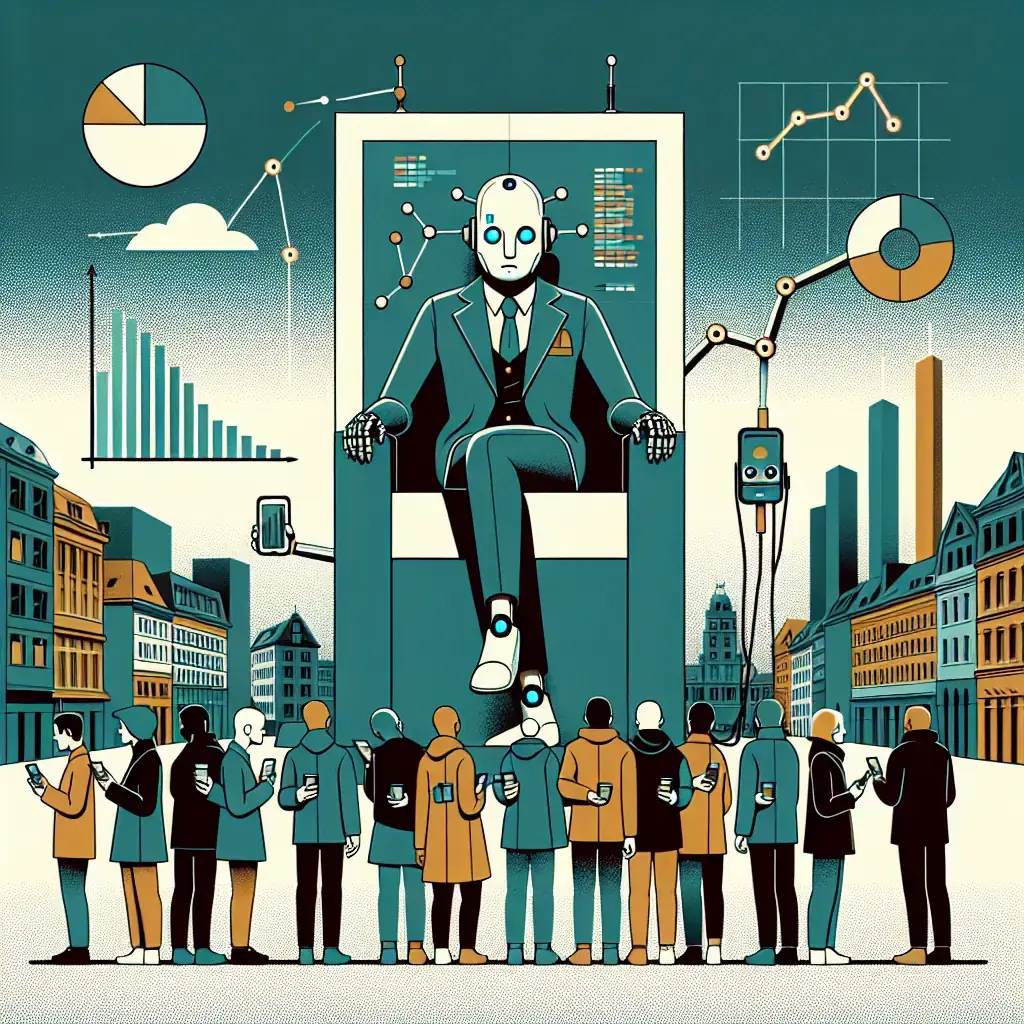
To understand the daily impact, it is enough to focus on three specific changes: how we consume information, how work tasks are automated and how companies use our data to make decisions. Recommendation systems shape what we see in networks and platforms, with implications for the formation of public opinion and the care economy. In the professional field, tools that automate administrative processes or generate content are redefining roles and skills. And the massive use of personal data introduces dilemmas on consent, transparency and equity.
The problem of transparency is one of the most complex. Many models are opaque by design or for commercial reasons, and explain why an IA makes a decision is not always trivial. This creates distrust when the results directly affect people: credit rejections, selection of candidates or medical diagnoses assisted by IA require clear accountability mechanisms. Researchers and digital rights organisations such as the Electronic Frontier Foundation analyse these tensions between innovation and rights protection ( EFF).
Not all are risks: the IA also enables significant progress. In health, for example, automatic learning models help identify patterns in medical images that sometimes escape the human eye, accelerating diagnostics and opening up more personalized medical possibilities. In transport, route optimization and demand prediction can reduce emissions and congestion. However, these benefits are often accompanied by conditions: data quality and diversity, human monitoring and rigorous assessments before large-scale solutions are deployed.
Data quality It is a key point that is often overlooked in the public debate. A powerful model trained with biased data will play these biases on a large scale. For this reason, organizations that develop and deploy IA need not only more representative datasets, but also independent audits to verify the system's performance in real scenarios. Scientific publications and specialized media such as Nature and MIT Technology Review have documented cases where the lack of this scrutiny has led to errors with social impact.
In regulatory matters, the EU proposal aims to introduce risk-proportional obligations: from transparency in high-impact systems to prohibitions on uses considered unacceptable. No one has said that regular is simple: there are tensions between protecting people and not stopping innovation. In addition, the global nature of technology requires international cooperation to avoid legal gaps that allow harmful practices in less stringent jurisdictions.
As citizens, there are practical things we can do to adapt and protect ourselves. Demand transparency on the systems that affect us, inform us about how our platforms use the data and search for tools that allow for greater control over privacy are useful steps. In Spain, the Spanish Data Protection Agency publishes guides and resources on digital rights and personal data processing ( AEPD), a source of consultation recommended for those who want to deepen.

At the business level, the responsible adoption of IA goes through internal governance policies, continuing staff training and mechanisms to detect and correct unwanted effects. It is not enough to deploy models: you have to measure their impact, keep records and be prepared to intervene when the system makes mistakes. This requires an organizational culture that values caution without giving up experimentation.
Looking forward, the conversation about IA will not only be technical, but deeply political and cultural. Decide which values we want to codify in systems, how we distribute benefits and how we protect the most vulnerable are debates that require citizen participation and transparency on the part of companies. International organizations have begun to draft ethical frameworks and recommendations, and it is important that these proposals be accessible and subject to public scrutiny ( UNESCO - Recommendation on the ethics of the IA).
In short, the IA transforms the present and raises collective decisions about the future. What comes will depend on both the technology and the rules, institutions and social practices we build around it. Being informed of this conversation - not just passive consumers - is now a form of digital citizenship.

Four Plex2Shell CVE allows remote execution and mining and proxy backdoor deployment
In recent days, an increase in attacks has been confirmed that take advantage of a chain of failures in Plex Media Server - nicknamed "Plex2Shell" by researchers - to run code r...

Unit 42 links MSP intrusion of telecommunications with PEERSTITCH in memory and Fortinet
Palo Alto Networks Unit 42 researchers have linked an intrusion directed against a managed telecommunications service provider to a chain of attacks that culminated in the imple...

Linux Kernel allows host memory reading from a VM; CVE-2026-99999 patch.
The security community has confirmed a critical vulnerability in the Linux kernel network code that allows code that is already running within a virtual machine (VM) to read mem...

Laboratory shows code execution in Windows SFAPE enclave (CVE-2026-83498) and patch
Researchers at the Doyensec firm have shown in laboratory that it is possible to run code chosen by an attacker within a portion of Windows memory that should remain sealed even...

Safety report of agents IA: 1,280 products, 282 with SSO; majority without identity control
A new report on the safety of IA agents presents a worrying but concrete picture: in the environments examined for the 2026 State of Agent Security Report There are about 1,280 ...

Campaign with LLM and ARTEX attacks South Korean financial institutions and exfilters data
Security researchers have documented a campaign directed against South Korean financial institutions using language-driven attack tools to automate intrusions and data extractio...

Cybersecurity report: defense is no longer a point, it is continuous visibility and scalable response
A new public report on cybersecurity describes how cloud expansion, artificial intelligence and distributed systems are changing the goal and protection priorities: it is no lon...