
The images in this article were generated with artificial intelligence. How we publish
The recent adaptation of Kazuar by the Russian group Turla shows a deliberate evolution towards a model of modular and peer-to-peer botnet designed for resilience and stealth with clear security implications for government, diplomatic and defence organizations in Europe and Central Asia. Far from being a simple monolithic backdoor, Kazuar now operates as an ecosystem with differentiated roles - a Kernel that coordinates, Bridges that act as proxies and Workers that perform active espionage - and internal communication mechanisms that reduce visibility to external infrastructure.
From a technical point of view, this architecture introduces several improvements that complicate detection: dynamic choice of a leader Kernel centralizing external communication minimizes telemetry noise; the use of internal channels such as Mailslot, named pipes and Windows messages reduces the number of observable outgoing connections; and the ability to talk to the outside through Exchange Web Services, HTTP and WebSockets allows to camouflage malicious traffic in legitimate protocols. In addition, the use of a work directory in disk as central staging makes it easier to maintain state between reinitiations and unbundle the direct execution of the exfiltration, complicating lists of IOC based only on network connections.

In terms of strategic intelligence, these changes fit traditional objectives attributed to Turla and FSB units: prolonged access to intelligence collection on objectives of geopolitical interest. Modularity increases the operational flexibility of the actor: they can deploy specific capabilities (keylogging, MAPI collection, file inventory) without reinstalling the entire frame, and they can update components separately to evade static signatures.
For security teams and decision makers, the immediate conclusion is that defending itself requires combining detections in host, network and operational processes. It is important to pay attention to unconventional signals such as unusual activity in mail services (EWS / MAPI), outgoing WebSocket traffic from .NET process stations, the creation of directories with recurrent staging structure and interprocess communications by named pipes or mailslots. Controls such as EDR with memory inspection capacity, Exchange records and terminal log correlation are essential for detecting the complete chain from the dropper (e.g. known loaders) to exfiltration.
The recommended tactical measures include strengthening the service control of exposed mail and APIs (blocking or inspecting EWS if not strictly necessary), applying minimum privilege principles in access to mailboxes and MAPI, and activating unsigned .NET application control and load blocking policies in sensitive environments. Network segmentation and HTTPS / WS inspection with corporate proxy reduce the communication surface to C2 that this type of backdoors exploit to camouflage.
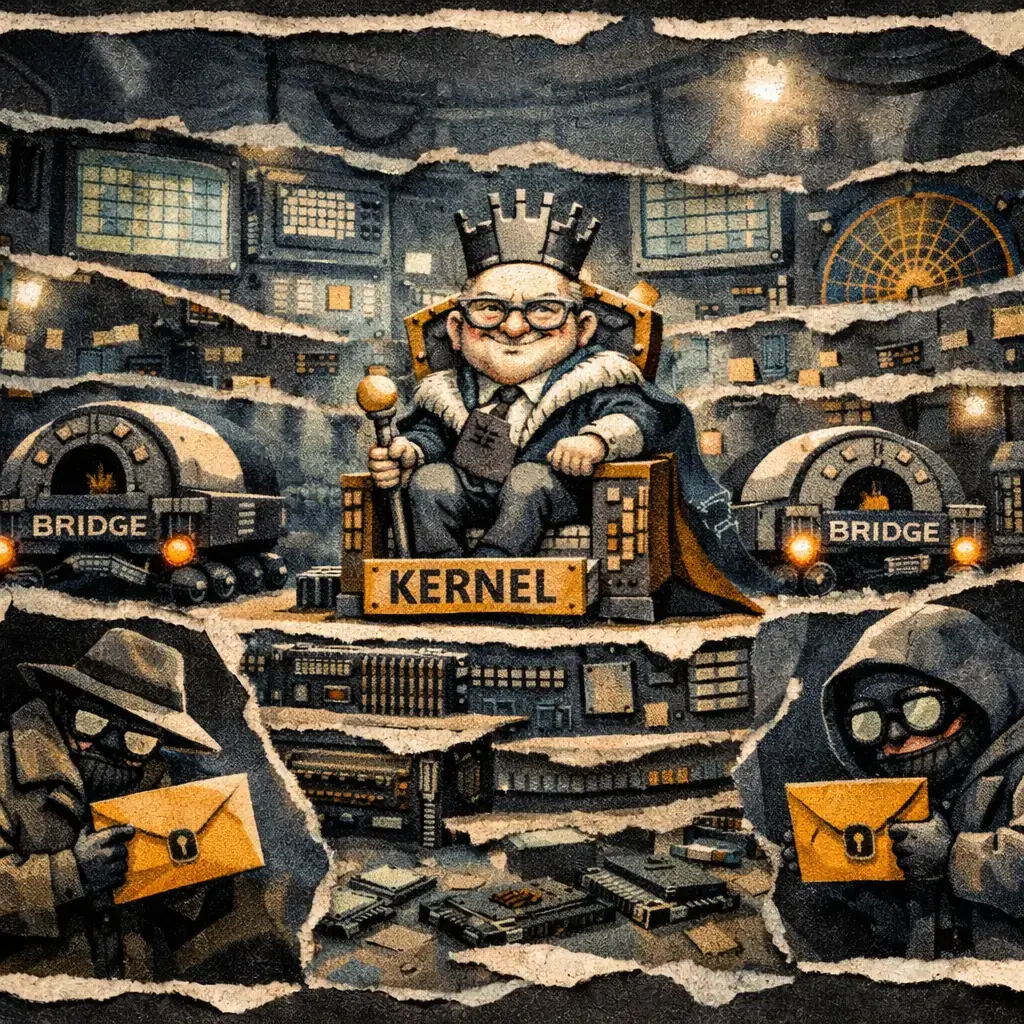
If an intrusion is suspected, the response should prioritize containment and forensic collection: isolate committed hosts, capture memory and process overflow to identify Kernel / Bridge / Worker modules, keep the work directory for analysis and records, and review Exchange and Proxys logs to track possible C2 via EWS or WebSockets. Given the persistence sought by these actors, in many cases the complete reconstruction of the system concerned and the rotation of credentials with a thorough review of privileged accounts will be necessary.
In addition to the technical response, organizations must integrate this threat into their risk intelligence: prioritize the protection and monitoring of assets associated with foreign policy, defence and diplomacy, and share findings with communities of response and competent authorities. Public reference sources and mitigation guides for agencies such as Microsoft and the US Infrastructure and Cybersecurity Agency. UU can support to update operational detections and playbooks ( Microsoft Security Blog, CISA). It is also recommended to map techniques observed against frames such as MITRE ATT & CK to prioritize detection coverage and correlations ( MITRE ATT & CK).
In short, the modernization of Kazuar reflects a broader trend: the actors with state espionage objectives invest in tools that incorporate operational resilience and footprint reduction from the design. Defend requires moving from static indicators to strategies that combine good registration, behavior-based detection, critical APIs control and a rapid and coordinated forensic and credentials response.

Four Plex2Shell CVE allows remote execution and mining and proxy backdoor deployment
In recent days, an increase in attacks has been confirmed that take advantage of a chain of failures in Plex Media Server - nicknamed "Plex2Shell" by researchers - to run code r...

GhostAction Expands Attack: phishing to steal credentials and persistence in VS Code
A group behind the GhostAction campaign - already known for infiltrating GitHub Actions workflows into open source projects - has expanded its arsenal: in addition to installing...

OpenCode: possible exposure of AI suppliers in Console affects 1.4% of users
On the night of October 16 there was an unauthorized access to a system inherited from OpenCode which, according to the company, could have exposed keys from IA suppliers that u...

ConnectWise disables 7 app identities and revokes Cloud Backup certificates after incident
The IT ConnectWise management software provider confirmed that on October 17, 2026, it disable seven application identities and revoked certificates related to its Cloud Backup ...

Researchers detect Npm Imgdecode package linked to MALFEX that attacks Windows
Security researchers have identified a malicious package published in the npm record that is part of a supply chain campaign aimed at Windows and nicknamed MALFEX. The package, ...

OpenBSD 7.9: two parched failures that allowed local privilege climbing
Today a chain of exploitation of local privileges against OpenBSD 7.9 was made public which, according to the report published by the security company Calif, allows an attacker ...