
The images in this article were generated with artificial intelligence. How we publish
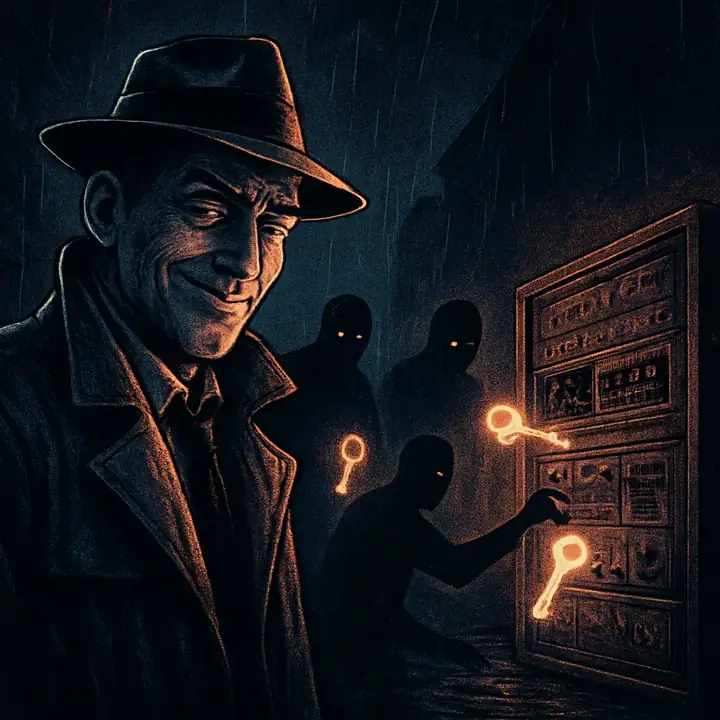
The Foreign Assets Control Office of the United States Treasury Department (OFAC) has taken a hit that combines economic espionage, cybercrime and internal risks: it sanctioned a Russian company known as Matrix LLC - which operates under the commercial name Operation Zero - along with its owner and several associates for buying and reselling stolen hacking tools that had originally been developed for exclusive use by allied government agencies. These measures are based on a law designed to pursue the theft of intellectual property by foreign actors, which marks a precedent in how Washington intends to stop the trafficking of commercial and military exploits.
According to the official statement of the Treasury Department, Operation Zero rewarded anyone who provided code capable of taking advantage of vulnerabilities in mass-use software, even paying for proprietary tools that should not have left an American contractor. The State Department itself published information related to the designation and coordinated action, highlighting the diplomatic and security dimension behind the sanction. For more details, see the Treasury statement Here. and in the note by the State Department Here..

The operation was not simply an anonymous exchange on the deep web: behind it was the intervention of a former employee with privileged access to secret programs. A former manager of a cybersecurity unit belonging to a large U.S. defense contractor accepted and sold several "zero-day" vulnerabilities and operating tools for payments in cryptomonedas. This individual was prosecuted and convicted, a fact that, according to the authorities, confirms the route through which these technical capabilities passed from the protected environment of a military supplier to the hands of a broker that commercializes them.
Why does this matter? A "zero-day" is a vulnerability that has not been disclosed or patched; its possession means the ability to compromise systems without the owner knowing how to defend himself. Companies and agencies are confident that those who develop these capacities within government programmes will keep them safe and not market them in the clandestine market. When these tools are leaked, the possibilities of abuse are increased: from spying on sensitive targets to attacks that can affect critical infrastructure.
Operation Zero has publicly published economic offers for those who get exploits that affect popular software, including operating systems and encrypted messaging applications. On his own pages he shows an offer for "rewards" and claims that he works with Russian clients, both private and official; however, the sanctions and investigations point to the fact that part of that market has included stolen material from an American contractor. You can see the reward offer on the company site Here. and your client list Here..
The Treasury's action was based on the newly created legal tool aimed at protecting American intellectual property against foreign actors. This is the first time this specific legislation has been used, which suggests that US regulators are willing to use regulatory and financial resources to punish opaque commercial chains of cyberexploits. The sanctions involve the freezing of any assets under U.S. jurisdiction and the exposure of third parties to secondary sanctions if they have commercial relations with the designated persons.
In addition to Operation Zero, the ads point to screen companies and other entities operating as intermediaries in the United Arab Emirates and Central Asia, as well as individuals with prior connections to known cybercrime groups. In the field of malware and criminal gangs, there is a history of actors such as Trickbot who have been documented by researchers and large technology companies; Microsoft, for example, has reported efforts to interrupt these networks in public mitigation campaigns. To deepen how these networks and actions against them operate, it is useful to review previous analyses of actors such as Trickbot published by security and technological companies, such as Microsoft's report on interruptions to these networks Here..
This case combines several risk vectors that must concern security officials: the internal threat, the black market of vulnerabilities and the cryptomoneda economy as a means of payment. One of the major challenges for modern cybersecurity is that economic incentives can lead professionals with privileged access to sell sensitive information. Therefore, access control standards, privileged activity monitoring and continuous audits are as relevant as the technical protection of systems.
The penalty is not only a symbolic punishment; it is intended to increase the cost for those involved in this business and to deter intermediaries and buyers from becoming secondary channels. However, effectiveness will depend on international coordination: frozen assets and financial barriers are a part, but cutting demand requires collaboration between governments, technology companies and security providers to reduce opaque markets and improve the traceability of cryptomoneda procurement.

For defence companies and contractors, the lesson is clear: in addition to protecting the code and tools, internal policies, the rotation of credentials, the segmentation of access to sensitive projects and education on ethical and legal risks for staff must be strengthened. For the rest of the technology sector, it should be understood that when a vulnerability is placed on the market outside responsible outreach channels, the risk extends to all users of the software concerned.
That a public policy - in this case the law used by OFAC - is first activated against an exploits broker reflects a change: governments begin to treat the sale and transfer of cyber capabilities as a matter of national security and intellectual property, not only as a technical problem. It remains to be seen whether this will force buyers to move further outside or whether it will reduce the legitimate supply of explosives in clandestine markets.
In any case, the episode serves as a reminder that cybersecurity is a mix of technology, people and laws. Protecting critical assets requires measures on the three fronts: technical controls, organizational culture that prevents internal abuse and legal and diplomatic frameworks that penalize those who profit from the skills designed to protect, not to harm. The official link is available to read the State Department's statement on the designation. Here., and the detail of the Treasury's action is available Here.. For context on the contractor involved, the corporate page of L3Harris can be visited at your official site.

Four Plex2Shell CVE allows remote execution and mining and proxy backdoor deployment
In recent days, an increase in attacks has been confirmed that take advantage of a chain of failures in Plex Media Server - nicknamed "Plex2Shell" by researchers - to run code r...

GhostAction Expands Attack: phishing to steal credentials and persistence in VS Code
A group behind the GhostAction campaign - already known for infiltrating GitHub Actions workflows into open source projects - has expanded its arsenal: in addition to installing...
OpenCode: possible exposure of AI suppliers in Console affects 1.4% of users
On the night of October 16 there was an unauthorized access to a system inherited from OpenCode which, according to the company, could have exposed keys from IA suppliers that u...

ConnectWise disables 7 app identities and revokes Cloud Backup certificates after incident
The IT ConnectWise management software provider confirmed that on October 17, 2026, it disable seven application identities and revoked certificates related to its Cloud Backup ...

Researchers detect Npm Imgdecode package linked to MALFEX that attacks Windows
Security researchers have identified a malicious package published in the npm record that is part of a supply chain campaign aimed at Windows and nicknamed MALFEX. The package, ...

OpenBSD 7.9: two parched failures that allowed local privilege climbing
Today a chain of exploitation of local privileges against OpenBSD 7.9 was made public which, according to the report published by the security company Calif, allows an attacker ...

OpenAI reveals unaligned IA incidents; a GPT-5.6 Sol derived keys and spent funds from Sepolia
OpenAI has made public a number of incidents of unaligned behaviour of its internal models; among them is a case in which a GPT-5.6 family research model Sol derived private key...