
The images in this article were generated with artificial intelligence. How we publish
Security researchers have identified a clean and effective tactic for phishing campaigns to go unnoticed: to take advantage of code-free application creation platforms, such as Bubble, to build and host malicious pages that simulate Microsoft login portals. The report of the Kaspersky disimplies how this method exploits the trust that generates legitimate domains and the complexity of the code generated automatically.
Bubble is a platform that allows you to create non-code applications, relying on artificial intelligence to generate the interface and logic. The resulting applications are usually housed under the * .bubble.io domain, a space considered legitimate by many perimeter security solutions. This apparent legitimacy makes links included in malicious emails not automatically marked as dangerous, and so the user reaches a page that apparently does not raise suspicion.
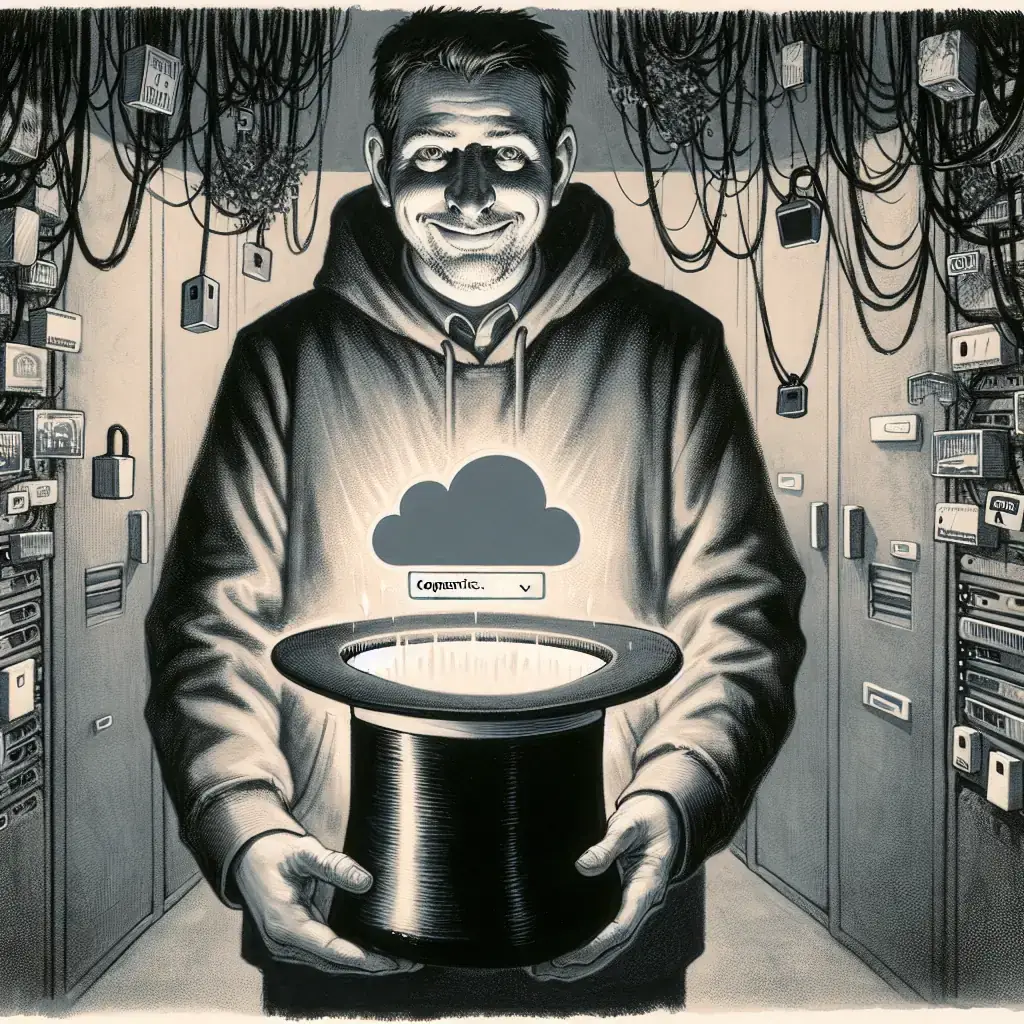
The technique is not based solely on the use of a reliable domain. The attackers create applications with large JavaScript packages and Shadow DOM-based structures that, because of their complexity and isolation, are difficult to analyze both manually and automatically. This code scrawl can hide redirections and false forms intended to capture credentials, and in some cases the true supplanting page is presented after checks such as those made by Cloudflare, adding an additional layer of apparent legitimacy.
The real danger is that any data entered on those pages - user and password, and in some cases secondary codes or confirmations - ends up in the hands of criminals. With Microsoft 365 credentials, an attacker can access the mail, calendar and other corporate services, opening the door to financial fraud, filtration of sensitive information and side movements within an organization's network.
In addition, researchers warn that this form of evasion has all the cards to become a standard piece within phishing kits and physical-as- a- service platforms (PhaaS). These services already integrate techniques such as session cookies theft, "adversary-in-the-middle" layers that attempt to circumvent the authentication of two factors, geo-restrictions to select victims and anti-analysis tricks. By adding the ability to hide malicious pages in legitimate infrastructure, the effectiveness and scope of campaigns increase.
In this context, not everything is lost: prevention and awareness remain powerful tools. Confirm the actual URL before entering credentials, distrust links that arrive by mail even if they point to known domains, and use more robust authentication methods as security keys or Passkeys reduce the impact of this type of fraud. For organizations, activating and tuning protection mechanisms on platforms such as Microsoft 365 - including anti-phishing solutions and conditional access controls - is an additional barrier recommended by manufacturers.

If you want to deepen how these campaigns work and what measures the security agencies recommend, Kaspersky's reports and guides are a good starting point ( see analysis) and authorities such as the CISA or United Kingdom NCSC maintain practical recommendations for detecting and reporting phishing. Microsoft also publishes guides to protect Microsoft 365 environments and set up anti-phishing defenses in their technical documentation.
In parallel, non-code platform managers have an important challenge ahead of them: to balance the experience of creation and rapid deployment with stricter abuse controls. Some means, such as BleepingComputer they have tried to get Bubble's version of these findings, which highlights the need for coordinated responses between suppliers, safety communities and users so that the flexibility offered by these tools does not become an easy way for fraud.
In day-to-day, the best defense remains prudence: to look critically at unexpected emails, validate links before interacting, activate higher levels of verification and resort to official channels when something does not fit. The technique may change, but the routine of checking before trusting remains one of the most effective barriers to the theft of credentials.

FBI and six countries link Integrity Technology Group to entity post theft in SE Asia
On October 8, the FBI and agencies in six countries issued a joint warning that assigns to a Chinese company, Integrity Technology Group, a sustained series of intrusions whose ...

Campaign with LLM and ARTEX attacks South Korean financial institutions and exfilters data
Security researchers have documented a campaign directed against South Korean financial institutions using language-driven attack tools to automate intrusions and data extractio...

ChainDrop campaign exposes tensorlake in npm; version 0.5.144 withdrawal
A package of npm called tensorlake, an SDK in TypeScript oriented to Tensorlake applications and services, was engaged in a supply chain campaign linked to the attack family kno...

Google reports DNS kidnapping: TLS certificates for google.com.gh, google.sl and google.as
Google reported on October 6 that attackers managed to issue unauthorized HTTPS certificates for Google and YouTube names after compromising authoritative DNS records of three t...
Cyber risk in 2026 moves to workflows and IA, according to Voice of the CISO
The data added by five editions of the Voice of the CISO study - including the most recent findings of 2026 - draw a less intense change than risk location: the threat is moving...

Phishing BitB points to advertising professionals and account managers to steal MFA
Security researchers have described a phishing campaign for advertising professionals and account managers that uses a human-operated platform to mimic ad products linked to IA ...