
The images in this article were generated with artificial intelligence. How we publish
The infection discovered in two beta versions of the name space @ joyfill confirms a dangerous trend in which seemingly harmless packages of the npm ecosystem act as persistent remote access vectors: in this case, a RAT-type implant associated with the DEV # POPPER family that is activated at the time of the module's import and not through conventional life cycle hooks.
What distinguishes this incident is the use of a multi-block control and control infrastructure (Tron, Aptos and BNB Smart Chain) to solve and distribute encrypted code, along with a redundant branch that launches a separate Node.js process that consults an IP server to download a second payload. This combination provides the attacker with an unusual operational resilience: they can update or change the payload without republishing the package in npm and the deposed process can survive the completion of an execution of build or test, creating persistence outside the expected life flow of the developer.

From a risk perspective, this has several critical implications. First, any process that matters the package is exposed to arbitrary code execution, including development environments, CI runners, build images and rendering servers. Second, the ability of malware to collect credentials and development tools - such as credentials managers, browser extensions, GitHub CLI data or stored tokens - multiplies the potential impact because it allows laterality and theft of secrets that then facilitate additional commitments.
Another important point is operational sophistication: the use of transactions in different blockchains as a cover channel to deliver hashes or payload fragments makes conventional mediation and traceability difficult, and the use of different addresses, accounts and transactions in each branch complicates the detection by simple signatures. Public investigations that have linked similar techniques to tracked clusters such as PolinRider and campaigns attributed to North Korean actors highlight the likelihood of a deliberate and resource-driven operation.
If your project, organization or CI images have used the affected versions, the first approach should be to assume that arbitrary execution has occurred and to act accordingly: remove compromised versions of Lockfiles, caches, internal mirrors, build images and deployed artifacts; rebuild images from clean sources; and immediately rotate associated credentials and tokens to the Node.js process or to the CI agents who were able to run those packages. It is also appropriate to look for evidence of Node.js processes that have been removed in records, unusual outgoing connections (for example to the IP mentioned in the analysis) and exfiltration activity.
At the operational level, it is appropriate to add containment controls: restrict the egress from runners and builders, block connections to suspicious hosts and IP addresses at the network level, and analyse the development machines to detect RAT and infostealer artifacts (e.g. temporary, persistent binary files, or open sockets). For incident response, capture forensic images of the committed machines before cleaning them and correlate CI logs, package records and endpoints telemetry to estimate scope and pivot vectors.
To reduce the likelihood of recurrence, implement technical and organizational measures: use unit integrity verification and version blocking, apply least privilege policies for CI tokens and credentials stored in runners, adopt device signature and response practices (e.g., testing solutions such as Sigstore and SLSA frames), and generate Bill of Materials (SBOM) for images and releases. In addition, limit access to secrets from building processes and use ephemeral tokens where possible to make temporary exposure less.
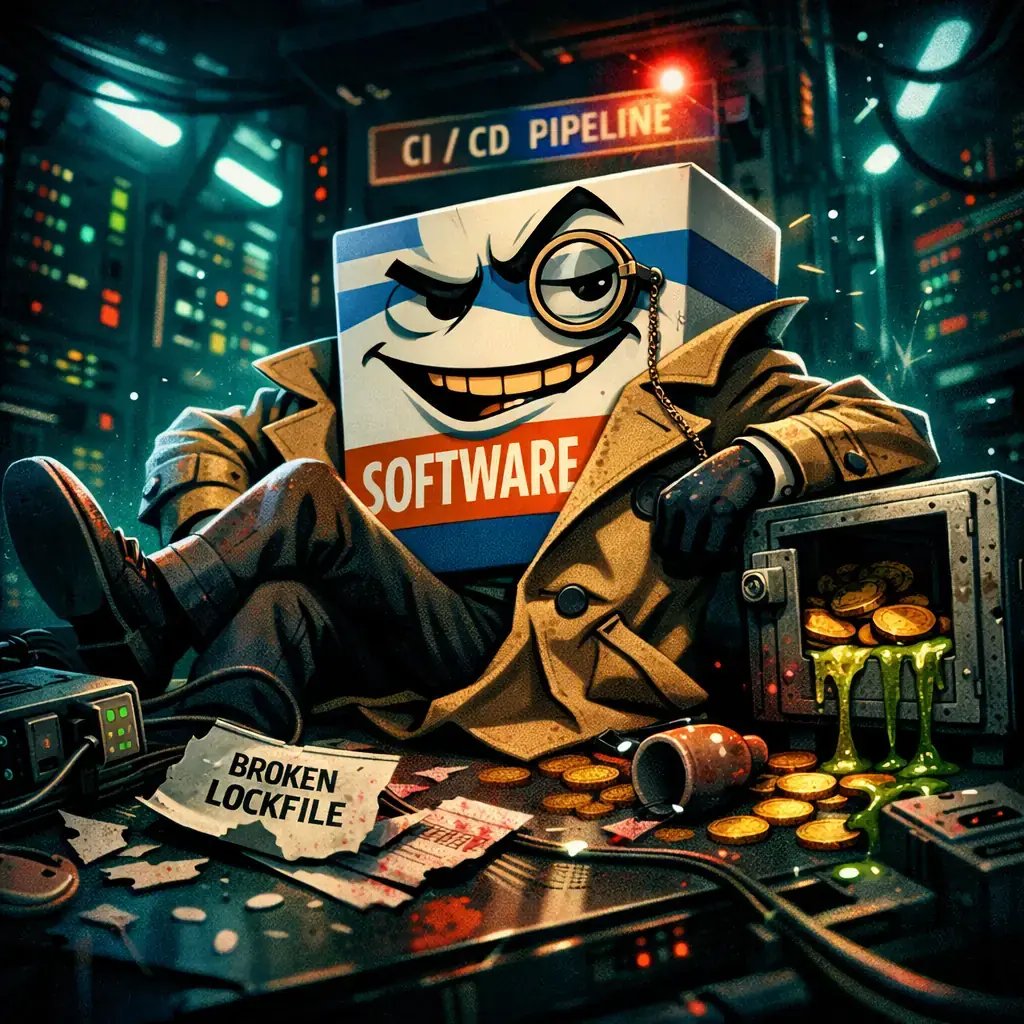
From the development community, the lesson is tangible: packages that are loaded in import time can run code immediately, so even units marked "development only" can result in commitments if they end up in images or runners. Reviewing and hardening pipelines to prevent devDependencies from reaching environments with secrets or credentials is a good preventive practice.
For technical analysis and similar contexts, the public reports and analysis of related supply chain and malwares campaigns provide more details and recommendations: the Checkmark research team publishes analysis of these threats on its research portal ( Checkmarx Research) and veterans in response as eSentire have documented families of comparable infostealers ( eSentire blog). For specific safety measures and guides on the platform and the runtime, the official Node.js page on security is a good starting point ( Node.js Security).
Finally, the treatment of a package like that of @ joyfill / layouts in its compromised version should be rigorous: assume remote execution, revoke and rotate credentials, rebuild artifacts from reliable sources and improve automatic CI controls. The prevention and early detection of supply chain engineering requires both technical controls and operational awareness between developers, security teams and infrastructure managers.

Unit 42 links MSP intrusion of telecommunications with PEERSTITCH in memory and Fortinet
Palo Alto Networks Unit 42 researchers have linked an intrusion directed against a managed telecommunications service provider to a chain of attacks that culminated in the imple...
Linux Kernel allows host memory reading from a VM; CVE-2026-99999 patch.
The security community has confirmed a critical vulnerability in the Linux kernel network code that allows code that is already running within a virtual machine (VM) to read mem...

Laboratory shows code execution in Windows SFAPE enclave (CVE-2026-83498) and patch
Researchers at the Doyensec firm have shown in laboratory that it is possible to run code chosen by an attacker within a portion of Windows memory that should remain sealed even...

Safety report of agents IA: 1,280 products, 282 with SSO; majority without identity control
A new report on the safety of IA agents presents a worrying but concrete picture: in the environments examined for the 2026 State of Agent Security Report There are about 1,280 ...

Campaign with LLM and ARTEX attacks South Korean financial institutions and exfilters data
Security researchers have documented a campaign directed against South Korean financial institutions using language-driven attack tools to automate intrusions and data extractio...
Cybersecurity report: defense is no longer a point, it is continuous visibility and scalable response
A new public report on cybersecurity describes how cloud expansion, artificial intelligence and distributed systems are changing the goal and protection priorities: it is no lon...