
The images in this article were generated with artificial intelligence. How we publish
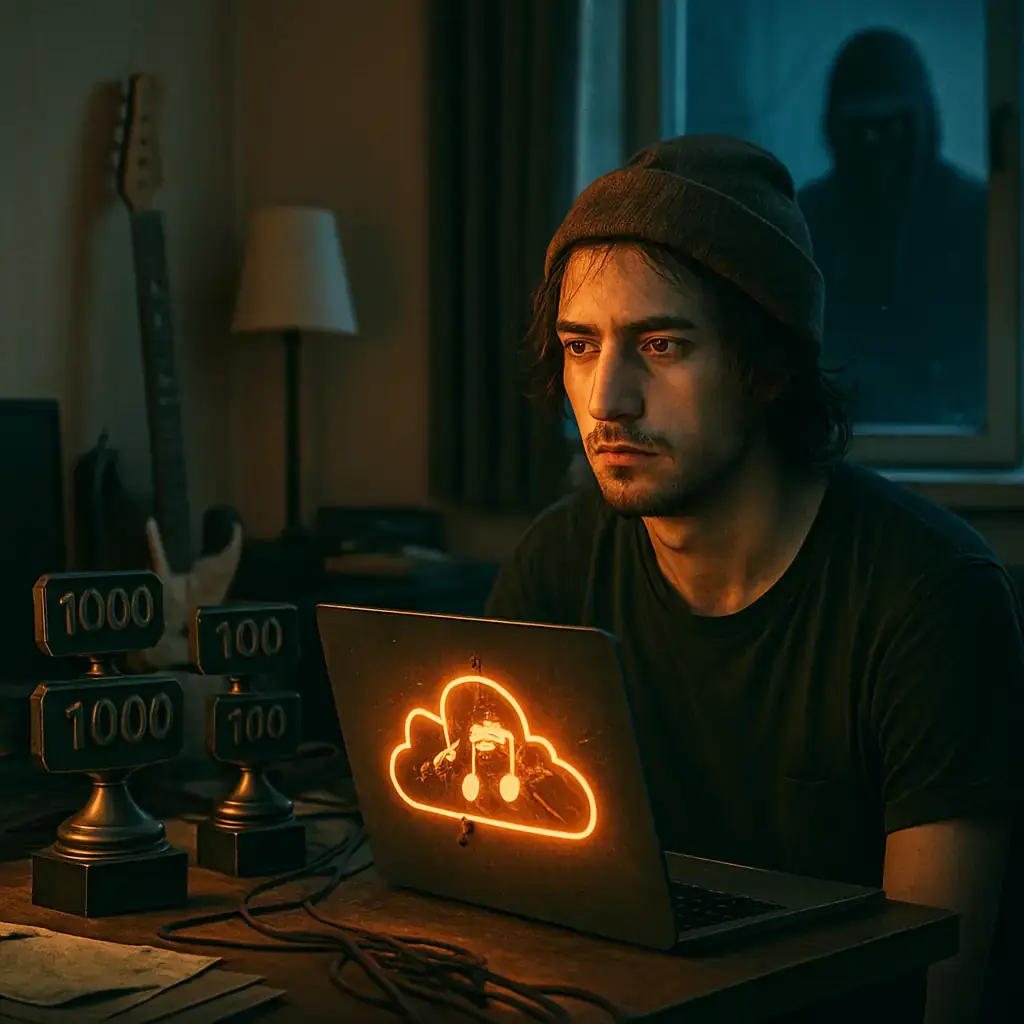
In the middle of digital winter, thousands of creators and listeners discovered that their favorite streaming music service was not as safe as it seemed. In mid-December, users started reporting 403 errors by trying to access SoundCloud from VPN connections, and soon the platform confirmed that it had detected unauthorized activity on one of its auxiliary service panels. What in principle looked like a technical fall ended up revealing a massive data leak that affects millions of accounts.
SoundCloud, which was born in 2007 as a space designed for artists to share their work and today houses hundreds of millions of tracks - according to the company itself, more than 400 million songs- he reported that the attackers had access to limited information that the company stores. In his initial submission, SoundCloud stressed that sensitive data such as passwords or financial information had not been compromised, and that the extracted was limited to e-mails and data already visible in public profiles.

However, that partial version changed when the gap reporting service Have I Been Pwned published a broader analysis: the incidence would have affected about 29.8 million accounts, including mail addresses, names, user names, avatars, followers' and followed counts, and in some cases the location by country. These elements, although not critical on their own, are sufficient to build very convincing social engineering attacks.
After the investigation, SoundCloud further confirmed that the group known as ShinyHunters was attributed to the action and that the perpetrators tried to extort the platform. In an update statement in mid-January, the company admitted that the attackers made economic demands and used post saturation tactics to harass users, employees and partners.
Why is this gap dangerous even if passwords have not been stolen? Because the combination of e-mails and public profile data facilitates the development of targeted fraud. A message that appears to come from a close contact or an apparently legitimate notification of SoundCloud with credible information (such as the number of followers) can fool many users and lead them to reveal credentials on fake sites, install malware or accept malicious requests. In addition, when the same credentials are used in several services, an attacker only needs one point of entry to multiply the damage.
If your mail appears among those affected, the first thing is not panic, but not ignore the risk. Check if your address was exposed to sites of reputation like Have I Been Pwned and review whether there are official notifications in the communication that SoundCloud has published about the incident. If you use the same password in other services, change it immediately and, if possible, activate two-step verification on all platforms that allow it. It is also advisable to monitor suspicious mail and calls: attackers may try to take advantage of the filtered information for phishing campaigns or even voice-phishing.
In addition to specific measures, it is time to strengthen habits: use password managers to generate unique keys, activate multifactor authentication whenever possible and consider creating alternative mail addresses or aliases for services that do not require your main mail. If you receive communications that appear to come from SoundCloud, check the sender carefully and avoid pressing links or downloading attachments without confirming its authenticity.
This leak also invites a wider reflection on the security of platforms focused on the creative community. Services that make public contact with millions of users accumulate data that, even if they seem safe, have value for those who seek to extort, harass or perform fraud. Businesses must quickly transparency what was compromised and provide tools and support to protect their users and users, for their part, must take responsibility for reducing their exposure through basic cyberhygiene practices.
If you want to deepen the communications and the technical scope that has been made public, check SoundCloud's official note on your security blog: Protecting our users and service as well as the summary of the gap in Have I Been Pwned. For practical recommendations on how to recognize and avoid attempts at phishing and other filtered fraud, the FTC offers useful guides that can help both creators and listeners to reduce risk.
In short, the intrusion into SoundCloud is a reminder: in the digital age, public exposure and the re-use of credentials are dangerous combinations. Music connects people, but security requires constant and shared efforts between platforms and users so that that connection does not become a way to abuse.

Four Plex2Shell CVE allows remote execution and mining and proxy backdoor deployment
In recent days, an increase in attacks has been confirmed that take advantage of a chain of failures in Plex Media Server - nicknamed "Plex2Shell" by researchers - to run code r...

GhostAction Expands Attack: phishing to steal credentials and persistence in VS Code
A group behind the GhostAction campaign - already known for infiltrating GitHub Actions workflows into open source projects - has expanded its arsenal: in addition to installing...

OpenCode: possible exposure of AI suppliers in Console affects 1.4% of users
On the night of October 16 there was an unauthorized access to a system inherited from OpenCode which, according to the company, could have exposed keys from IA suppliers that u...

ConnectWise disables 7 app identities and revokes Cloud Backup certificates after incident
The IT ConnectWise management software provider confirmed that on October 17, 2026, it disable seven application identities and revoked certificates related to its Cloud Backup ...

Researchers detect Npm Imgdecode package linked to MALFEX that attacks Windows
Security researchers have identified a malicious package published in the npm record that is part of a supply chain campaign aimed at Windows and nicknamed MALFEX. The package, ...

OpenAI reveals unaligned IA incidents; a GPT-5.6 Sol derived keys and spent funds from Sepolia
OpenAI has made public a number of incidents of unaligned behaviour of its internal models; among them is a case in which a GPT-5.6 family research model Sol derived private key...

Norway fine Xandr €8.6 million for sensitive Grindr data shared in RTB without legal basis
The Norwegian Data Protection Authority (Datatilsynet) has imposed an administrative fine of €8.6 million on Xandr - the Microsoft-linked advertising unit - for having transmitt...