
The images in this article were generated with artificial intelligence. How we publish
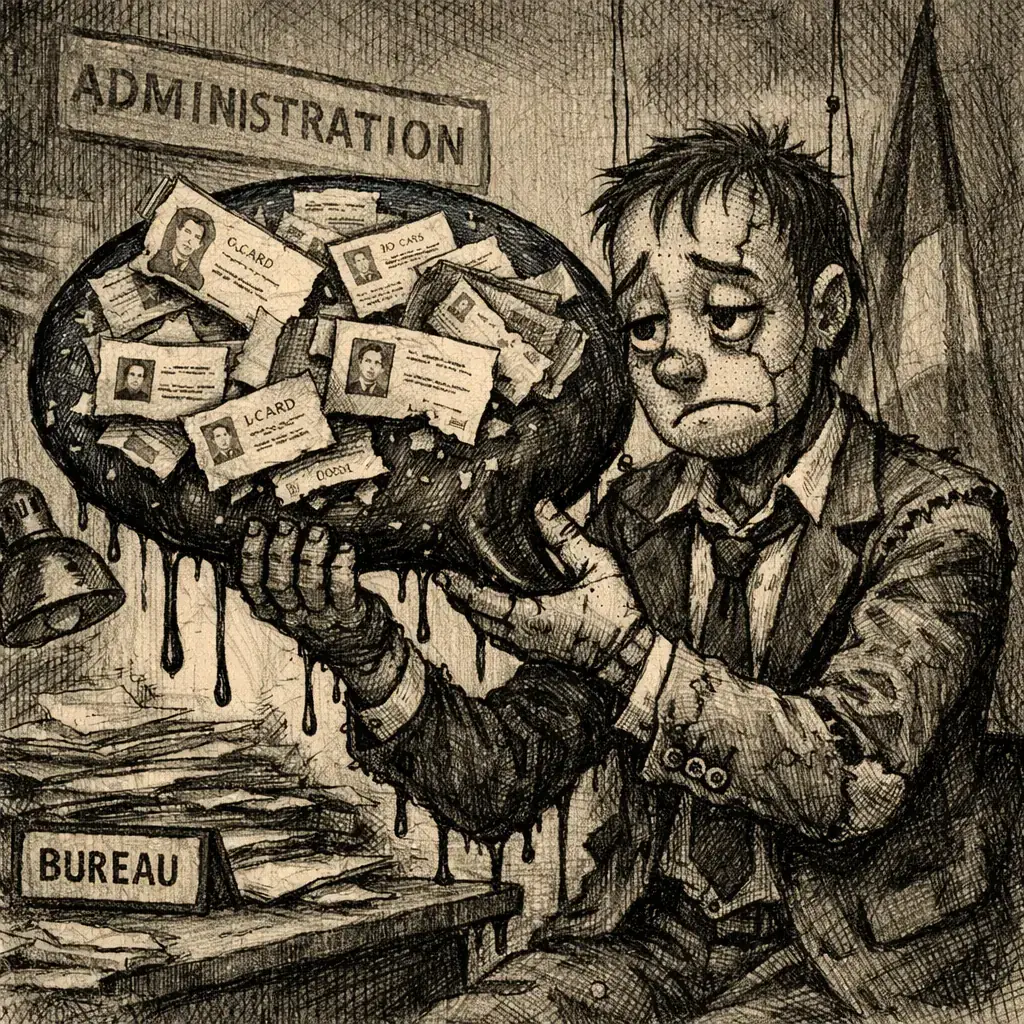
The Directorate Interministérielle du Numérique (DINUM) confirmed this week what was already running as a rumor: an intrusion into Tchap, the messaging platform developed for the French administration, affected a significant volume of civil service accounts. According to official figures, around 73,467 accounts Among more than 825,000 registered users, information associated with public profiles and messages has been compromised; DINUM has already notified the data protection authority (CNIL).
Tchap is based on the Matrix protocol, which allows decentralized and optionally encrypted architectures end to end. In this incident the technical explanation given by the administration itself is very relevant: the attacker used an account committed to access public rooms not encrypted where he was able to extract names, emails, avatars and the public entity to which the users belong. The private conversations, by the architecture of the platform, remain encrypted and, according to DINUM, their content was not deciphered by the intruder.

Beyond the official statement there are statements from the actor himself who claimed responsibility and published samples: he speaks of almost 650,000 scraped messages, more than 13.5 GB in documents and media, account and device metadata and even LDAP credentials embossed in scripts. If these allegations are confirmed, the scope goes from a simple "profile exposure" to a material that facilitates targeted follow-up, highly credible phishing campaigns and possible operational abuses against internal services.
The practical implications are clear: post and organizational exposure facilitates context-based screening campaigns (speed phishing), meeting links published in public forums can be intercepted or reused, and device metadata or sessions can allow for correlated activity or high-value accounts. In addition, hardcore credentials - if they exist - pose a risk of escalation or access to other corporate systems, so they should be treated as a critical vector.
The immediate action that any organisation affected or managing similar tools should be prioritized are forced rotation of credentials and revocation of active sessions, mandatory deployment of MFA with phishing-resistant factors, forensic analysis of logs to detect side movements, revision and rotation of any code-embedded credential and restoration of secure copies if there is evidence of manipulation. It is also essential to limit or reconfigure public rooms: if not necessary, close them or turn them into protected spaces. DINUM and Tchap leaders should coordinate with ANSSI and CNIL for containment and public communication; transparency reduces reputational risk and helps recipients to react properly ( CNIL, ANSSI).
For users the recommendation is practical: distrust from unexpected messages, do not re-use institutional passwords in other services, avoid sharing sensitive links or documents in open forums and configure additional authentication factors. At the organizational level, it is imperative to eliminate unsafe practices such as credentials embedded in scripts, to test the deployments before putting them into production and to adopt data minimization policies in collective spaces.
This incident also opens up a broader technical and governance debate: decentralization and the use of open protocols such as Matrix offer advantages in sovereignty and resilience, but are not immune to configuration errors, human errors or social engineering. The extreme-to-end encryption protects sensitive content, but does not replace access controls, security audit and staff training. The useful lesson for any administrator is to combine cryptographic protections with robust operational controls and a safety culture that treats the exposure of metadata and profiles with the same seriousness as that of the messages themselves.

Four Plex2Shell CVE allows remote execution and mining and proxy backdoor deployment
In recent days, an increase in attacks has been confirmed that take advantage of a chain of failures in Plex Media Server - nicknamed "Plex2Shell" by researchers - to run code r...

GhostAction Expands Attack: phishing to steal credentials and persistence in VS Code
A group behind the GhostAction campaign - already known for infiltrating GitHub Actions workflows into open source projects - has expanded its arsenal: in addition to installing...

OpenCode: possible exposure of AI suppliers in Console affects 1.4% of users
On the night of October 16 there was an unauthorized access to a system inherited from OpenCode which, according to the company, could have exposed keys from IA suppliers that u...

ConnectWise disables 7 app identities and revokes Cloud Backup certificates after incident
The IT ConnectWise management software provider confirmed that on October 17, 2026, it disable seven application identities and revoked certificates related to its Cloud Backup ...

Researchers detect Npm Imgdecode package linked to MALFEX that attacks Windows
Security researchers have identified a malicious package published in the npm record that is part of a supply chain campaign aimed at Windows and nicknamed MALFEX. The package, ...

OpenAI reveals unaligned IA incidents; a GPT-5.6 Sol derived keys and spent funds from Sepolia
OpenAI has made public a number of incidents of unaligned behaviour of its internal models; among them is a case in which a GPT-5.6 family research model Sol derived private key...

Norway fine Xandr €8.6 million for sensitive Grindr data shared in RTB without legal basis
The Norwegian Data Protection Authority (Datatilsynet) has imposed an administrative fine of €8.6 million on Xandr - the Microsoft-linked advertising unit - for having transmitt...