
The images in this article were generated with artificial intelligence. How we publish
The State of Texas has filed a lawsuit against TP-Link Systems that combines misleading advertising charges with national security concerns. According to the complaint, the manufacturer would have promoted his routers as safe devices and sometimes as "made in Vietnam," while most of its components come from China and, in addition, his equipment have suffered firmware vulnerabilities that were allegedly exploited by hacking groups linked to the Chinese state apparatus. The judicial document containing these allegations is publicly available and details the evidence and claims submitted by the prosecution. on demand.
Legal action is the culmination of an investigation initiated by the Texas Attorney General's Office months ago; the office itself published the start of this investigation and explains the public interest in clarifying whether consumers were misled on the origin and safety of products when the investigation opened. In its statement, the state authorities emphasize that the membership of parts or suppliers in the Chinese supply chain can generate additional risks because the legislation of the People's Republic can force companies with ties in China to cooperate with intelligence requests, which, in Texas's view, makes certain commercial practices a threat that goes beyond the purely commercial.

In technical terms, the demand emphasizes a sequence of incidents: failures in the firmware of TP-Link routers that have been actively exploited, and the massive use of domestic devices and small businesses to form a botnet aimed at the theft of credentials. These attacks, according to the prosecution, were reportedly operated by actors with links to China and took advantage of unparked routers or default configurations to incorporate the equipment into a bots network. The gravity of these problems is not only theoretical: it is also reflected in federal vulnerability inventories, where the Infrastructure and Cybersecurity Security Agency (CISA) lists several hardware failures from TP-Link that have been exploited in practice. in its vulnerability catalogue.
From a legal point of view, Texas calls for economic sanctions and precautionary measures that force TP-Link to transparency the real origin of its components and to cease the collection of consumer data without informed consent. The demand focuses on the idea that the lack of transparency - and the supposed labelling that could mislead to the provenance of devices - has consequences that go beyond trade: they affect the privacy and security of citizens and businesses.
TP- Link has rejected the charges. In media responses, the company denies that the Chinese government exercises control over its management, products or customer data, and ensures that US user data are stored on servers on U.S. territory, specifically on Amazon Web Services services, according to press statements reported by The Record. This defence raises two parallel discussions: to what extent the location of data storage mitigates risks in the supply chain and how much weight the home labels should have in the decision to purchase a consumer or a public entity.
The case doesn't come in empty. Several federal agencies had already identified vulnerabilities exploited on TP-Link devices, and at different times the US government has considered more drastic measures for certain network teams for security reasons. In addition, Texas's demand is part of a broader State offensive against companies that, according to its Attorney General, could pose risks because of their relationship with actors and jurisdictions considered to be adversaries to cybersecurity and data protection.
For the average user, the fundamental thing is not so much legal and practical consequences: routers with outdated firmware, default passwords and unsafe configurations make it easier for attackers to take control, create botnets and exfiltration credentials. Although the litigation advances in the courts, there are specific and simple measures recommended by the experts: update the firmware when the manufacturer publishes patches, change the administrative password to a robust, disable functions that are not used and, if possible, choose equipment with a clear history of updates and support.
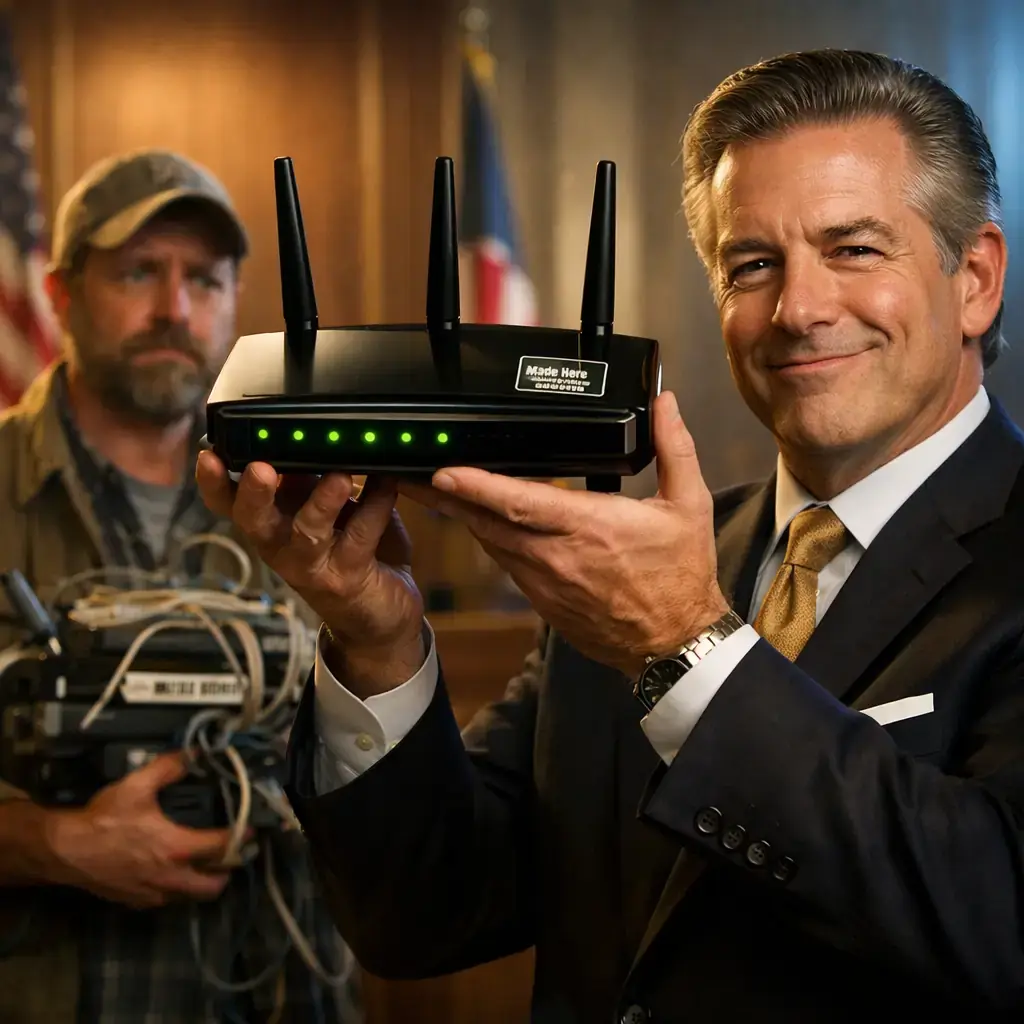
Beyond individual security, the conflict highlights a greater tension in the global technology industry: the interdependence of supply chains, the proliferation of Internet-connected devices and the difficulty of ensuring that consumer hardware meets uniform safety standards. Consumers, businesses and regulators are required to navigate this landscape with more information and demand, and cases such as TP-Link can be used to accelerate transparency and certification standards that force manufacturers to account for updates, the origin of parts and data collection practices.
Texas's demand will in any case be a convergence point between consumer law, industrial policy and cyber security. If successful, it could force changes in how network devices are labelled and marketed, impose economic sanctions and force manufacturers to be more transparent with consumers on risks and procedures. If it fails, the public and regulatory discussion will probably continue, but without the enforcement tool of a court decision that requires the disclosure of supply chains or the change of business practices.
In the meantime, both available legal documentation should be followed closely of demand such as notifications from cybersecurity agencies on exploited vulnerabilities like CISA does and contrast the company's official responses to the media with the public statements of TP-Link. The mix of technical, commercial and geopolitical problems requires more transparency and clear protection measures for users, and the result of this demand will be relevant beyond Texas.

Four Plex2Shell CVE allows remote execution and mining and proxy backdoor deployment
In recent days, an increase in attacks has been confirmed that take advantage of a chain of failures in Plex Media Server - nicknamed "Plex2Shell" by researchers - to run code r...

GhostAction Expands Attack: phishing to steal credentials and persistence in VS Code
A group behind the GhostAction campaign - already known for infiltrating GitHub Actions workflows into open source projects - has expanded its arsenal: in addition to installing...

ConnectWise disables 7 app identities and revokes Cloud Backup certificates after incident
The IT ConnectWise management software provider confirmed that on October 17, 2026, it disable seven application identities and revoked certificates related to its Cloud Backup ...

Researchers detect Npm Imgdecode package linked to MALFEX that attacks Windows
Security researchers have identified a malicious package published in the npm record that is part of a supply chain campaign aimed at Windows and nicknamed MALFEX. The package, ...

OpenBSD 7.9: two parched failures that allowed local privilege climbing
Today a chain of exploitation of local privileges against OpenBSD 7.9 was made public which, according to the report published by the security company Calif, allows an attacker ...

OpenAI reveals unaligned IA incidents; a GPT-5.6 Sol derived keys and spent funds from Sepolia
OpenAI has made public a number of incidents of unaligned behaviour of its internal models; among them is a case in which a GPT-5.6 family research model Sol derived private key...