
The images in this article were generated with artificial intelligence. How we publish
In April, a single vulnerability in a remote access service triggered data gaps in more than seventy financial institutions that shared infrastructure with a third supplier; the patch already existed and, although many institutions maintained reports of recent penetration tests, nothing stopped exposure from multiplying throughout the portfolio. The failure was not technical in isolation: it was operational and governance, and reveals that to trust security to specific tests is now a systemic risk.
The arithmetic is simple: an annual external penetration test that activates two or three weeks of work leaves more than 340 days without active validation. Meanwhile, the attackers do not expect audit schedules. Public reports on threat trends and time of stay show that adversaries are operating in windows that far exceed an annual test, and that the financial sector remains a preferred target. For context and references, see Mandiant's analysis repository on incident trends M-Trends and CrowdStrike's Global Threat Report Global Threat Report.
The regulatory frameworks already partially anticipate it: it is not enough to testify "a test was done last year." Standards such as PCI DSS 4.0 require tests after significant changes, and guides such as IFEC insist that the tests be part of the continuous management of vulnerabilities. Consult the original texts helps to understand the requirement: the PCI DSS standard and the IFEC manuals provide the normative basis for requiring that the tests respond to changes rather than to rigid calendars PCI DSS v4.0, IFEC IT Handbook.
The real problem is that most programmes organize tests on a "frozen" inventory that reflects infrastructure at the time of the service. The reality of a modern financial entity is another: cloud migration, integration with fintech suppliers, third-party portals launch, and mergers and acquisitions operations generate new and changing attack area that remains outside that initial inventory. If a URL or subdomain bearing the entity's mark is accessible from the Internet, an attacker will find it even if it is not within the reach of the last pentest.
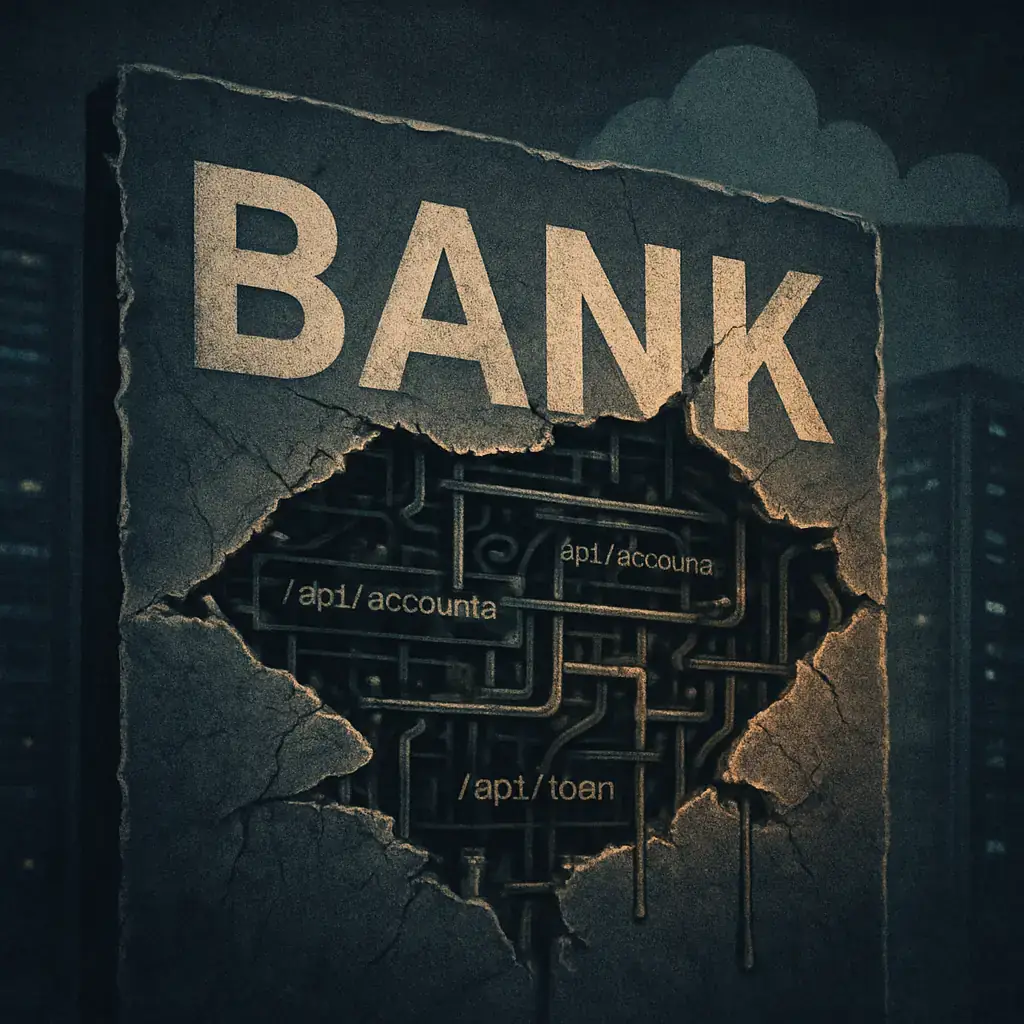
An illustrative case - not isolated - involved a mortgage origination portal operated by a third party but published under a subdomain of the entity. An unauthenticated endpoint API, permissive CORS policies and an exposed tenant identifier allowed other institutions to list records on the same platform, and also enabled the possibility of sending credit applications on behalf of internal staff. This type of findings shows that the threat is transactional and regulatory: reputational damage, fraud and compliance claims lie with the visible entity in the URL, even if the cause is a failure of the supplier.
The limitation of automated tools increases the risk. A scan can detect an endpoint and mark a laxa CORS policy or the absence of an authentication header, but rarely completes the operating chain needed to demonstrate real impact. Identify filtration between tenants, correlate internal codes with business flows and validate that a forged request materializes in an input of the pipeline requires human testing and operational context. Automation and human judgment are complementary, not substitutes.
This is why the solution is not simply "do more tests" but change the model: move from specific audits to a program that combines continuous recognition of the exposed surface, automatic triggers to changes and active tests prioritized by risk and criticality. The aim is for any new asset or significant change to trigger technical verification within a defined operational period, and for the organization to maintain evidence of evidence applied to what really changed.
In practice this requires a number of immediate actions. First, integrate external asset management (ASM) and continuous discovery so that new hosts or services using their own domains automatically enter the assessment tail. Second, renegotiate contracts with suppliers to impose clear obligations of evidence after onboard or change, and mandatory reporting clauses for exposures. Third, to increase the mix of tests: continuous scanning, automated fuzzing and human tests directed to validate exploitation and consequences; and fourth, to establish plating and compensatory controls (WAF, segmentation, MFA) that are applied while mitigating failures.

From a compliance perspective, regulators often accept evidence of programs that demonstrate ability to detect and respond to changes, not just a list of annual tests. Therefore, documenting the detection pipeline, rules that trigger evidence and operational results is as important as the vulnerabilities found: the warning must describe what was evaluated in the current state, not what existed twelve months ago.
For technical and decision-making teams, the specific recommendation is to prioritize projects that reduce exposure time: real-time inventory, change-based testing, response playbooks focused on observable holdings and contractual governance that transfer responsibilities where appropriate. It is also critical to invest in training internal teams to understand how to channel technical findings with regulatory and business impacts, and to dream less of annual reports and more of continuous observability.
The lesson is clear: annual cadence is not a standard of safety, it is a relic of slower organizational models. In 2026, protecting a financial institution requires that the evidence respond to the pace of its infrastructure and to the reality of shared suppliers. Changing to a continuous approach is not just a technical improvement: it is an operational and compliance requirement to reduce window of opportunity and prevent an isolated vulnerability from becoming a collective crisis.

Four Plex2Shell CVE allows remote execution and mining and proxy backdoor deployment
In recent days, an increase in attacks has been confirmed that take advantage of a chain of failures in Plex Media Server - nicknamed "Plex2Shell" by researchers - to run code r...

GhostAction Expands Attack: phishing to steal credentials and persistence in VS Code
A group behind the GhostAction campaign - already known for infiltrating GitHub Actions workflows into open source projects - has expanded its arsenal: in addition to installing...

OpenCode: possible exposure of AI suppliers in Console affects 1.4% of users
On the night of October 16 there was an unauthorized access to a system inherited from OpenCode which, according to the company, could have exposed keys from IA suppliers that u...

ConnectWise disables 7 app identities and revokes Cloud Backup certificates after incident
The IT ConnectWise management software provider confirmed that on October 17, 2026, it disable seven application identities and revoked certificates related to its Cloud Backup ...

Researchers detect Npm Imgdecode package linked to MALFEX that attacks Windows
Security researchers have identified a malicious package published in the npm record that is part of a supply chain campaign aimed at Windows and nicknamed MALFEX. The package, ...

OpenBSD 7.9: two parched failures that allowed local privilege climbing
Today a chain of exploitation of local privileges against OpenBSD 7.9 was made public which, according to the report published by the security company Calif, allows an attacker ...