
The images in this article were generated with artificial intelligence. How we publish
Dashlane has confirmed that an external actor carried out a brute force attack directed at personal user accounts with the aim of circumventing authentication controls and recording new devices, and that in less than 20 cases the attackers managed to download an encrypted copy of the password vault. Although the company claims that its internal systems were not compromised, the incident again shows a key distinction: access to the encrypted copy of the vault does not amount to reading its contents unless the attacker gets the main password (Master Password) or is trivial.
The information disseminated by Dashlane further indicates that the wave of attempts caused temporary suspensions of accounts and authentication problems thanks to the built-in protection mechanisms, suggesting that the automatic defenses worked to some extent. However, the fact that vaults were allowed to be discharged in a small number of cases shows that defense chains are not infallible and that the current most effective attack vectors focus on human weaknesses and record / recovery flows rather than on cryptographic vulnerabilities of the service.
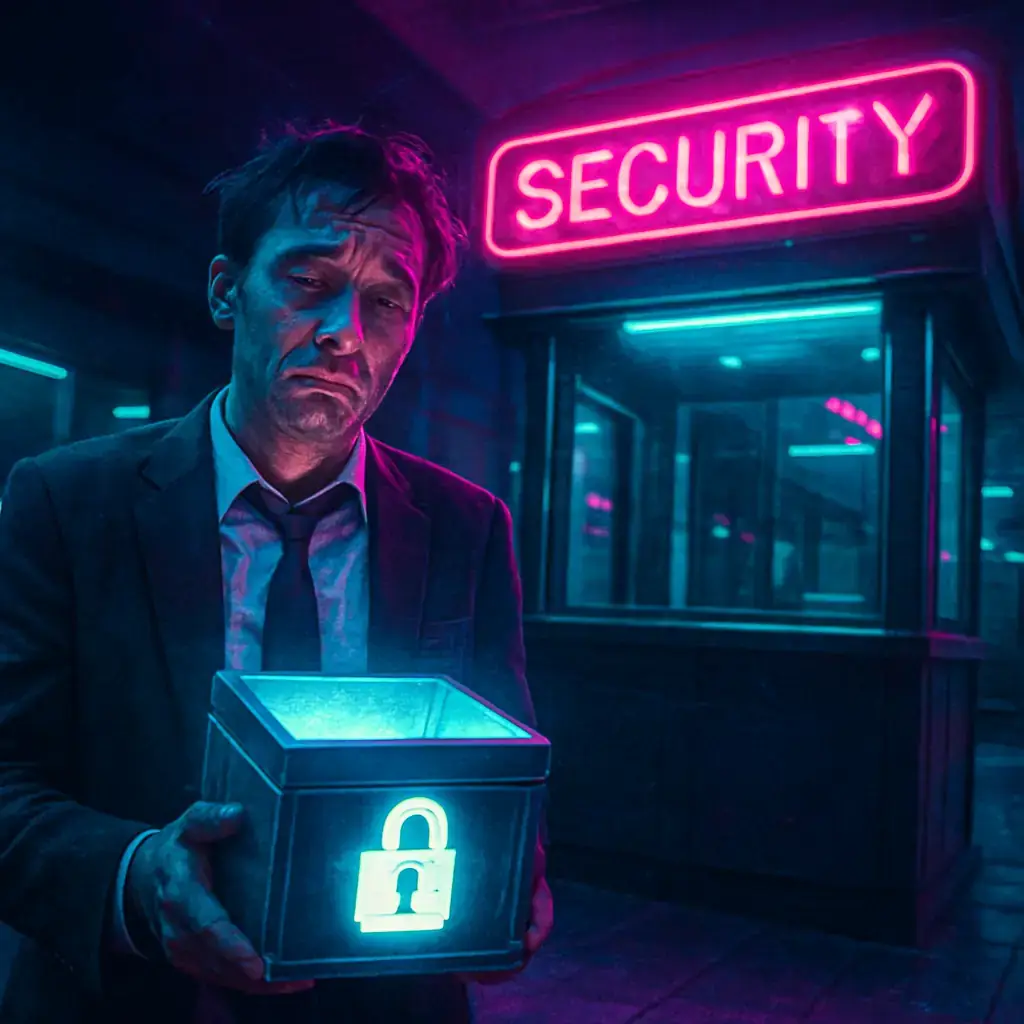
From a technical point of view, the real threat to affected users depends to a large extent on the strength of your Master Password and how the manager derives the encryption key (the KDF function and its parameters). If the main password is a long, unique and complex sentence, the effort to recover the credentials from the encrypted file will be prohibitively high. On the contrary, short passwords, common or reused words facilitate attacks by dictionary and brute force. For consolidated technical guidance on password management and authentication methods, it is appropriate to review official documents such as NIST recommendations ( SP 800-63B) and practical guides on multi-factor authentication of agencies such as CISA ( CISA - Multi-Factor Authentication).
The practical implications for users and organizations are clear: even when the supplier ensures that cryptography remains intact, the single filtration of an encrypted file should be considered a serious incident that requires mitigation actions. The most valuable data - emails, critical service credentials, tokens and secure notes - are usually in those vaults and its potential exposure justifies proactive measures such as the rotation of sensitive passwords and the activation of additional controls.
If you use Dashlane (or any other password manager), immediately apply these protective measures: review the list of registered devices and remove any unknown equipment; check your supplier's official notifications and respond only to verified communications; activate more robust authentication methods (preferably physical keys or FIDO2 standards rather than SMS); and strengthen your Master Password by making it a long and unique sentence. To check if your accounts have been involved in public leaks, you can use reputed breach reporting services such as Have I Been Pwned.
For users specifically affected by vault download, recommendations should be more urgent: change the critical account passwords that were stored in the manager, invalidate active sessions wherever possible and enable hardware-based authentication. It is also prudent to audit recent access to bank accounts, mail and business services, and to consider the creation of secure backup of essential information in a controlled environment.

This incident highlights two institutional lessons: on the one hand, suppliers must tighten the flow of registration and recovery of devices to make them resistant to automated attacks; on the other, users must assume that security depends on both the supplier and robust personal practices. The safety of a password manager is a composite link: good cryptography and supplier controls plus strong personal habits.
Finally, keep an eye on Dashlane's official communications and follow his instructions if you are contacted. If you manage critical credentials or are responsible for security, review your organization's password management policies, prioritize high-risk credentials for immediate rotation and consider requiring phishing-resistant authentication (as security keys) for sensitive access.
For more information and practical resources on how to protect your accounts and choose authentication methods, visit Dashlane, the NIST guide cited above and the CISA documentation on multifactor authentication.

GhostAction Expands Attack: phishing to steal credentials and persistence in VS Code
A group behind the GhostAction campaign - already known for infiltrating GitHub Actions workflows into open source projects - has expanded its arsenal: in addition to installing...

ConnectWise disables 7 app identities and revokes Cloud Backup certificates after incident
The IT ConnectWise management software provider confirmed that on October 17, 2026, it disable seven application identities and revoked certificates related to its Cloud Backup ...

Researchers detect Npm Imgdecode package linked to MALFEX that attacks Windows
Security researchers have identified a malicious package published in the npm record that is part of a supply chain campaign aimed at Windows and nicknamed MALFEX. The package, ...

OpenBSD 7.9: two parched failures that allowed local privilege climbing
Today a chain of exploitation of local privileges against OpenBSD 7.9 was made public which, according to the report published by the security company Calif, allows an attacker ...

OpenAI reveals unaligned IA incidents; a GPT-5.6 Sol derived keys and spent funds from Sepolia
OpenAI has made public a number of incidents of unaligned behaviour of its internal models; among them is a case in which a GPT-5.6 family research model Sol derived private key...

Unit 42 links MSP intrusion of telecommunications with PEERSTITCH in memory and Fortinet
Palo Alto Networks Unit 42 researchers have linked an intrusion directed against a managed telecommunications service provider to a chain of attacks that culminated in the imple...