
The images in this article were generated with artificial intelligence. How we publish
Anthropic's recent decision to stop the public publication of his Glasgow project and to temporarily share access only with large suppliers and coalitions puts on the table an inescapable reality: the ability of artificial intelligences to discover critical software failures has reached a maturity that transforms the family problem of cybersecurity. It is not just about finding individual vulnerabilities; models like Mythos have shown that they can channel independent failures on complete operating routes, some of them residing for decades in projects considered very safe, as they have shown public reports on operating system errats. Anthropic It made an exceptional decision precisely because the nature and pace of these findings pose new operational and ethical risks.
The most disturbing contribution comes not only from the technical depth - the ability to generate ROP chains, to force career conditions to escalate privileges or to distribute payloads in network services - but also from the volume and speed with which these machines discover them. When an automated engine produces thousands of findings, the advantage of the attacker ceases to be marginal and becomes structural: the defence teams continue to organize around human processes, periodic reviews and workflows that were not designed to accept a continuous avalanche of exploitable vulnerabilities.

This mismatch between the speed at which IA-powered attackers can operate and the ability of organizations to absorb and correct failures is the central problem. In practical terms, an organization can continue to detect security gaps more efficiently thanks to IA, but if it does not have mechanisms to quickly validate whether a vulnerability is exploitable in its environment, prioritizing and remediing it, visibility does not translate into real risk reduction. The chain from finding to validation and patching must stop depending on manual transfers between equipment to function at the speed required by the new scenario.
The security community and regulators have already warned about this acceleration: agencies such as the CISA publish alerts and guides that reflect how the deadlines between disclosure and active exploitation are shortened, and how traditional vulnerability management processes are obsolete in the face of automated campaigns. CISA and other entities offer resources to harden defenses, but institutional adaptation requires more than mitigation lists; it requires process reengineering and reliable automation.
From an organizational perspective, accepting that everything cannot be fixed is an uncomfortable but necessary first step. The useful question is no longer "how do we find more faults?" to become "how do we process thousands of findings in a verifiable and actionable way without collapsing our operations?" Resolving it involves redefining exposure management on three fronts: real-time validation capacity on the organization's specific heritage, operational context-based prioritization and compensatory controls that reduce the exposure window while the arrangement is completed.
In practice this translates into concrete changes that must be driven from the direction: integrate automated validators into pipelines and productive environments to execute safe and reproducible tests against real assets; enrich the prioritization with control telemetry - if there is EDR, segmentation, MFA and mitigation applied in the affected service - to decide what to correct first; and automate the orchestration of remediations, from the opening of tickets to the subsequent verification, minimizing the manual steps that now delay mitigation.
In parallel, the approach should be strengthened in controls that do not depend exclusively on the immediate patch: network segmentation and microsegmentation, least privileged policies, detection and response in endpoints and network, canary deployments and rollback mechanisms to isolate and contain holdings in minutes. These measures do not eliminate the need to park, but reduce impact and make operational time to apply safe corrections.
The implications for coordination with suppliers and the supply chain are direct. A flood of CVE by engines like Mythos will make it essential to have channels and agreements that accelerate the exchange of information and the delivery of patches, as well as service level agreements for critical remediations. Bug bounce programs, responsible outreach processes and incentives for fast patches should evolve because the value of a finding is now measured in hours, not weeks.
There is also an organizational and governance component: measure and reduce detection and repair times, define and practice high-volume scenarios of findings, and audit the traceability of each step - from intelligence ingestion to revalidation after correction. Transparency and the ability to demonstrate that a vulnerability was validated and mitigated not only reduce technical risk, but are increasingly relevant to regulatory obligations and business confidence.
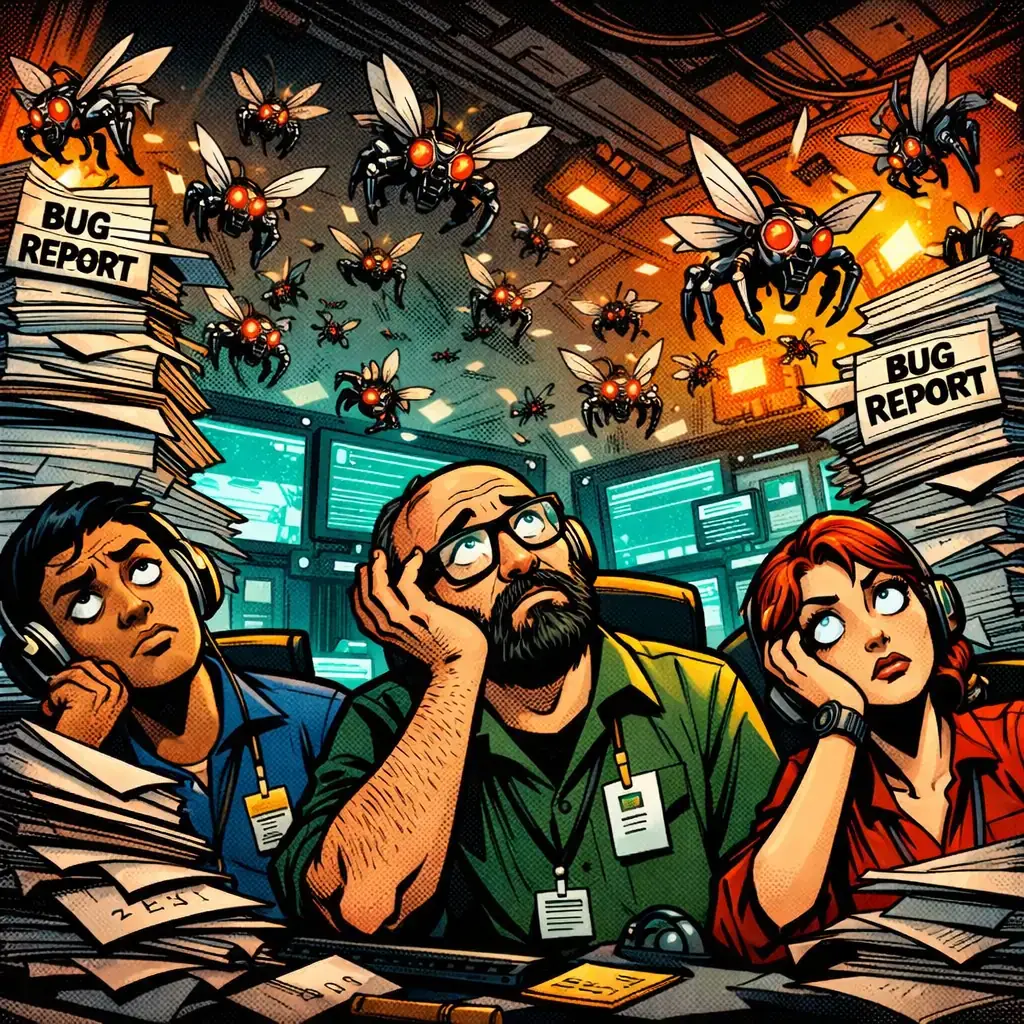
Finally, not everything must be blind automation: security frameworks must incorporate limits, security tests for autonomous tools and intelligent human reviews at critical points. Automation must operate within technical, legal and business guards to avoid collateral damage and maintain control over the decision chain. While the companies themselves that develop these IAS decide how and with whom to share access, the responsibility lies with the security teams of the organizations to prepare now and prevent the detection advantage from becoming an operational disadvantage.
The challenge is clear: the age of slow discoveries is over. The response is not only technological, but organizational and strategic. Companies that now invest in continuous validation, contextual prioritization and orchestrated automation will significantly increase their resilience. To ignore this transition is to trust that the adversaries will not take the same tools; recent experience suggests that this trust will be, at best, naive.
For those who want to deepen how large-scale detection and response practices evolve, in addition to the official communications of IA model developers, it is appropriate to review reference sources on erratas and vulnerabilities in critical projects, such as the Free Software Project Technical Notices page, and the operational guides and alerts of agencies such as CISA. OpenBSD Errata and public safety notice repositories are good starting points to understand why old failures remain relevant in this new context.

OpenAI engineer arrested by hidden recorder in office board room in San Francisco
A United States court this week authorized the arrest of Abdulrahman Alfozan, an engineer who worked in OpenAI, following the U.S. government's charges for placing a hidden reco...

Four Plex2Shell CVE allows remote execution and mining and proxy backdoor deployment
In recent days, an increase in attacks has been confirmed that take advantage of a chain of failures in Plex Media Server - nicknamed "Plex2Shell" by researchers - to run code r...

GhostAction Expands Attack: phishing to steal credentials and persistence in VS Code
A group behind the GhostAction campaign - already known for infiltrating GitHub Actions workflows into open source projects - has expanded its arsenal: in addition to installing...

ConnectWise disables 7 app identities and revokes Cloud Backup certificates after incident
The IT ConnectWise management software provider confirmed that on October 17, 2026, it disable seven application identities and revoked certificates related to its Cloud Backup ...

Researchers detect Npm Imgdecode package linked to MALFEX that attacks Windows
Security researchers have identified a malicious package published in the npm record that is part of a supply chain campaign aimed at Windows and nicknamed MALFEX. The package, ...

OpenBSD 7.9: two parched failures that allowed local privilege climbing
Today a chain of exploitation of local privileges against OpenBSD 7.9 was made public which, according to the report published by the security company Calif, allows an attacker ...