
The images in this article were generated with artificial intelligence. How we publish
For years the network security strategy was simple: routing and inspecting. Companies trusted in cloud proxies to decrypt traffic, implement policies and register activity. That logic worked when most of the sensitive interaction occurred on channels that the network could interpret. This is no longer the case today: the work moves to the browser, the generative tools and the autonomous agents act at machine speed, and the critical interactions happen in the presentation layer, where traditional proxies do not arrive.
The development of protocols such as TLS 1.3, QUIC and HTTP / 3 - designed to improve safety and performance - complicates the ability of traffic interceptors to act as a man-in-the-middle without breaking the connection. The TLS 1.3 technical specification documents these design changes: see RFC 8446 (TLS 1.3). Sailors and applications also take advantage of techniques such as certificate pinning which block forced interceptions and cause critical service failures if forced decrypt is insisted.

The operational result is double and corrosive: on the one hand the organizations end up building huge lists of exceptions so that legitimate applications do not break down, reducing their security perimeter silently; on the other hand the constant diversion of sessions to remote proxies introduces a penalization of latency- the so-called "tour tax" - which degrades the user experience and encourages the search for shortcuts by the equipment (Shadow IT), expanding the risk surface.
The arrival of LLMs and automated agents makes a structural limitation visible: a network proxy can see a valid HTTPS connection to an IA provider, but cannot discern the intention contained in the payload or the semantic context of an interaction when it occurs in the browser before leaving the organization. By then, the operation - copying sensitive code to a public prompt or allowing an agent to recover internal documentation - has already been consumed outside the scope of the traditional inspection.
In front of this scenario the binary alternative - blocking any use of IA or allowing it without controls - is unviable. Blogging promotes hidden work and loss of productivity; allowing it to blind the security team. The answer cannot be more of the same: a reapproach is required that will lead to the evaluation of policies to the last section of the connection, i.e. endpoint and browser, where the copy / paste, prompts and agent invocation appear.
Assessing and implementing controls at the point of interaction opens up three strategic advantages: first, contextual protection, because content such as copied text, prompts and files can be analyzed locally before any data output; second, alignment with native protocols since it does not force the end-to-end encryption of modern protocols to break; third, direct performance, because most of the legitimate traffic can move without detours, recovering latency and user experience. Architectures that combine endpoint evaluation with dynamic edge routing reduce the need for universal cloud inspection.
Implementing this change is more than adopting technology: it involves reconfiguring processes and responsibilities. Organizations should start by mapping data flows and cataloguing what types of information can come out through LLMs and agents, applying classification and labels that then feed contextual policies. It is essential to complement technical controls with governance: rules on the use of public models, contracts with IA providers, and training to teach safe design and risk recognition.
On the technical level it is appropriate to deploy solutions that combine DLP to the browser or to managed extensions, endpoint agents capable of intercepting copying / gluing events and monitoring process calls to APIs models, and a control plane that orchestrates when and how to redirect traffic to the edge for additional inspection. It is also important to take advantage of good practice and standards frameworks, for example, the NIST AI Risk Management Framework provides useful criteria for managing IA risks at the organizational level.
However, there are costs and trade-offs: the inspection in the endpoint increases the operational complexity, raises questions about user privacy and requires zero confidence models that distinguish between sessions and data that should be protected and those that do not. Also, not all applications allow easy instrumentation; the practical solution is usually a combination of browser isolation for unreliable sessions, content-based policies for prompts and agents, and centralized telemetry for audit and response.
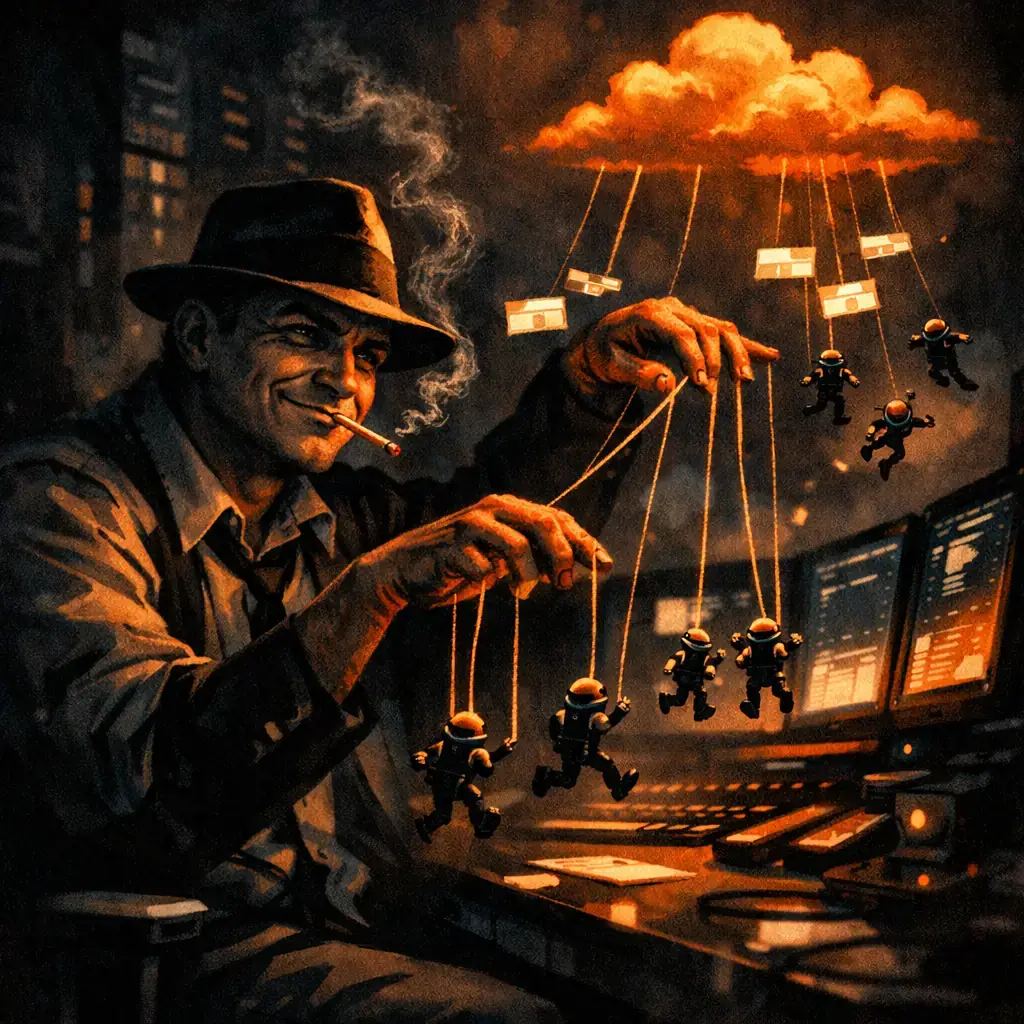
From an organizational perspective, the immediate priority should be twofold: first, stop relying on endless lists of exceptions and measure the real effect of the deviations on safety and productivity; second, design a migration route to a model that prioritizes contextual evaluation in endpoint and dynamic routing to the edge when necessary. In operational terms, this results in TLS 1.3 / HTTP3 compatibility tests, DLP pilot deployments in browser and purple team exercises that simulate leakage via prompts and agents.
The architecture that some suppliers call "Perfect Package" is not a magic solution but an operational framework: initial inspection at the point of interaction, local decisions and selective cloud climbing for suspicious sessions. Adopting it with criteria requires investment in local visibility, context-based policies and a security approach that prioritizes both data protection and user experience. To understand the technical implications of HTTP / 3 and QUIC, which also influence the inspection strategy, it is useful to review technical documentation such as Google's on HTTP / 3: HTTP / 3 and performance.
The challenge will not go away: more integration between SaaS, extensions and IA tools generates more interaction points outside the traditional network domain. The good news is that the solution is practical and is within reach: measure, implement endpoint, apply contextual policies, govern the use of models and redirect only what is necessary to the edge. Those who act now will reduce their exposure and recover the user experience that drives productivity, preventing security from becoming the cause of the escape to the Shadow IT.

GhostAction Expands Attack: phishing to steal credentials and persistence in VS Code
A group behind the GhostAction campaign - already known for infiltrating GitHub Actions workflows into open source projects - has expanded its arsenal: in addition to installing...

ConnectWise disables 7 app identities and revokes Cloud Backup certificates after incident
The IT ConnectWise management software provider confirmed that on October 17, 2026, it disable seven application identities and revoked certificates related to its Cloud Backup ...

Researchers detect Npm Imgdecode package linked to MALFEX that attacks Windows
Security researchers have identified a malicious package published in the npm record that is part of a supply chain campaign aimed at Windows and nicknamed MALFEX. The package, ...

OpenBSD 7.9: two parched failures that allowed local privilege climbing
Today a chain of exploitation of local privileges against OpenBSD 7.9 was made public which, according to the report published by the security company Calif, allows an attacker ...

OpenAI reveals unaligned IA incidents; a GPT-5.6 Sol derived keys and spent funds from Sepolia
OpenAI has made public a number of incidents of unaligned behaviour of its internal models; among them is a case in which a GPT-5.6 family research model Sol derived private key...

Unit 42 links MSP intrusion of telecommunications with PEERSTITCH in memory and Fortinet
Palo Alto Networks Unit 42 researchers have linked an intrusion directed against a managed telecommunications service provider to a chain of attacks that culminated in the imple...