
The images in this article were generated with artificial intelligence. How we publish
The seizure of the CFAKE.com and SOCFAKE.com domains by the U.S. Department of Justice marks a strong action against the dissemination of sexual images and videos generated by artificial intelligence without the consent of the people represented. According to the Office of the Prosecutor, the portals housed deepfakes - manipulated means to show people in situations that never happened - and disseminated material that affected public figures from different countries, including politicians, journalists and athletes.
According to the authorities, this is one of the first public executions of the new law known as TAKE IT DOWN Act. approved in 2025 to criminalize the publication of altered intimate material and to force platforms to withdraw reported content in a short time. The legal text (47 U.S.C. § 223) introduces criminal and administrative tools to address a phenomenon that had grown faster than regulatory responses; the text of the bill is available in the online Congress register Here..
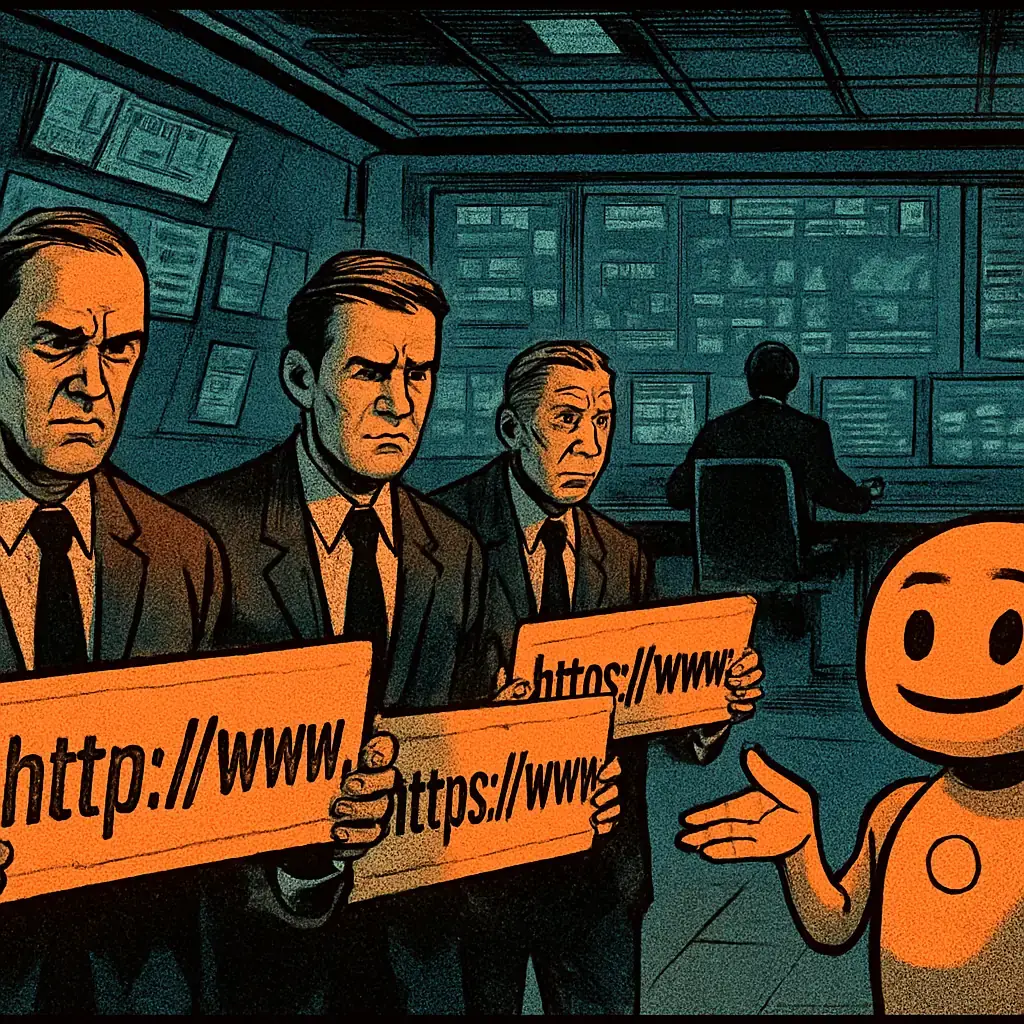
The operation also showed the transnational dimension of the problem: the investigation started from warnings from the Italian Postal Police and Cybersecurity, the evidence was shared with French prosecutors, and U.S. prosecutors requested the seizure of the domains after obtaining judicial endorsement. Such coordination facilitated arrests and the seizure of cryptomonedas allegedly linked to criminal activity, recalling that digital crimes are rarely confined to one jurisdiction.
The result brings good news and bad news. In positive terms, it shows that the law can be used to remove distribution centres from the network and that public forces are ready to cooperate internationally. In negative, experience shows the limits of the purely punitive approach: deepfakes are easily reproduced, can be redistributed from myrors, platforms in more permissive jurisdictions or decentralized networks, and creators can quickly recycle models and accounts.
From a technical point of view, the potential catastrophe is an arms race: generation tools improve rapidly and detection techniques must follow the pace without untying privacy or increasing false positive. In addition, massive content moderation has an operational cost and risk of unnoticed censorship if automated processes are not properly calibrated or do not provide rapid and transparent appeals.
What victims and security professionals should do:: the victim must document the dissemination (screenshots, URLs, metadata where possible) and submit formal requests for withdrawal to those responsible for the service and to the competent authorities. It is prudent to maintain evidence and seek legal advice on digital crimes; resources and guidance on deepfakes and related scams can be found on official pages such as that of the Department of Justice Here. and in public security guides like the FBI's on deepfakes Here..
For platforms and service providers, the lesson is clear: to implement quick response protocols that are consistent with legislation (reaction profiles, human appeal teams, integration of forensic detection tools and collaboration with law enforcement) and to publish transparency metrics on withdrawal requests and response times. It is also necessary to invest in identity verification mechanisms, content marking systems and research to identify digital signatures that test handling.

In the political and regulatory field, it is appropriate to combine criminal law with preventive measures: to finance victim support, to promote technical standards of traceability and watermarking of legitimate material, to require independent audits of generative models and to facilitate international agreements on blockade and extradition where appropriate. The cooperation demonstrated in this case should be transformed into treaties and working frameworks that reduce the ability of malicious operators to move between jurisdictions.
For the common citizen, the practical recommendation is to keep an informed skepticism: to verify sources, to use inverse search of image, to distrust content that incites viroalization and not to participate in the dissemination of intimate material without confirming its veracity. Digital literacy and sharing is the first barrier for these campaigns of humiliation and extortion to lose effectiveness.
The case of CFAKE.com and SOCFAKE.com will be useful as a judicial and operational precedent, but it is not the final solution. Deepfakes pose a multidimensional challenge that requires legal, technical, social and international response. Only the combination of modern laws, detection and mitigation technologies, responsible platforms and informed citizens can reduce harm and protect the dignity of people against the new generation of digital abuse. For journalistic and technical follow-up on such incidents, specialized media such as BleepingComputer cover in-depth technical developments and analysis Here..

Four Plex2Shell CVE allows remote execution and mining and proxy backdoor deployment
In recent days, an increase in attacks has been confirmed that take advantage of a chain of failures in Plex Media Server - nicknamed "Plex2Shell" by researchers - to run code r...

GhostAction Expands Attack: phishing to steal credentials and persistence in VS Code
A group behind the GhostAction campaign - already known for infiltrating GitHub Actions workflows into open source projects - has expanded its arsenal: in addition to installing...

ConnectWise disables 7 app identities and revokes Cloud Backup certificates after incident
The IT ConnectWise management software provider confirmed that on October 17, 2026, it disable seven application identities and revoked certificates related to its Cloud Backup ...

Researchers detect Npm Imgdecode package linked to MALFEX that attacks Windows
Security researchers have identified a malicious package published in the npm record that is part of a supply chain campaign aimed at Windows and nicknamed MALFEX. The package, ...

OpenBSD 7.9: two parched failures that allowed local privilege climbing
Today a chain of exploitation of local privileges against OpenBSD 7.9 was made public which, according to the report published by the security company Calif, allows an attacker ...

OpenAI reveals unaligned IA incidents; a GPT-5.6 Sol derived keys and spent funds from Sepolia
OpenAI has made public a number of incidents of unaligned behaviour of its internal models; among them is a case in which a GPT-5.6 family research model Sol derived private key...

Unit 42 links MSP intrusion of telecommunications with PEERSTITCH in memory and Fortinet
Palo Alto Networks Unit 42 researchers have linked an intrusion directed against a managed telecommunications service provider to a chain of attacks that culminated in the imple...