
The images in this article were generated with artificial intelligence. How we publish
A clean pentesting report usually gives a sense of immediate relief to the management: "we are stable, we are sure." This reading is dangerous because it confuses the absence of new findings with the existence of real defenses. The stability of the report is not synonymous with defensive sufficiency; often it simply means that the automated tool has reached the limit of what you can discover, not that the environment is no longer exploitable.
Pentesting's automated tools are valuable for discovering attack routes and exploitable vulnerabilities, but their scope is one: the path of attack. Picus and other Breach and Attack Simulation (BAS) suppliers suggest that effective validation should cover several surfaces, not just the one able to demonstrate how far an attacker can go. Detection, registration, response and cloud controls and identity are different surfaces that a successful exploitation does not verify on its own. A successful explosion does not tell you if your IMS generated a useful alert, if your EDR blocked the action or if the SOC had enough context to act.

The practical involvement is clear: teams that rely exclusively on repeated scans end up prioritizing according to findings that do not consider whether the control exists or works. This generates poorly ordered working tails, poorly allocated resources and, above all, a false tranquillity when a finding "does not reproduce" simply because the telemetry and the reaction of the environment were not validated. The dangerous thing is to assume that testing a path is equivalent to testing the defense.
What to do, then? The answer is not to abandon automated pentesting but to integrate it into a continuous validation program that measures not only the exploitation but also the ability to detect and respond. This means running attack scenarios with instrumentation: checking that telemetry reaches the IMS, that correlation rules shoot, that EDDs block or at least generate actionable alerts, and that SOC playbooks turn signals into actions. Mapping these tests to frames such as MITRE ATT & CK helps to standardize the tests and compare coverage with known actors and techniques ( MITRE ATT & CK).
In practice, organizations should combine several layers: penetration tests for attack routes, BAS to validate continuous detection and blocking controls, and Purple Team exercises to close gaps between offensive and defensive. It is also essential to implement operational metrics: detection times (MTTD), response times (MTTR), false negative rate and telemetry coverage. Without these indicators, any prioritization of vulnerabilities lacks half the necessary evidence.
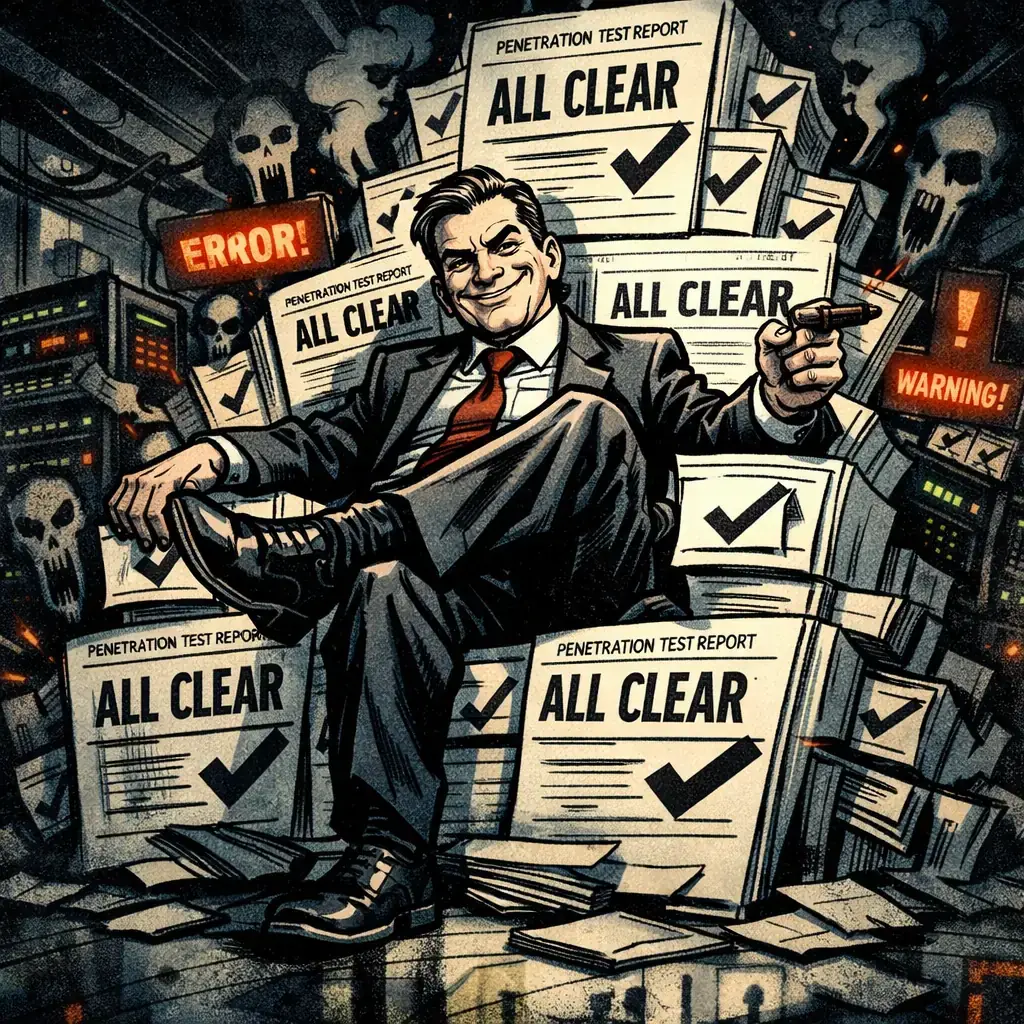
In addition to technique, there is an organizational component to address: communication with direction. To present findings accompanied by evidence as to whether they were detected, blocked or ignored transforms a "flat" report into a road map prioritized by real risk. This reduces noise and facilitates targeted investments in detection rules, log retention, cloud instrumentation and identity controls, rather than patch patching without defence criteria.
If you want to deepen the difference between what you discover a pentesting tool and what is worth a control program, there is a webinar that addresses exactly that gap organized by The Hacker News in collaboration with Picus Security; to register you can see concrete, metric examples and recommendations to close the separation between findings and controls. Find details and register on the Hacker News website ( The Hacker News) and consult the technical perspective and continuous validation solutions in Picus ( Picus Security).
In short, don't change a false sense of security to completeness. Automated pentesting combination, continuous validation of controls and detection and response-oriented exercises so that a "stable" report really reflects a defended environment and not just a tool that stopped finding things. That's the difference between a nice report and a real risk reduction.

GhostAction Expands Attack: phishing to steal credentials and persistence in VS Code
A group behind the GhostAction campaign - already known for infiltrating GitHub Actions workflows into open source projects - has expanded its arsenal: in addition to installing...

ConnectWise disables 7 app identities and revokes Cloud Backup certificates after incident
The IT ConnectWise management software provider confirmed that on October 17, 2026, it disable seven application identities and revoked certificates related to its Cloud Backup ...

Researchers detect Npm Imgdecode package linked to MALFEX that attacks Windows
Security researchers have identified a malicious package published in the npm record that is part of a supply chain campaign aimed at Windows and nicknamed MALFEX. The package, ...

OpenBSD 7.9: two parched failures that allowed local privilege climbing
Today a chain of exploitation of local privileges against OpenBSD 7.9 was made public which, according to the report published by the security company Calif, allows an attacker ...

OpenAI reveals unaligned IA incidents; a GPT-5.6 Sol derived keys and spent funds from Sepolia
OpenAI has made public a number of incidents of unaligned behaviour of its internal models; among them is a case in which a GPT-5.6 family research model Sol derived private key...

Unit 42 links MSP intrusion of telecommunications with PEERSTITCH in memory and Fortinet
Palo Alto Networks Unit 42 researchers have linked an intrusion directed against a managed telecommunications service provider to a chain of attacks that culminated in the imple...