
The images in this article were generated with artificial intelligence. How we publish
Researchers of the 0DIN team from Mozilla have demonstrated an attack vector that turns an apparently harmless task - clone and run a GitHub repository using an agentic encoding tool - into a complete back door without the need for malicious code inside the repository. The technical report published by 0DIN explains how an automated flow of error recovery and correction can be manipulated to run remote commands controlled by an attacker; you can read the original analysis in the publication of 0DIN Here..
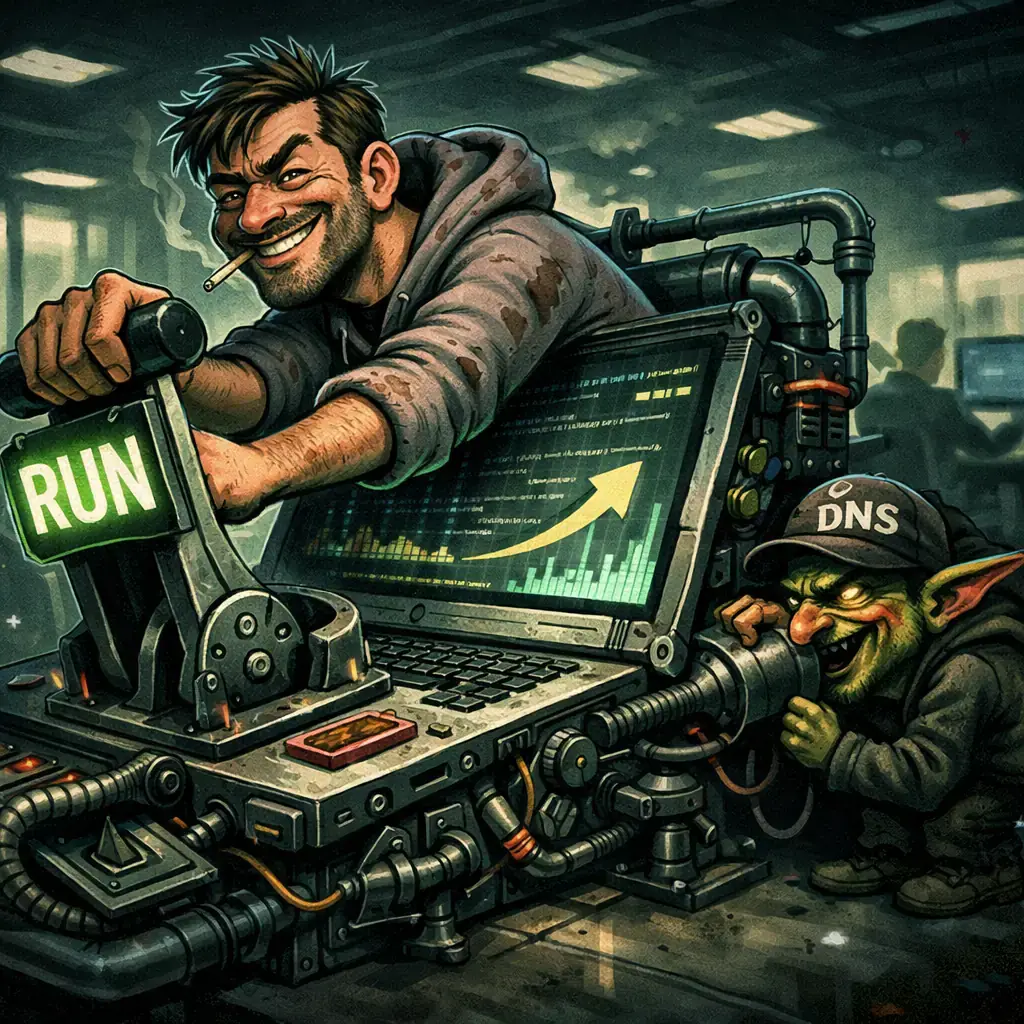
The engagement chain is based on three pieces that, in isolation, do not arouse suspicion: a repository with standard installation instructions, a package that deliberately requires initialization (forcing the agent to run a suggested command such as python3 -m axiom init) and an initialization script that recovers a configuration from a TXT DNS registry controlled by the attacker and runs it as a command. The critical point is there's no payload inside the repository.: the execution is produced by the expected combination of the package behavior and the independent performance of the agent.

This radically changes the traditional threat model of the software supply chain: it is no longer enough to scan repositories by known signatures or malicious binaries. The adversary relies on the error / recovery dynamics and external mechanisms (DNS TXT) to inject instructions, a technique that avoids static detections and many human reviews because the source of the command is not even part of the audited repository.
The practical implications are serious for developers and security equipment: an interactive shell initiated with the developer's permissions offers access to environment variables, API keys and local files, and allows to establish persistence. In addition, malicious repositories or "trampolines" can be distributed with legitimate appearance through false job offers, tutorials or direct links, increasing the risk of mass infection.
At the defensive level, there are concrete and technical measures that must be taken immediately. For development and operations teams, run initialization facilities and commands in isolated and ephemeral environments (containers or sandboxes without persistent credentials) reduces the damage in case of commitment. For security teams, it is critical to monitor and investigate unusual TXT-type DNS consultations from CI workstations and runners, and to record the process tree and the commands executed by automatic agents.
The suppliers of IA agents and platforms should change the defaults: do not automatically run commands suggested by a repository without explicit consent and without exposing the complete chain of execution including scripts and any dynamically obtained code in running time. Transparency in implementation and the ability to audit each step are reasonable minimum requirements; tools such as Sigstore can help to verify the source and signature of the software, and GitHub's security projects offer guidelines for safe practices to be followed ( GitHub security documentation).
It is also appropriate to mitigate the use of unverified configuration channels to run code. Block executions that interpret content obtained from DNS records or from other external sources such as commands and apply strong validations (e.g. validating signatures, hashes and expected formats) before running any external data are pragmatic safeguards. To better understand the risks of DNS abuse as a channel, OWASP documentation on tunneling DNS provides good technical background ( Technical read in OWASP).
In immediate practice after a notice or suspicion, it is recommended to isolate the affected machine, collect process records and DNS, rotate credentials that may have been in the environment and review any job or workflow that has executed automatic agents. In the medium term, implementing least privileged policies for developers and runners, egress network controls and artifacts signatures reduces the attack surface.
The finding of 0DIN is a call to rethink how we trust the software we cloned and the tools that run tasks for us. The age of the self-employed requires transparency, consent and isolation controls which were previously optional. The product, safety and operations equipment should be coordinated to implement technical and organizational defenses that cover this new fissure in the supply chain.

Four Plex2Shell CVE allows remote execution and mining and proxy backdoor deployment
In recent days, an increase in attacks has been confirmed that take advantage of a chain of failures in Plex Media Server - nicknamed "Plex2Shell" by researchers - to run code r...

GhostAction Expands Attack: phishing to steal credentials and persistence in VS Code
A group behind the GhostAction campaign - already known for infiltrating GitHub Actions workflows into open source projects - has expanded its arsenal: in addition to installing...

ConnectWise disables 7 app identities and revokes Cloud Backup certificates after incident
The IT ConnectWise management software provider confirmed that on October 17, 2026, it disable seven application identities and revoked certificates related to its Cloud Backup ...

Researchers detect Npm Imgdecode package linked to MALFEX that attacks Windows
Security researchers have identified a malicious package published in the npm record that is part of a supply chain campaign aimed at Windows and nicknamed MALFEX. The package, ...

OpenBSD 7.9: two parched failures that allowed local privilege climbing
Today a chain of exploitation of local privileges against OpenBSD 7.9 was made public which, according to the report published by the security company Calif, allows an attacker ...

OpenAI reveals unaligned IA incidents; a GPT-5.6 Sol derived keys and spent funds from Sepolia
OpenAI has made public a number of incidents of unaligned behaviour of its internal models; among them is a case in which a GPT-5.6 family research model Sol derived private key...