
The images in this article were generated with artificial intelligence. How we publish
Recently, an international operation coordinated by Europol He played a major hit against one of the most efficient phishing factories in recent years: the platform known as Tycoon2FA. The joint action - involving police agencies from several countries and a coalition of technology companies - disconnected hundreds of domains that formed the backbone of the service and left out of line control panels and subplanting pages used by criminals.
According to the Europol press release, 330 domains linked to the service were seized and deactivated, and operational measures were carried out in countries such as Latvia, Lithuania, Portugal, Poland, Spain and the United Kingdom, with coordination from the Europol European Cybercrime Centre. You can consult the official communiqué on the Europol site here: europol.europa.eu.

Microsoft, which led the technical interruption with the support of several private actors, describes Tycoon2FA as a platform that operated since at least August 2023 and was exploited by criminals to avoid multi-factor authentication protections on a large scale. The company's researchers estimated that by mid-2025 Tycoon2FA was generating tens of millions of phishing e-mails per month and represented a very high proportion of the attempts to subplant blocked by its systems. Microsoft analysis is available on your security blog here: microsoft.com / security / blog.
The key technical element that made this platform dangerous was its design as a service of "adversary-in-the-middle" (AITM). In practical terms, Tycoon2FA acted as an inverse proxy: when a victim tried to log into services such as Microsoft 365 or Gmail through a fraudulent page, the platform intercepted in real time both the credentials and session cookies and the MFA codes that the user introduced. From the victim's perspective, the login process might seem successful, but attackers gained access to the authenticated session and could maintain control even if the password was changed later.
This behavior explains why many affected organizations did not immediately detect intrusion: it was not just about the theft of passwords, but about the capture of tokens and active sessions that allowed the attacker to move with apparently valid credentials. Microsoft also warned that, unless active sessions and tokens are explicitly revoked, the simple re-establishment of passwords is not enough to cut off malicious access.
One factor that accelerated risk dissemination was the commercial model of the platform: Tycoon2FA was sold for short periods through channels such as Telegram, which facilitated actors with little technical knowledge to launch sophisticated attacks against organizations of all sizes. This "criminal access economy" turns complex tools into commodities and multiplies the scope of malicious campaigns.
The arrest and neutralization of the infrastructure alone does not eliminate the risk: the suplanting campaigns come back with variations and other kits can quickly occupy the vacuum. That is why it is necessary to understand what measures actually reduce exposure.
First of all, multifactor authentication is still necessary, but it is not infallible. There are differences between methods: SMS codes and codes sent by authentication apps are susceptible to AITM attacks and interception processes; instead, solutions based on public keys (e.g., FIDO2 / WebAuthn and physical security keys) offer proven resistance to this type of interception because they do not make a reusable secret available that can be retransmitted by a proxy.
Secondly, it is essential to incorporate session controls: when a commitment is suspected, active sessions and tokens must be revoked, re-authenticated and access records reviewed to identify anomalous latences or locations. It also helps conditional access policy that limits the validity of sessions according to the device, network or user behavior.
Besides the technical layer, e-mail prevention remains critical: more aggressive anti-phishing filters, domain authenticity validation (DMARC, SPF, DKIM) and content and link analysis reduce the likelihood of a victim reaching a fraudulent page. The collaboration between security firms, infrastructure providers and police forces, as seen in this operation, increases the effectiveness of these defenses.
For IT organizations and administrators, the practical recommendations are to prioritize the adoption of physical-resistant authentication (FIDO2), enable automatic session revocation by detecting changes in credentials, further deactivate inherited authentication methods and monitor telemetry indicating atypical session beginnings. In response, it is essential to have clear procedures to act on a possible AITM: identification of scope, revocation of tokens, blocking of committed accounts and reporting to affected users.
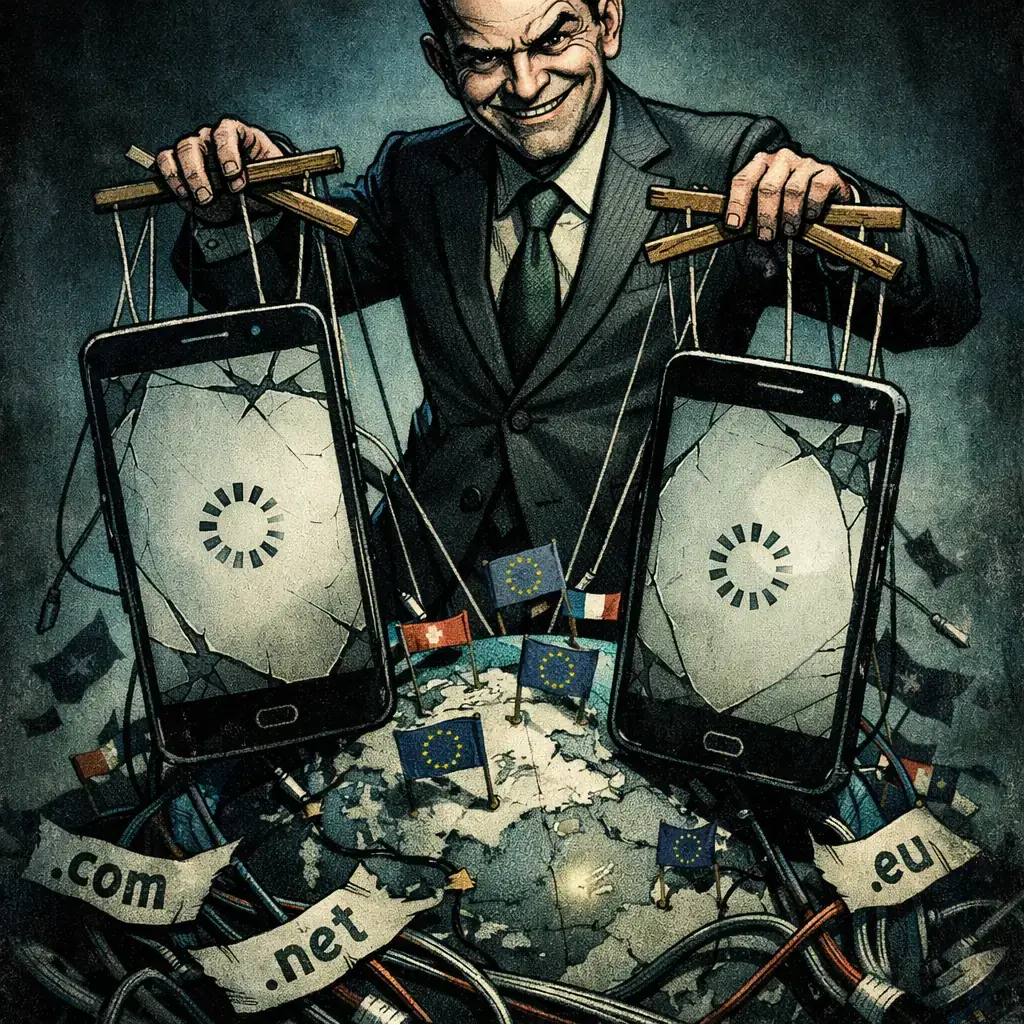
Finally, this episode highlights something that experts have been repeating for years: security is not a single control, but layers that must be combined and updated continuously. The disarticulation of Tycoon2FA is an important operational success, but the threat evolves and requires companies, public administrations and users to strengthen both technology, awareness and digital hygiene practices.
If you want to deepen, the Europol communiqué details international cooperation and measures taken, and Microsoft's technical analysis explains how the platform worked and why it was so effective against certain MFA methods: Europol and Microsoft Security Blog. For context on good authentication practices and session management, the NIST authentication guide provides useful foundations: NIST SP 800-63B.
The lesson is clear: public-private cooperation can dismount large criminal operations, but it is to be hoped that malicious actors will adapt their tools. Effective defense requires constant updating, quick response and a determined bet on authentication mechanisms that resist real-time attempts to supplanting.

Florida, Iowa, Montana and Nebraska sue TP-Link Systems for security and source of routers
On October 6, four State Attorney General filed complaints against TP- Link Systems in U.S. state courts - in addition to a previous Texas lawsuit - for business practices relat...

FBI and six countries link Integrity Technology Group to entity post theft in SE Asia
On October 8, the FBI and agencies in six countries issued a joint warning that assigns to a Chinese company, Integrity Technology Group, a sustained series of intrusions whose ...

Campaign with LLM and ARTEX attacks South Korean financial institutions and exfilters data
Security researchers have documented a campaign directed against South Korean financial institutions using language-driven attack tools to automate intrusions and data extractio...

ChainDrop campaign exposes tensorlake in npm; version 0.5.144 withdrawal
A package of npm called tensorlake, an SDK in TypeScript oriented to Tensorlake applications and services, was engaged in a supply chain campaign linked to the attack family kno...

Google reports DNS kidnapping: TLS certificates for google.com.gh, google.sl and google.as
Google reported on October 6 that attackers managed to issue unauthorized HTTPS certificates for Google and YouTube names after compromising authoritative DNS records of three t...

Cyber risk in 2026 moves to workflows and IA, according to Voice of the CISO
The data added by five editions of the Voice of the CISO study - including the most recent findings of 2026 - draw a less intense change than risk location: the threat is moving...