
The images in this article were generated with artificial intelligence. How we publish
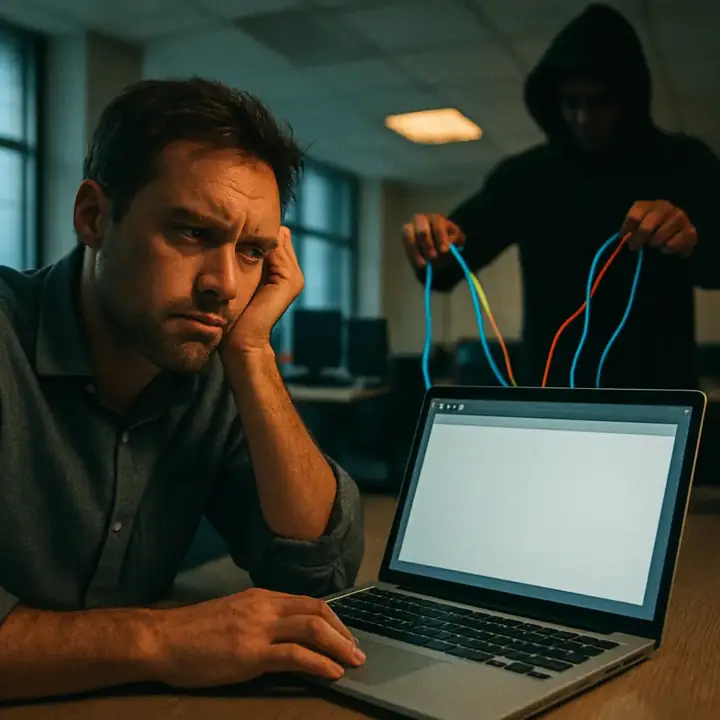
In recent days, high-value Instagram accounts have been documented to demonstrate a dangerous combination: images and video generatives capable of creating convincing falsifications, automated IA-driven identity verification procedures and a user-care process that in many cases does not include human intervention. The attackers took advantage of the flow of "Did you forget your password?" to force a facial verification and, with a public photo of the target, generated a short animated clip that Meta's automatic tool accepted as a legitimate test, which allowed to change the associated mail and then restore the password and take control of the account.
The failure was not a classic technical explosion but a combination of social engineering and limits in the detection of deepfakes by automated systems. Affected users pointed out that even with 2FA activated - in many cases by SMS or authentication applications - the video verification valid by the IA overturned other barriers. In addition, there are reports that attackers used VPNs to simulate regular locations to avoid more stringent geographical verification flows. That legitimate support equipment is not available or that recovery depends exclusively on chatbots created endless loops for those who tried to recover their assets.

This incident has several immediate implications. For account holders, especially those with rare names or high commercial value, the confidence that the protections are sufficient has been eroded. For platforms that delegate critical security decisions to automatic models, the need for complementary controls and traceability in the algorithmic decisions is evident. At the regulatory and reputational level, companies offering automatic biometric verification face the risk of investigations and sanctions if their processes do not include safeguards that prevent deepfakes-based fraud.
From the technical point of view, the exploited vector is clear: the life test (livelihood detection) and the ability to distinguish real video from synthesized are not up to the current threat generated by image and video generation tools. Facial verification systems that are trained in limited data or apply rigid thresholds without multi-factor authentication can be misled with content generated from existing photographs in the victim's own account.
What can users do now to minimize risks? First, review and tighten the security of the email associated with the account, because that mail is the entry door to restore passwords. Activate 2FA methods based on physical safety keys (FIDO2 / WebAuthn) when the platform allows it significantly reduces the risk of taking control, as the keys require the physical presence of the user. It is also recommended to use single password and password managers, and to maintain an offline copy of property tests (old catches, advertising bills, etc.) that can be submitted to support if human attention is available. If your account has commercial value, posting it on other channels and documenting the property can help press for a human review.

For platforms that enable automated facial verification, recommendations are urgent: incorporate real-time challenge mechanisms (e.g., ask for specific video actions that cannot be predicted in advance), combine multiple signals - device footprint, login behavior, mail change history - and ensure human scalation routes for high-value account cases or when risk signals exceed certain thresholds. It is also essential to audit and maintain records of IA decisions to allow forensic review and mediation.
The debate on liability and safe design of automatic verification systems already has frameworks and good practices. NIST, for example, publishes guidelines on digital identity and life tests to be considered when designing robust verification processes: https: / / pages.nist.gov / 800-63-3 /. The technical and security incident coverage that documents similar cases helps to understand the extent of the problem and to prepare organized responses: an example of journalistic follow-up can be found in BleepingComputer, which has reported on these abductions and the current limitations of support systems: https: / / www.bleepingcomputer.com / news / security / instagram-accounts-hijacked-after-meta-s-ai-accepted-deepfake-videos /.
Ultimately, these incidents highlight that automation without a design that includes adverse failures can increase the risk rather than mitigate it. Users, companies and regulators must demand transparency on how and when automatic biometric verifications are used, and platforms must provide effective human support pathways to recover accounts when IA fails. As long as these improvements are not the norm, account owners - and especially those who manage high-value profiles - should assume that automated facial verifications can be violated and plan mitigation accordingly.

FBI and six countries link Integrity Technology Group to entity post theft in SE Asia
On October 8, the FBI and agencies in six countries issued a joint warning that assigns to a Chinese company, Integrity Technology Group, a sustained series of intrusions whose ...

Campaign with LLM and ARTEX attacks South Korean financial institutions and exfilters data
Security researchers have documented a campaign directed against South Korean financial institutions using language-driven attack tools to automate intrusions and data extractio...

ChainDrop campaign exposes tensorlake in npm; version 0.5.144 withdrawal
A package of npm called tensorlake, an SDK in TypeScript oriented to Tensorlake applications and services, was engaged in a supply chain campaign linked to the attack family kno...

Google reports DNS kidnapping: TLS certificates for google.com.gh, google.sl and google.as
Google reported on October 6 that attackers managed to issue unauthorized HTTPS certificates for Google and YouTube names after compromising authoritative DNS records of three t...

Cyber risk in 2026 moves to workflows and IA, according to Voice of the CISO
The data added by five editions of the Voice of the CISO study - including the most recent findings of 2026 - draw a less intense change than risk location: the threat is moving...
Phishing BitB points to advertising professionals and account managers to steal MFA
Security researchers have described a phishing campaign for advertising professionals and account managers that uses a human-operated platform to mimic ad products linked to IA ...

LibreOffice / OpenOffice Calc allows remote source execution when opening ODB / JDBC leaves
Researchers have shown that a malicious spreadsheet can force LibreOffice and Apache OpenOffice to run code controlled by an attacker at the time the file is opened, without sho...