
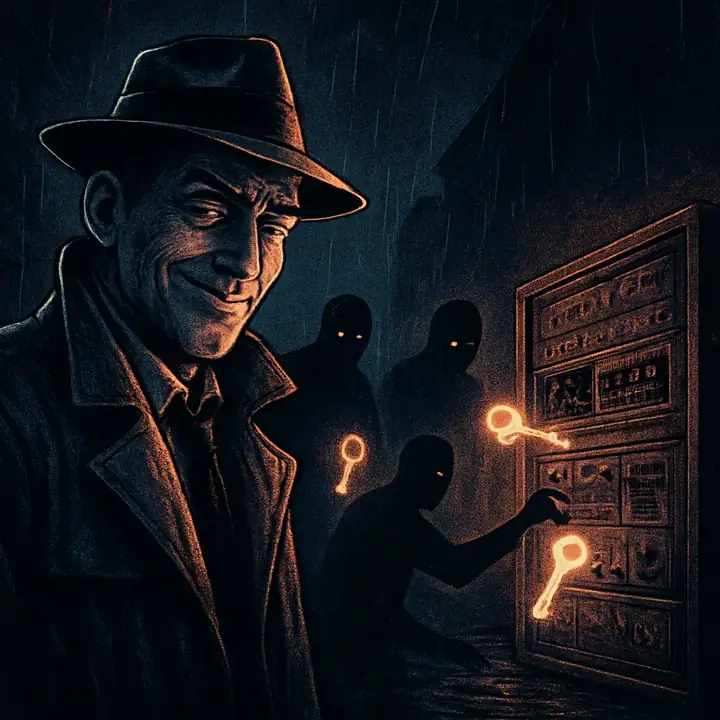
The images in this article were generated with artificial intelligence. How we publish
The Spanish National Police have taken a major blow against the piracy of comics: according to his statement, he has disarticulated what they consider the largest manga portal in Spanish, a site that has been operating since 2014 and which was allegedly attended by millions of users a month from all over the world. The investigation, which started in June 2025, describes a sophisticated operation whose business model was based on providing free access to copyright-protected works and monetizing traffic through aggressive advertising windows.
The official note of the National Police highlights the international scope and the damage caused to creators, publishers and translators, and is in line with what is published by specialized means of security and intellectual property. For example, TorrentFreak has reported that the Tu Manga Online portal (TMO) was released after legal action, and that the description and time limits the Police cites coincide with that site, although the police note itself does not explicitly name the platform. You can read the official statement on the National Police page here: Communiqué de la Policía Nacional.

Beyond the closure, what is striking are the figures and practices described. The authorities claim that the portal came to generate more than $4.7 million in advertising revenue by mass exploitation of pop-ups: windows that were deployed with each interaction - by selecting a comic book, by reading a synopsis or by browsing the catalogue - thus multiplying the advertising impressions. According to the research, many of these advertisements were of pornographic content, a particularly serious problem if a significant part of the manga public is considered to be underage.
The police operation included an entry and registration in a house in Almería where, according to the officers' account, a "complex technological assembly" was discovered that supported the operation of the web. During the search, they also found evidence that an alternative site was being developed, probably thought of as a backup to migrate the activity in the event of a closure; the raid prevented its start-up. Several people were arrested by the security forces: in addition to the main suspect registered in Almería, there were three other arrests linked to the same operation, although the exact roles of each of them have not been publicly detailed.
One of the most striking findings was that of two USB devices hidden within a wall thermometer: inside it there were "cold wallets" of cryptomonedas with a higher value than $470,000 in digital assets, according to the police. This type of off-line storage is used to protect funds from hacking, but it also complicates the tracing and recovery of resources linked to illicit activities; it is an example of how digital piracy has crossed with the critical ecosystem. To better understand how cryptomonedas intertwine with online crimes, reports from analysts like Chainalysis can offer context on trends and concealment techniques.
In addition to the economic implications, this case puts on the table again a broader discussion: the effect of piracy on cultural industries. The sleeves are works involving authors, cartoonists, translators, editors and distributors; when unauthorised operating income is affected, the whole chain is damaged that allows these works to reach new audiences and new productions are financed. International institutions governing intellectual property, such as the World Intellectual Property Organization (WIPO) they recall that the protection of rights is essential to sustain cultural creation, but also point to the need for balanced policies that facilitate legal and affordable access to the public.
International cooperation has been a key factor in many operations against unauthorised content platforms, because servers, paywalkways and users often spread their activity across several countries. In this case, the National Police highlighted the international impact of the action and the reputational and economic damage inflicted on rights-holders both in Spain and abroad. It is a reminder that the fight against piracy combines technical research, judicial action and - sometimes - collaboration with rights-holders and authorities in other jurisdictions.

For manga-loving readers, this episode can also serve to reflect on responsible alternatives. Today there are legal options that offer access to comprehensive catalogues, official translations and subscription or purchase models that reverse revenue to authors and publishers: from platforms of Japanese origin such as MangaPlus even international services that include manga in your offer, such as Crunchyroll Manga. Support legitimate channels helps keep the industry alive, guarantees quality translations and protects vulnerable audiences from inappropriate content inserted by advertising networks of dubious origin.
It remains to be seen how judicial proceedings will be conducted and what sanctions and preventive measures will be applied in the coming months. What is clear is that the technification of piracy platforms - from infrastructure to host huge catalogues to the use of cryptomonedas to whiten benefits - requires equally technical and coordinated responses from the authorities and the sectors concerned. Meanwhile, this closure brings to the fore the tension between the desire for immediate access to culture and the need to support those who create it economically.
If you are interested in following the case from the original sources, you can consult the Communiqué de la Policía Nacional and the specialized coverage of TorrentFreak. For context on intellectual property and the protection of cultural creation, the WIPO provides updated guides and documentation.

OpenAI engineer arrested by hidden recorder in office board room in San Francisco
A United States court this week authorized the arrest of Abdulrahman Alfozan, an engineer who worked in OpenAI, following the U.S. government's charges for placing a hidden reco...

Four Plex2Shell CVE allows remote execution and mining and proxy backdoor deployment
In recent days, an increase in attacks has been confirmed that take advantage of a chain of failures in Plex Media Server - nicknamed "Plex2Shell" by researchers - to run code r...

GhostAction Expands Attack: phishing to steal credentials and persistence in VS Code
A group behind the GhostAction campaign - already known for infiltrating GitHub Actions workflows into open source projects - has expanded its arsenal: in addition to installing...
OpenCode: possible exposure of AI suppliers in Console affects 1.4% of users
On the night of October 16 there was an unauthorized access to a system inherited from OpenCode which, according to the company, could have exposed keys from IA suppliers that u...

ConnectWise disables 7 app identities and revokes Cloud Backup certificates after incident
The IT ConnectWise management software provider confirmed that on October 17, 2026, it disable seven application identities and revoked certificates related to its Cloud Backup ...

Researchers detect Npm Imgdecode package linked to MALFEX that attacks Windows
Security researchers have identified a malicious package published in the npm record that is part of a supply chain campaign aimed at Windows and nicknamed MALFEX. The package, ...