
The images in this article were generated with artificial intelligence. How we publish
cPanel has published patches for three security failures in cPanel & WHM that, in different scenarios, allow from arbitrary file reading to remote code execution and mismodification of permissions through symbolic links. Although there is still no public evidence of massive exploitation of these three vulnerabilities, their presence in such widespread software in shared hosting makes any delay in updating a real risk to suppliers and customers.
The three failures identified (CVE-2026-29201, CVE-2026-29202 and CVE-2026-29203) cover different vectors: insufficient validation of file names that can lead to arbitrary reading, unsafe validation of the "plugin" parameter that allows Perl code execution in the context of the already authenticated user, and unsafe handling of symlinks that allows to change permits with chmod over other files. These combinations represent a high risk in multi-user environments, where an attacker with limited access could scale privileges or interrupt services from other customers.
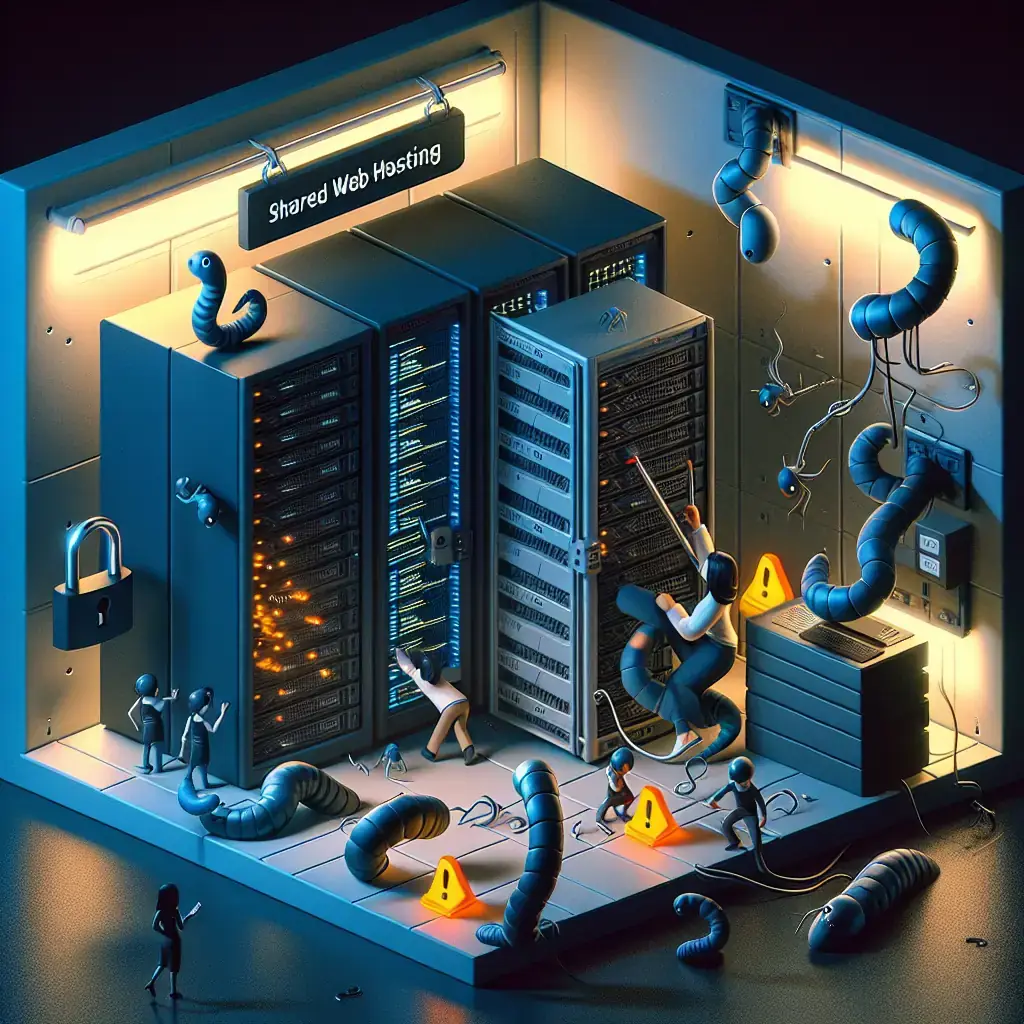
Why is it serious at shared hosting? On servers where there are dozens or hundreds of accounts, a vulnerability that allows code execution under the system user or permit handling can quickly be transformed into multiple site engagement, zombie machine creation (e.g. for Mirai) or entry door for ransomware. The recent history of cPanel failure exploitation by actors that distributed Mirai and Ransomware variants reinforces the urgency of patching and monitoring the engagement signals.
cPanel has included these corrections in recently published product branches; in addition, it has offered a timely update (110.0.114) for customers still running CentOS 6 or CloudLinux 6. If you manage servers with cPanel / WHM you must check the installed version and apply official updates as soon as possible. For update instructions and supported versions check the official cPanel documentation in https: / / docs.cpanel.net / and the news of the team in https: / / news.cpanel.com /.
Immediate recommended action: acts first with patches; if you cannot apply the support update or maintenance windows, it mitigates by blocking access to administrative ports (2082 / 2083 / 2086 / 2087) from the Internet, restricting WHM / cPanel to administration PIs by firewall, disabling APIs exposed unnecessary and applying WAF / ModSecurity rules to protect known entries. It also considers temporarily disabling non-essential third-party modules or plugins until they are safe.

In addition to updating, he does a basic forensic review: he seeks unusual processes, persistent outgoing connections, files with altered permissions, unknown chronJobs and cPanel / WHM log activity. If you manage customers, report transparently on the applied mitigation and recommend restoring sensitive credentials (passwords, API keys). For guidance on vulnerability management and good practices you can consult NVD resources in https: / / nvd.nist.gov / and incident response guides at official sites.
What to monitor in the short term: abnormal authentication attempts, called to administrative APIs from hosting accounts, scripts or binaries Unusual perl running as account users, and permit modifications using synlinks. Early indicators that suggest exploitation can be CPU peaks / network use, processes such as download or scanners and creation of devices associated with botnets or ransomware.
On the organizational level, it prioritizes applying patches in order of criticality and visibility: first exposed production servers and nodes that host multiple customers. Keep a schedule of updates and test the patches in staging environments when possible to avoid unexpected interruptions. Finally, it documents the actions taken and communicates to stakeholders to maintain confidence: speed and transparency are key to vulnerabilities in shared infrastructure.

FBI and six countries link Integrity Technology Group to entity post theft in SE Asia
On October 8, the FBI and agencies in six countries issued a joint warning that assigns to a Chinese company, Integrity Technology Group, a sustained series of intrusions whose ...

Campaign with LLM and ARTEX attacks South Korean financial institutions and exfilters data
Security researchers have documented a campaign directed against South Korean financial institutions using language-driven attack tools to automate intrusions and data extractio...

ChainDrop campaign exposes tensorlake in npm; version 0.5.144 withdrawal
A package of npm called tensorlake, an SDK in TypeScript oriented to Tensorlake applications and services, was engaged in a supply chain campaign linked to the attack family kno...

Cyber risk in 2026 moves to workflows and IA, according to Voice of the CISO
The data added by five editions of the Voice of the CISO study - including the most recent findings of 2026 - draw a less intense change than risk location: the threat is moving...

Phishing BitB points to advertising professionals and account managers to steal MFA
Security researchers have described a phishing campaign for advertising professionals and account managers that uses a human-operated platform to mimic ad products linked to IA ...

LibreOffice / OpenOffice Calc allows remote source execution when opening ODB / JDBC leaves
Researchers have shown that a malicious spreadsheet can force LibreOffice and Apache OpenOffice to run code controlled by an attacker at the time the file is opened, without sho...