
The images in this article were generated with artificial intelligence. How we publish
Grafana Labs has confirmed that attackers accessed their GitHub environment and downloaded part of the source code after compromising an access token. Although the company claims that no evidence of customer data exposure or impact on systems in production, the filtration of the code poses different and persistent risks that deserve technical and strategic attention.
The extortion group that claims the intrusion, self-called CoinbaseCartel, has added Grafana to its data leakage portal (DLS) without yet publishing files, in a classic pressure maneuver to force a payment. Grafana has chosen not to give in to extortion and has invalidated the committed credentials, following the public recommendation of the authorities, which warn that paying ransom does not guarantee the recovery of assets or deter future attacks. See the FBI's general orientation on ransomware and extortion here: https: / / www.fbi.gov / scams-and-safety / common-scams-and-crimes / ransomware.
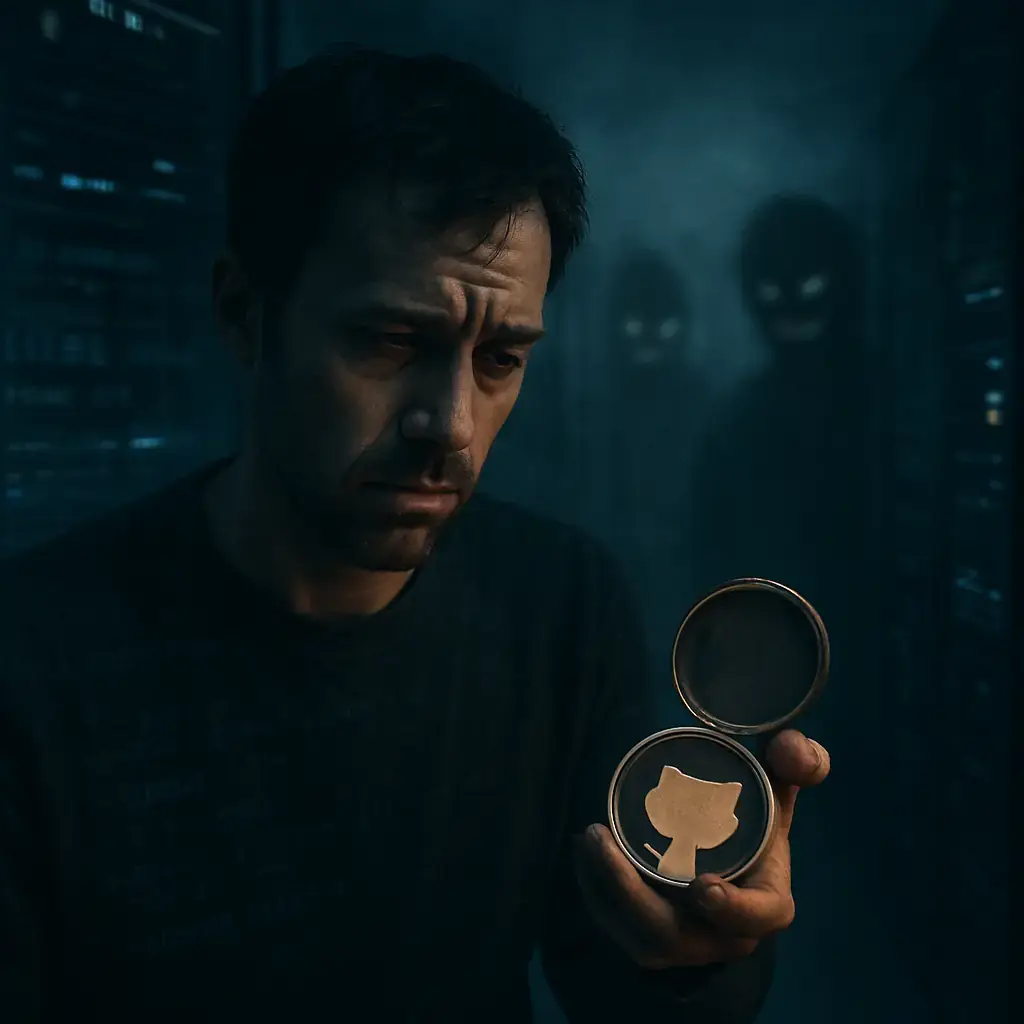
From the operational point of view, the declared vector - a stolen token in GitHub - emphasizes a constant: the credentials and the secrets exposed remain the main gateway for attacks on repositories and pipelines. Open source organizations and projects with high commercial adoption, such as Grafana, are particularly valuable for attackers because their code may contain useful information about configurations, dependencies and potentially logical flows that facilitate supply chain vulnerabilities.
The incident also highlights the mode of operation of collectives such as CoinbaseCartel, which according to researchers groups members of previous bands (ShinyHunters, Lapsus $) and combines data theft with publication threats and destructive tools. Technical and intelligence reports indicate that variants of these threats develop loads to encrypt critical infrastructure like VMware ESXi, which complicates the response if the actor decides to climb.
For product equipment and operations that manage own or third-party software such as Grafana, priority actions should include the immediate rotation of tokens and keys, the revision and restriction of permits (principle of less privilege), and migration to safer mechanisms: fine tokens with expiry, OIDC between CI / CD and identity providers, and automatic expiry policies. GitHub offers guides to create and protect tokens that should be reviewed: https: / / docs.github.com / en / authentication / keeping-your-account-and-data-secure / creating-a-personal-accesses.
Beyond the management of secrets, it is recommended to audit the entire history of commitments and automatic integrations in case the access was used to insert back doors or modify releases. Software consumer organisations should verify official release signatures / prints, prefer packages distributed from official sources, and activate integrity controls (check sum, reproducible building and device signature) to minimize the risk of accepting manipulated binaries.

As for the response to extortion, Grafana followed the position recommended by many law enforcement officials and specialists: not to pay. However, public communication and technical transparency matter as much as internal containment. Companies should prepare communication plans to explain which information has been revised, which evidence supports the non-impact of sensitive data, and the mitigation measures taken to restore confidence.
For those responsible for cybersecurity and governance, this case is a reminder of two priorities: investing in early detection and credentials hygiene practices, and assuming that the source code, although not containing personal data, is a strategic asset that requires equivalent protection. Risk assessments, post-incident integrity tests and escape / extortion simulation exercises help to calibrate the response and reduce reputational and operational impact.
Finally, the community should remember that incidents of this type can evolve: subsequent publication of code or artifacts, or exploitation attempts based on the knowledge acquired from the repository, are plausible scenarios. Maintain monitoring of leak forums and portals, update intelligence alerts and collaborate with suppliers and authorities are actions that, combined with technical controls, improve resilience to future attacks. For more context on the initial coverage of this incident, see BleepingComputer's report: https: / / www.bleepingcomputer.com / news / security / grafana-labs-confirms-source-code-stolen-by-coinbasecartel /.

Four Plex2Shell CVE allows remote execution and mining and proxy backdoor deployment
In recent days, an increase in attacks has been confirmed that take advantage of a chain of failures in Plex Media Server - nicknamed "Plex2Shell" by researchers - to run code r...

GhostAction Expands Attack: phishing to steal credentials and persistence in VS Code
A group behind the GhostAction campaign - already known for infiltrating GitHub Actions workflows into open source projects - has expanded its arsenal: in addition to installing...

ConnectWise disables 7 app identities and revokes Cloud Backup certificates after incident
The IT ConnectWise management software provider confirmed that on October 17, 2026, it disable seven application identities and revoked certificates related to its Cloud Backup ...

Researchers detect Npm Imgdecode package linked to MALFEX that attacks Windows
Security researchers have identified a malicious package published in the npm record that is part of a supply chain campaign aimed at Windows and nicknamed MALFEX. The package, ...

OpenBSD 7.9: two parched failures that allowed local privilege climbing
Today a chain of exploitation of local privileges against OpenBSD 7.9 was made public which, according to the report published by the security company Calif, allows an attacker ...

OpenAI reveals unaligned IA incidents; a GPT-5.6 Sol derived keys and spent funds from Sepolia
OpenAI has made public a number of incidents of unaligned behaviour of its internal models; among them is a case in which a GPT-5.6 family research model Sol derived private key...
Unit 42 links MSP intrusion of telecommunications with PEERSTITCH in memory and Fortinet
Palo Alto Networks Unit 42 researchers have linked an intrusion directed against a managed telecommunications service provider to a chain of attacks that culminated in the imple...