
The images in this article were generated with artificial intelligence. How we publish
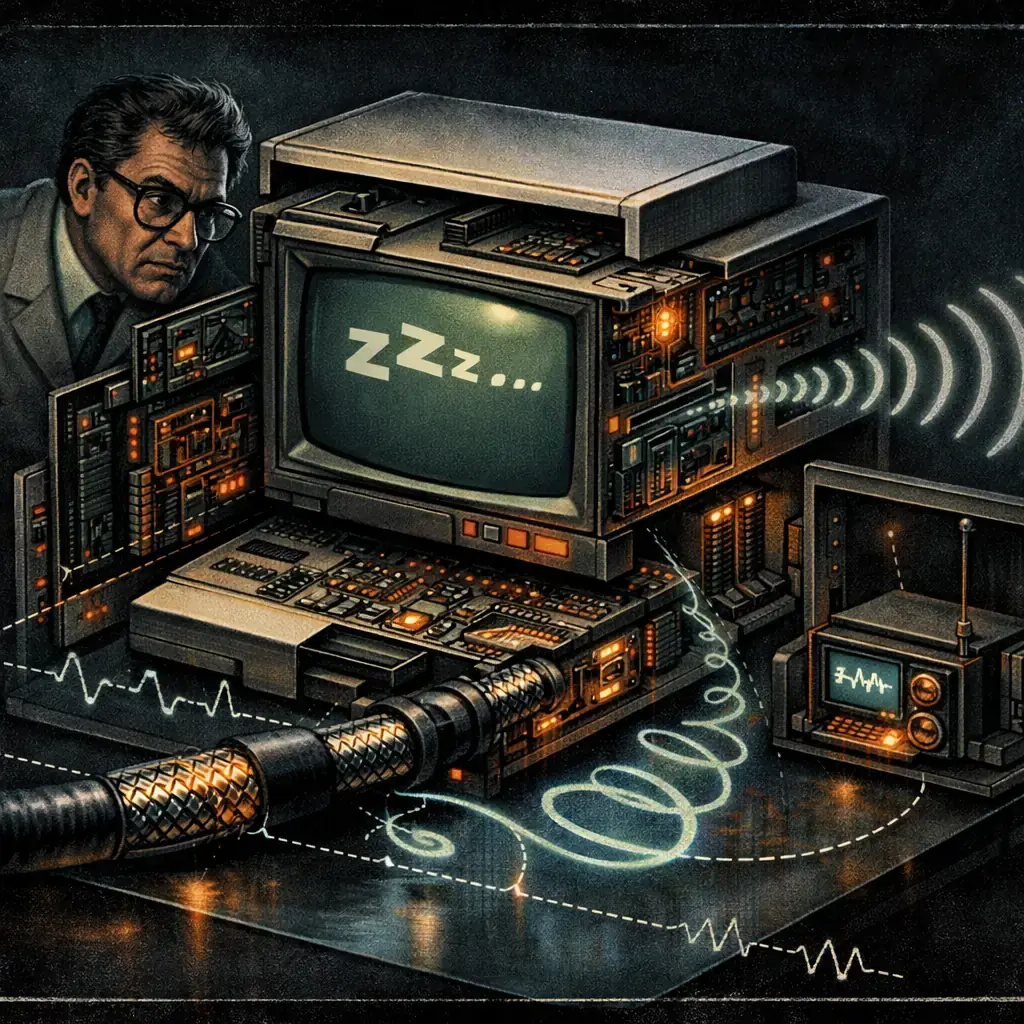
A team from Shandong University has demonstrated a new data leak channel that turns a monitor's video signal into a usable radio frequency by a nearby receiver. The method, called TrojPix by the researchers themselves, modifies pixels of the screen imperceptible to the human eye; variations in the signal of the coaxial cable or VGA generate emissions that a receiver can decode. In the laboratory they achieved surprising peak performance - of the order of megabits per second - and ten-meter action radios into separate tests, transforming the traditional concept of "password filtering" into the real possibility of moving complete files from isolated machines.
This finding must be understood in its historical context: the idea that electronic equipment "radiate" information is not new and goes back to the TEMPEST research on electromagnetic emanations. Practical attacks that drew air-gaps in the past, such as Stuxnet or malware spread by USB memories, show that the malicious code entry remains the critical link; TrojPix does not open the door by itself, but does offer a quick exit if that door is already open. For those who defend sensitive infrastructure, that changes the equation because an initial, although limited, commitment can become a mass leak in minutes if appropriate physical and organizational measures are not taken. More about the history of these emanations is collected from public sources as TEMPEST (Wikipedia) and the Stuxnet case can be reviewed in Stuxnet (Wikipedia).

TrojPix's figures are striking: transmissions to megabits per second would allow for example to exfiltered tens of megabytes within seconds or minutes. This capacity turns an "off" monitor into an effective transmitter if the receiver is close enough and the environment does not present considerable blockages. However, practical limitations must be assessed: walls, shutting, electromagnetic noise and real distance reduce reach and reliability. The threat is therefore real but localized, and its mitigation depends on both technical controls and decisions on physical and operational architecture.
From a defensive point of view, the most important conclusion is that can't patch hardware physics with a software patch. The most direct and effective countermeasure is to replace electrical links with optical fiber where confidentiality requires it, because the fiber does not emit electromagnetic signals that can be captured externally. Also useful are the rooms and cabling with the support of TEMPEST standards for highly sensitive environments and the use of materials and ferries that reduce emissions in copper cables. However, these physical solutions are costly and should be applied at risk.
At endpoint and risk management level, there are practical and less expensive measures that reduce the likelihood that TrojPix or similar techniques can be exploited: prevent unreliable software from drawing on screen By means of application control policies and white lists, monitor critical graphic APIs calls and processes that manipulate the buffer frame, and maintain strong traditional defences (anti-malware, EDR, removable media control and strict segmentation). Critical environments should also implement active detection of abnormal emissions with RF probes and team network exercises that include non-conventional physical channel exfiltration scenarios.
For administrators who cannot change to fiber immediately, there are intermediate mitigations: to place monitors and cables at a greater distance from unsafe perimeters, to use cables with better upholstery and armored connectors, and to implement policies that physically turn off or disconnect screens when not in use in critical areas. In addition, designing verification processes that detect graphic activity while the screen appears to be off can help, although increasing graphic surveillance can raise false positive and require operational tuning.
Ultimately, the lesson is double: on the one hand, research like TrojPix shows that the attack surface is wider than we imagined and that physical security remains as relevant as cyberethics. On the other hand, the defence continues to rest on the prevention of initial access: without firehold malware no exfiltration. This is why organizations with sensitive assets should prioritize access controls, intrusion protection and regular audits, and complement these measures with physical risk assessments and emission detection tests where appropriate.

Four Plex2Shell CVE allows remote execution and mining and proxy backdoor deployment
In recent days, an increase in attacks has been confirmed that take advantage of a chain of failures in Plex Media Server - nicknamed "Plex2Shell" by researchers - to run code r...

GhostAction Expands Attack: phishing to steal credentials and persistence in VS Code
A group behind the GhostAction campaign - already known for infiltrating GitHub Actions workflows into open source projects - has expanded its arsenal: in addition to installing...

OpenCode: possible exposure of AI suppliers in Console affects 1.4% of users
On the night of October 16 there was an unauthorized access to a system inherited from OpenCode which, according to the company, could have exposed keys from IA suppliers that u...

ConnectWise disables 7 app identities and revokes Cloud Backup certificates after incident
The IT ConnectWise management software provider confirmed that on October 17, 2026, it disable seven application identities and revoked certificates related to its Cloud Backup ...

Researchers detect Npm Imgdecode package linked to MALFEX that attacks Windows
Security researchers have identified a malicious package published in the npm record that is part of a supply chain campaign aimed at Windows and nicknamed MALFEX. The package, ...

OpenBSD 7.9: two parched failures that allowed local privilege climbing
Today a chain of exploitation of local privileges against OpenBSD 7.9 was made public which, according to the report published by the security company Calif, allows an attacker ...

OpenAI reveals unaligned IA incidents; a GPT-5.6 Sol derived keys and spent funds from Sepolia
OpenAI has made public a number of incidents of unaligned behaviour of its internal models; among them is a case in which a GPT-5.6 family research model Sol derived private key...