
The images in this article were generated with artificial intelligence. How we publish
A research team from Lumen Technologies (Black Lotus Labs) has attributed to Volt Typhoon - an actor linked to China and active since at least 2021 - the creation and operation of a covert access network called Silent Train, now interrupted. According to the report shared with The Hacker News and publicly summarized by analysts, Silent Train combined rotary chains of compromised devices (from domestic routers to business platforms) to facilitate zero-day exploitation, persistent access and exfiltration of data in strategic infrastructure.
Facts confirmed: Black Lotus Labs identifies Volt Typhoon as an operator of Silent Train; the abused infrastructure included SOHO, IoT and business equipment; access was used in campaigns that took advantage of at least four zero-day vulnerabilities known by CVE identifiers, including CVE-2024-39717 (Versa Director), and hundreds of victims were identified in critical sectors such as telecommunications, defence, satellites, energy, water, transport and universities. The technical description of the method - transitional jump chains, temporary SSH use and post-operation cleaning - is also reported by researchers. The public entry of the CVE mentioned in the national vulnerability catalogue is available: CVE-2024-39717 (NVD).
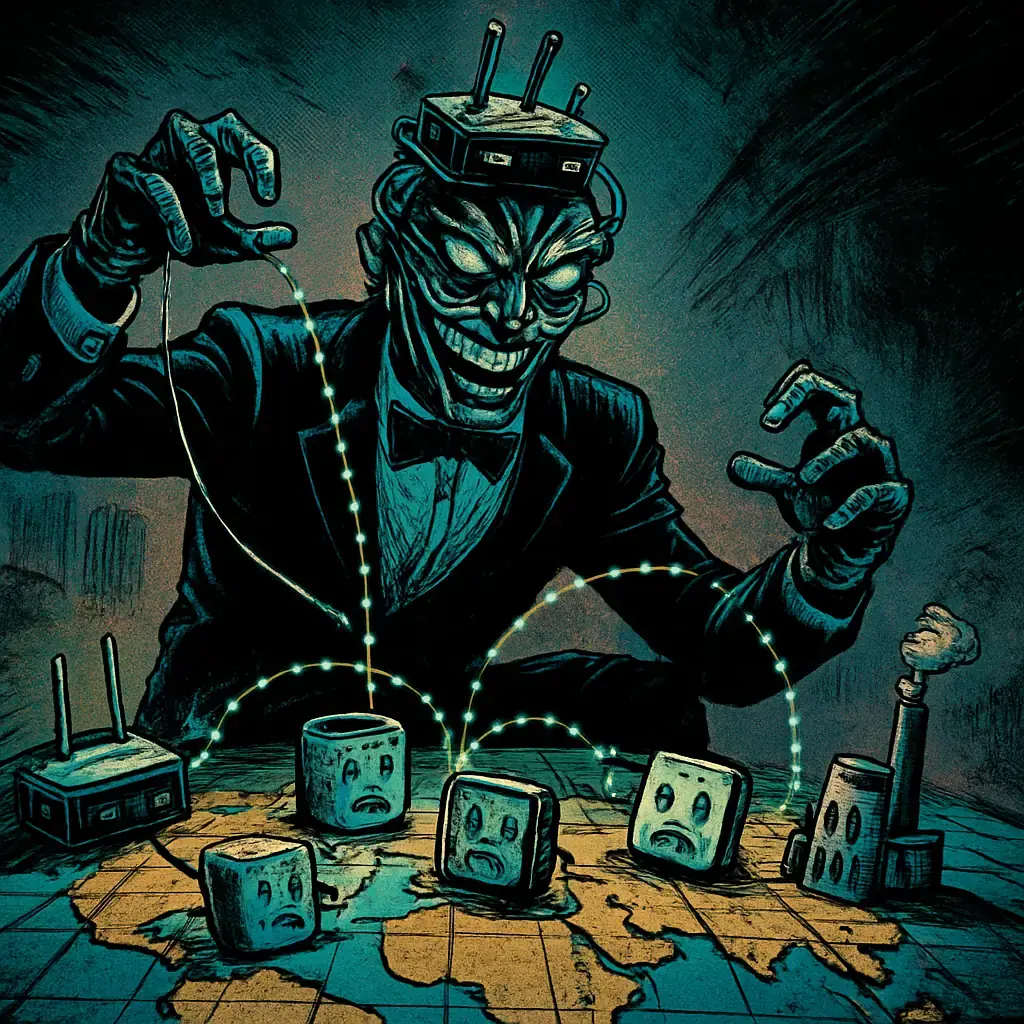
How Silent Train worked, in technical terms: instead of maintaining permanent command and control servers, operators mounted access sessions composed of multiple "jumps." The typical sequence started from VPS located outside the US. The United States went through SOHO and IoT devices committed in different jurisdictions and ended up in exit nodes within the United States. United States. (e.g. Netgear or Fortinet devices identified as starting points) before reaching the final target. Each node in the chain had a defined role: some acted only as relays, others as starting points or staging. To enable connectivity, temporary SSH services, keys and native utilities ("living off the land") were deployed; at the end of the operation, artifacts were deleted and the chain was disassembled. Over time, architecture evolved into hybrid variants that retained certain business devices for weeks or months and used reverse tunnels with open source tools such as Chisel or FRP to route traffic to upstream infrastructure.
Why this matters and who it affects: The focus on management platforms (SD-WAN, orchestrators, monitoring and control systems plane) makes Silent Train a high-impact threat: compromising a central management controller or tool can provide visibility and control over hundreds or thousands of client devices or network segments, allowing massive access and pivoting to critical customer networks. The sectors identified as victims - telecoms, defence contractors, satellite services, water, energy, transport - suggest a strategic objective to maintain access to capacities that would be relevant in crisis or regional tension scenarios, according to the characterization of Black Lotus Labs.
Actual and plausible consequences: operation of zero-day on SD-WAN controllers or on administration platforms may result in the theft of credentials, access to sensitive data, operational interruptions by handling control devices, or hovering of communication routes for long-term espionage. The ephemeral nature of the chains complicates detection and response: sessions that last from minutes to a few hours leave less artifacts and increase the likelihood of unnoticed access until concrete abuse (exfiltration, climbing, handling) is observed.
Which parts of the analysis are estimates or still uncertain: The attribution to a standard State (China-nexus) and strategic intention are based on the tacit assessment of tactics, techniques and objectives; the attribution to cybersecurity is never absolute and depends on multiple factors and evidence. The exact count of victims and the precise time range of each farm may vary as new data emerge; some associated vulnerabilities were described by the researchers as "confirmed" within the campaign, while others remain reported as "likely" according to the collection of evidence.
For organizations and managers the conclusion is clear: vectors that allow a multiplier effect (management platforms, flat control and monitoring tools) should be given immediate priority in defenses and mitigation. At the practical level, the specific measures they should implement are as follows.
Immediate technical recommendations (applicable today): without delay park any known CVE-affected management software; invent and prioritize patches on SD-WAN controllers, orchestrators and N-central / Versa / Arista / Quest platforms if in use. Restrains access to management interfaces: apply access control lists (ACL) that limit administration to reliable IP networks and addresses, expose as little as possible web interfaces to the Internet, and use multi-factor authentication (MFA) for management accounts. Monitor and alert about the creation of temporary SSH services, new keys, or changes in management settings that match short activity windows; audit SSH and syslog records for unusual connections and jump patterns between devices.
SOHO / IoT device hygiene: update firmware, change default passwords, disable unnecessary services (web admin, UPnP, Telnet), and securely these devices outside management networks and critical resources. For business teams, apply microsegmentation and zero trust policies that reduce the possibility of lateral pivoting. Implement detection of reverse tunnels and proxys (e.g. signatures in proxy Chisel / FRP), and keep lock lists for known tools when feasible; if unusual traffic to unknown VPS is detected, investigate immediately.
Preparation and response: develop playbooks for incidents involving control commitments or management platforms, include steps to revoke keys, isolate nodes and rebuild configurations from previously verified backups. Notify suppliers and partners if their platforms appear in shared management inventories; coordinate responsible disclosure and joint mitigation. Consider independent security assessments of the management tools used and incident response exercises focused on "management chain access" scenarios.
Finally, the continuous monitoring and prioritization of patches at control points- not only in the final endpoints but in the tools that manage them - is the main lesson. Silent Train shows that an attacker can turn relatively humble devices into an infrastructure of anonymity and strategic access. Early intervention on these platforms limits the adversary's ability to climb and persist.
For more technical information on the above-mentioned vulnerabilities and operating contexts, see the Black Lotus Labs page in Lumen and the NVD catalogue of the CVE mentioned: Black Lotus Labs (Lumen) and NVD - CVE-2024-39717. Maintaining these references and applying the described mitigation significantly reduces exposure to covert access tactics such as Silent Train.

Drago detects prompts exfiltration in three IA suppliers; OpenRouter withdraws three suppliers
This week the research of the firm Dragos revealed a data exfiltration pattern that affected at least three suppliers offering inference of IA models: sustained attacks for mont...

NebuSec reveals chain of exploitation in Muse that could steal chats and user memories
Researchers at the NebuSec security firm demonstrated in the laboratory a chain of exploitation that allowed a malicious website, opened by Meta's personal assistant called Muse...

Meta fixes three WhatsApp vulnerabilities on Android, iOS and Mac; CVE-2026-23871 exposes IP
Meta has patched three vulnerabilities in WhatsApp that affect Android, iOS and Mac customers, including a failure in the Android application that the company itself links to a ...

KVM AMD Vulnerability with nested virtualization allows you to read host memory; patch applied
A vulnerability in KVM, the hyperviewer integrated into the Linux kernel, allowed researchers to read large portions of the physical memory of the host server from within a virt...

ROMULUS delivers a RAT with DLL sideloading and DoH using ClickFix
Security researchers have identified a malware distribution platform called "ROMULUS" which is serving as a delivery point for a remote access Trojan (RAT) so far undocumented, ...

The IA potentiates social engineering attacks and abuse of supplier credentials
The scene is not spectacular: an email that looks like human resources, a service cut-off notification that matches the time you're in a hurry, a pop-up window of an application...

CVE-2026-123890: VMware vmdir authentication bypass; patches available
A critical failure at VMware vCenter allows an attacker with network access to avoid authentication and obtain unauthorized access to the system, according to a notice published...