
The images in this article were generated with artificial intelligence. How we publish
In recent days, complaints have been raised from users using POP accounts in the classic version of Outlook on Windows 11: after installing the January security update, several reported that the desktop client is frozen or not reopened after closing it. Microsoft has already recognized the problem and is investigating it, although for now it has not offered a definitive correction or a date to solve it. You can check the official status note at the Microsoft support center about this incident Here..
What do we talk about when we say "POP accounts"? POP, or Post Office Protocol, is a traditional way to download emails from the server to a single device. It does not offer real-time synchronization between devices that have IMAP or Exchange, but it remains a common option for domestic users and small businesses that prefer to store local emails. If you need a quick review of how POP works against IMAP, there are useful outreach resources such as the Wikipedia entry on Post Office Protocol Here., and Microsoft's documentation on POP / IMAP accounts in Outlook.
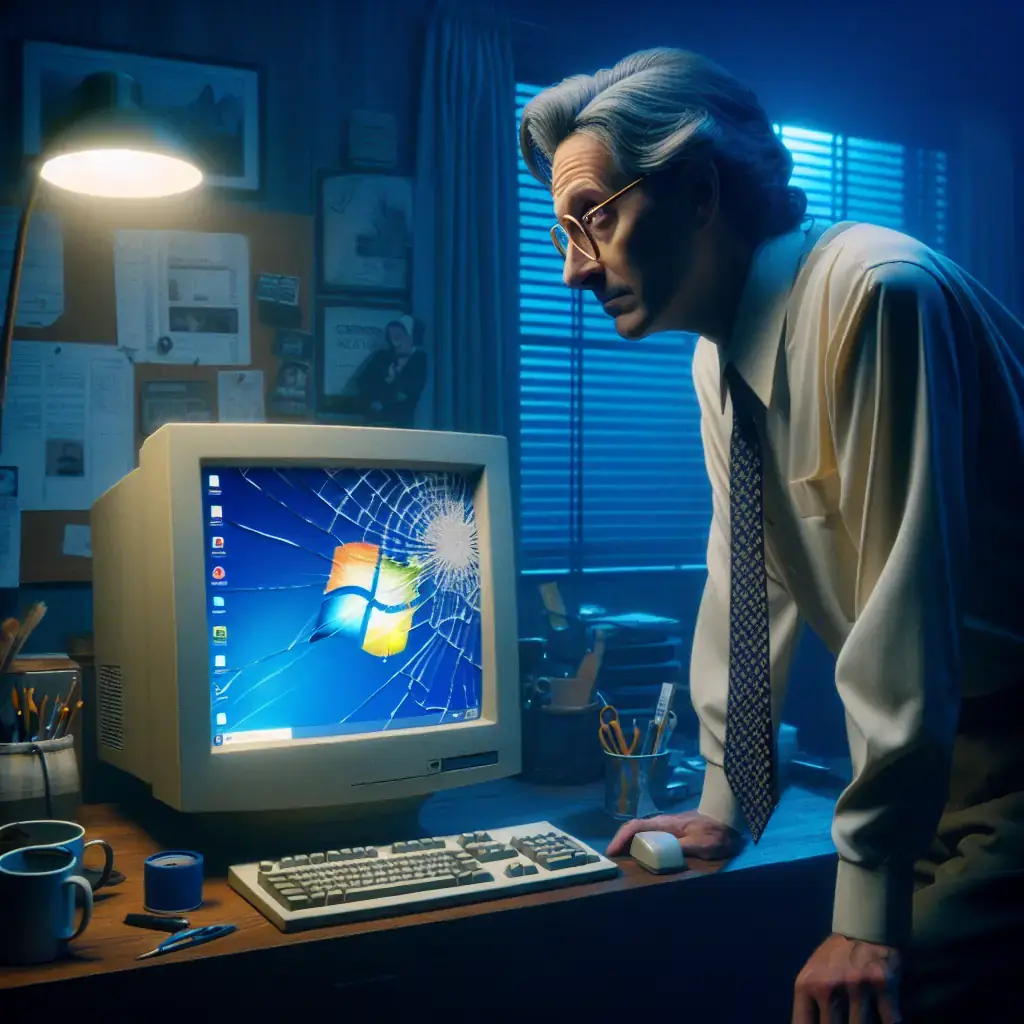
The specific update involved is the KB5074109, published on January 13 for the 25H2 and 24H2 branches of Windows 11; Microsoft maintains a page with the details of that update in this link. Cumulative reports - including threads in Microsoft Answers forums where users describe their experience - agree that, after installing that package, "classic" Outlook may not be closed properly and sometimes does not start after a forced closure; Microsoft has collected these testimonies and linked them in its public communication. Here..
At the moment, the company indicates that the Outlook and Windows teams are working on identifying the root of the failure and understanding its scope to prepare a solution. Meanwhile, Microsoft has published a temporary recommendation for affected users: if problem behavior started right after updating, a way to recover functionality is to uninstall the KB5074109 update. Uninstallation is done from the Windows Settings application, on the Windows Update → History of updates → Uninstall updates; there appears the option to remove the security update.
Before you hurry to remove patches, it's worth remembering a critical point: security updates correct vulnerabilities that, in many cases, are already being exploited in nature. Microsoft explicitly warns about the risks of removing updates that protect the system. If you decide to reverse the update temporarily, try to take compensatory measures such as making sure you have an updated antivirus, back up and postpone automatic redeployment of that patch until there is an official fix. Microsoft alert on why security updates should not be uninstalled is available in this page.

What options do those affected have while a correction is published? A practical alternative is to use web access to the mail or mobile applications provided by the service provider, which do not depend on the classic Outlook client on the PC. Another output is to configure the account as IMAP or use another mail client if your provider allows it; this prevents the lock that seems to be specifically linked to the management of POP profiles in the classic version. Some users have commented on the forums that, after uninstalling the problem update, Outlook was back on track and that, until a stable patch exists, they had to pause the updates to prevent Windows from automatically reinstalling KB5074109.
If you decide to uninstall the patch temporarily, do it with caution and document the steps you make so that you can reverse them. Keep an eye on the Microsoft support page and the KB5074109 update notes to know when a final solution is published. Microsoft has indicated that it will update its advisory as the research progresses, so that consulting the official source regularly is the best way to receive reliable and up-to-date information.
In short, we are facing a failure that affects a specific range of users - those who continue to use POP accounts with the classic Outlook on Windows 11 - and that has been officially recognized by Microsoft. The company investigates the origin, and the most effective shock measure reported by the community has been to reverse the January update, despite the risks that this manoeuvre entails. While an official patch arrives, the prudent recommendation is to evaluate alternative mail access, keep the security defences active and follow Microsoft communications to apply the correction as soon as it is available.

GhostAction Expands Attack: phishing to steal credentials and persistence in VS Code
A group behind the GhostAction campaign - already known for infiltrating GitHub Actions workflows into open source projects - has expanded its arsenal: in addition to installing...

ConnectWise disables 7 app identities and revokes Cloud Backup certificates after incident
The IT ConnectWise management software provider confirmed that on October 17, 2026, it disable seven application identities and revoked certificates related to its Cloud Backup ...

Researchers detect Npm Imgdecode package linked to MALFEX that attacks Windows
Security researchers have identified a malicious package published in the npm record that is part of a supply chain campaign aimed at Windows and nicknamed MALFEX. The package, ...

OpenBSD 7.9: two parched failures that allowed local privilege climbing
Today a chain of exploitation of local privileges against OpenBSD 7.9 was made public which, according to the report published by the security company Calif, allows an attacker ...

OpenAI reveals unaligned IA incidents; a GPT-5.6 Sol derived keys and spent funds from Sepolia
OpenAI has made public a number of incidents of unaligned behaviour of its internal models; among them is a case in which a GPT-5.6 family research model Sol derived private key...
Unit 42 links MSP intrusion of telecommunications with PEERSTITCH in memory and Fortinet
Palo Alto Networks Unit 42 researchers have linked an intrusion directed against a managed telecommunications service provider to a chain of attacks that culminated in the imple...