
The images in this article were generated with artificial intelligence. How we publish
Meta has submitted a patent application that describes an artificial intelligence system capable of listening to your voice during the day, infer your emotional state from the way you speak and keep a record with a time mark that links each reading to the place, activity and use of the phone at that time. The document, publicly located in the patent database, is an important warning: it does not mean that there is a ready commercial product, but the company does want to reserve the idea and possible technical variants before deciding whether to build it or not. You can review the application in the patent database here: US2026 / 0182881 on Google Patents.
From a technological perspective, the proposal combines several trends that we see separately: voice recognition, prosodic analysis (tone, rhythm, breaks), multimodal fusion with biometric signals (pupil, blink, eye humidity) and telemetry of use of the device. This source crossing increases complexity and, potentially, apparent accuracy, but also multiplies scientific uncertainties: emotional expression is not universal or constant, and signals can depend on culture, situational context or even transient physiological state. An automatic and continuous interpretation of "how you feel" is far from infallible and to treat it as objective truth has ethical and practical risks.

The security and privacy implications are considerable. A detailed history of emotional states combined with locations, call records and phone use patterns is extremely sensitive material: it can reveal psychological vulnerabilities, times of crisis, intimate relationships or everyday exploitable habits by malicious actors. If these data are stored on servers, a commitment could turn that emotional base into a monetizable asset for hypersegmented advertising, job assessments or insurance decisions. The difference between processing on the device and synchronizing on the cloud is not only technical: it is the line that separates real protection from extended risk.
On the regulatory level, there are already emerging responses. The European Union, for example, has set limits on systems that instill emotions in sensitive environments such as work or education and requires transparency when using biometric signals for affective readings. These rules show that legislators recognize both the intrusion and the low scientific robustness of many emotional detection techniques. You can see the general framework that the EU is defining here: the European approach to the regulation of the.
There are also risks of bias and discrimination: trained algorithms with non-representative data can overinterpret the emotional expression of underrepresented groups, mislabelling sadness, irritation or lack of commitment and, from there, influence recommendations, conditions of service or automated interactions. In areas such as employment or mental health, this influence can be harmful and difficult to challenge for the affected person, especially when the "quotes" that accompany each reading (the audio fragment or the view screen) can be used as an apparently objective test.
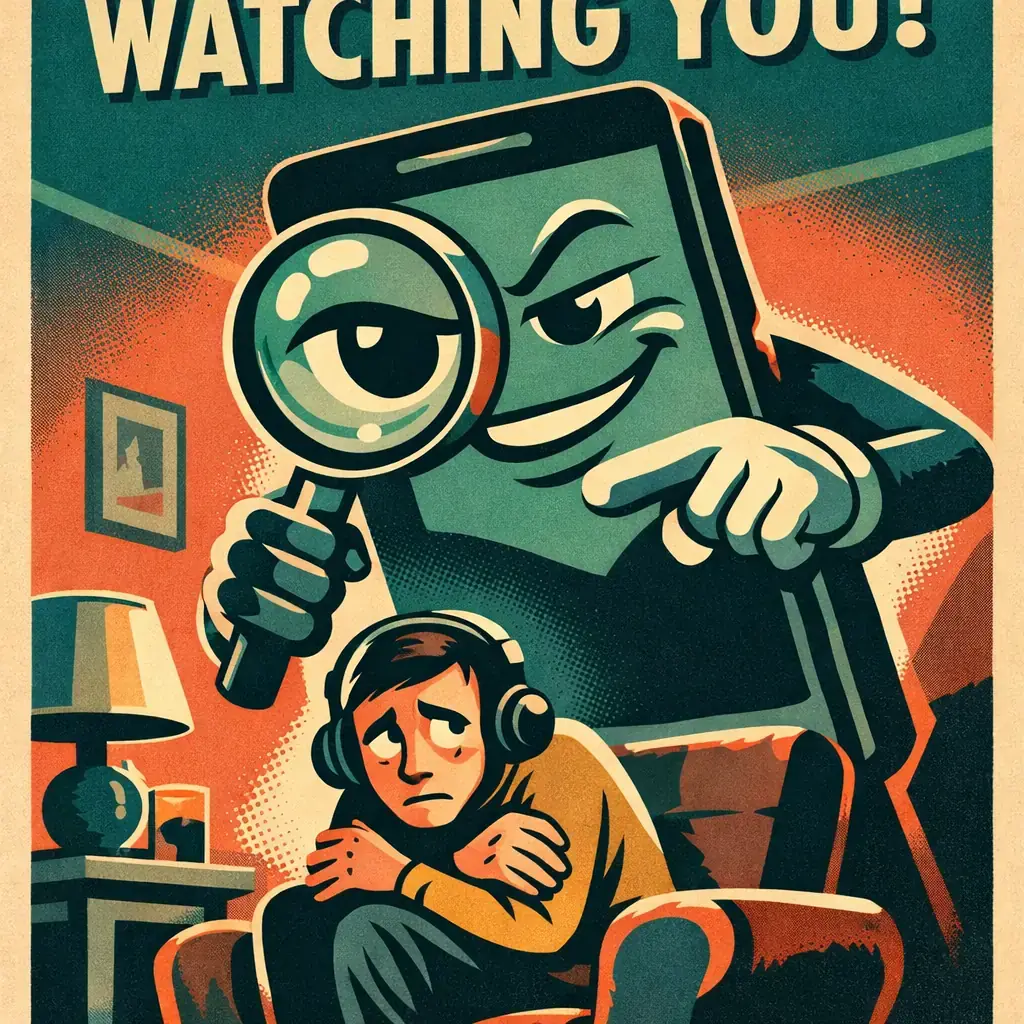
As a technology and security journalist, I recommend that users take a preventive stance: to question alarmingly wide permissions on devices and applications, to prefer solutions that process sensitive data on the device itself and to review privacy and data retention policies before allowing continuous or multimodal recordings. In addition, it is reasonable to demand transparency from companies on what signals are analysed, for what purposes and for how long these emotional profiles are maintained. Where commercial alternatives exist, choosing tools that avoid cloud synchronization and offer clear controls to delete records is a pragmatic defense.
Those responsible for safety and privacy in organisations should consider that such a function, although intended for the general consumer (e.g. as a sports coach), can open up risk vectors in corporate environments if employees use personal devices for work. Internal policies should clarify the prohibition of software that records or infers emotional statements at the workplace, and incident response teams should catalogue emotional profiles as sensitive data in asset inventories. Preventing is cheaper and less harmful than mitigating an emotional state leak.
Finally, the presentation of a patent is a further reminder that technological innovation does not occur in the vacuum: there are ethical decisions, business models and regulatory frameworks that must evolve at the same rate. As users, regulators and security professionals, it is appropriate to monitor not only whether Meta or other company launch such a product, but how they will do it: with transparency, minimization of data and effective controls, or with darkness and centralization. Public discussion of what types of automatic interference are acceptable and under what safeguards should be advanced to mass marketing, not waiting to react after deployment.

GhostAction Expands Attack: phishing to steal credentials and persistence in VS Code
A group behind the GhostAction campaign - already known for infiltrating GitHub Actions workflows into open source projects - has expanded its arsenal: in addition to installing...

OpenCode: possible exposure of AI suppliers in Console affects 1.4% of users
On the night of October 16 there was an unauthorized access to a system inherited from OpenCode which, according to the company, could have exposed keys from IA suppliers that u...

ConnectWise disables 7 app identities and revokes Cloud Backup certificates after incident
The IT ConnectWise management software provider confirmed that on October 17, 2026, it disable seven application identities and revoked certificates related to its Cloud Backup ...

Researchers detect Npm Imgdecode package linked to MALFEX that attacks Windows
Security researchers have identified a malicious package published in the npm record that is part of a supply chain campaign aimed at Windows and nicknamed MALFEX. The package, ...

OpenBSD 7.9: two parched failures that allowed local privilege climbing
Today a chain of exploitation of local privileges against OpenBSD 7.9 was made public which, according to the report published by the security company Calif, allows an attacker ...

OpenAI reveals unaligned IA incidents; a GPT-5.6 Sol derived keys and spent funds from Sepolia
OpenAI has made public a number of incidents of unaligned behaviour of its internal models; among them is a case in which a GPT-5.6 family research model Sol derived private key...